Aurora Annual Conference 2026 Charts Future Of European Higher Education While Celebrating A Decade Of Collaboration

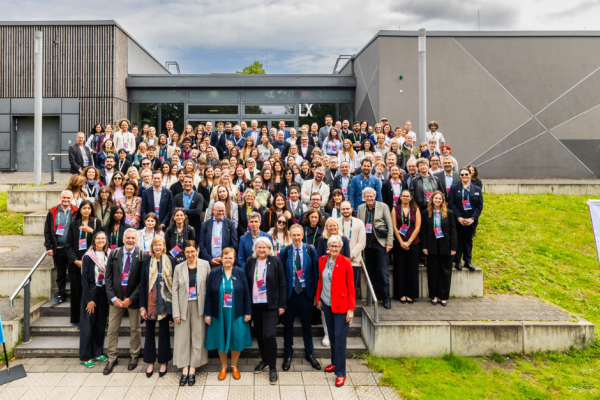
In May 2026, the University of Duisburg-Essen hosted the Aurora Annual Conference 2026, an international gathering of the Aurora community from its 15 universities across Europe and Canada. Gathering nearly 200 participants, the conference served as a key platform to discuss the progress of the Aurora 2030 programme while marking the ten years of cooperation within the Aurora network.


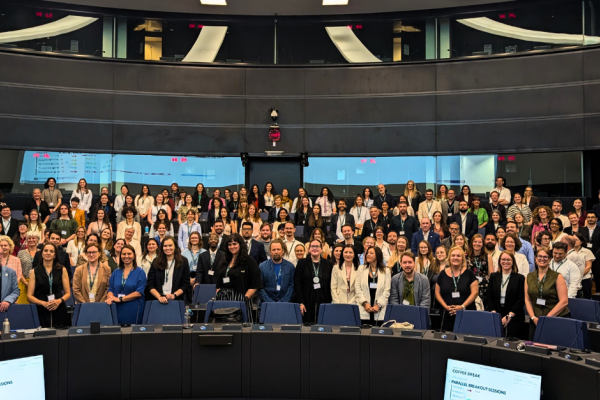
Participants from 15 Aurora universities across Europe and Canada. © Photo credit: eventfotograf.in

Over four days, academics, students, staff and stakeholders, engaged in plenary sessions, workshops, strategic meetings, and networking events designed to address some of the most pressing challenges facing higher education. Numerous exchanges focused on how universities can strengthen their societal impact, foster innovation, support student engagement, and build trust in science in an increasingly complex global environment.

Building A Future Of Trust

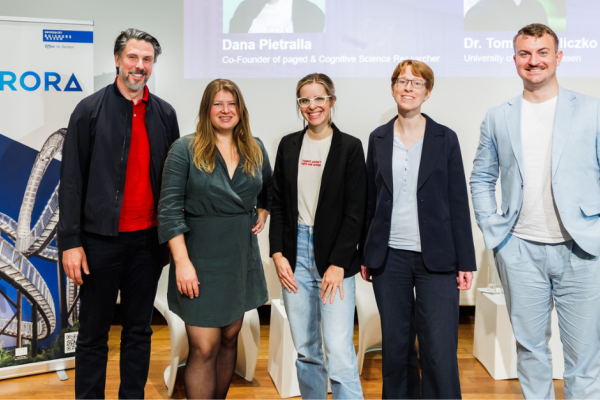
A central theme throughout the conference was the role of universities as trusted institutions. In the opening keynote, renowned science communicator and chemist Dr Mai Thi Nguyen-Kim addressed the challenge of communicating science in an era of information overload and declining public trust. Her presentation sparked discussions on how universities can engage more effectively with society, combat misinformation, and strengthen public confidence in research and evidence-based decision-making.

Dr Mai Thi Nguyen Kim opens with keynote of science communication
Attentive participants during the Opening Ceremony
Plenary session on Innopreneurship and Peer Review
Plenary session on Student Representation

© Photo credit: eventfotograf.in

Research and innovation, and entrepreneurship featured prominently across the programme. Sessions examined topics such as open science, digital education, international mobility, citizen engagement, and innopreneurship, highlighting ways Aurora institutions are developing new approaches to teaching, learning, and research. Students also played an active role in the conference, contributing perspectives on inclusion, mobility, and the future of students’ active involvement in European higher education.

During the conference, attendees confirmed their commitment to Aurora’s long-term vision for transforming higher education through joint educational programmes, interdisciplinary research, and learning opportunities that prepare students to tackle global challenges.

Marking Milestone Moments And Achievements

One of the highlights of the Opening Ceremony at the Aurora Annual Conference 2026 was the handover of the Aurora Presidency to Dr Margrethe Jonkman, President of the Executive Board of Vrije Universiteit Amsterdam. In her first address as Aurora President, Jonkman highlighted the importance of strong collaboration among Aurora universities in a rapidly changing international landscape and emphasised the commitment to joint education, knowledge exchange, research cooperation, and societal impact.

The opening also featured the seizmic Awards 2025, an initiative that rewards students’ engagement for societal impact through their social entrepreneurship and innovation projects. This year, Project SavEat took the grand prize and was lauded for its practical solution to food waste in Naples, Italy.

Handover of the Aurora Presidency to Margrethe Jonkmann, VU Amsterdam
Project SavEat team, seizmic Awards 2025 Winner
Celebrating 10 years of collaboration in Aurora
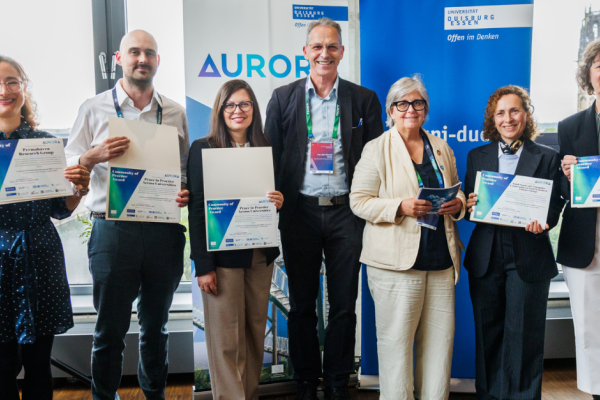
Aurora Communities of Practice Awards 2026

© Photo credit: eventfotograf.in

While the conference focused on future ambitions, it also provided an opportunity to reflect on Aurora’s achievements since its inception in 2016. Over the past decade, Aurora has grown into a global network of universities committed to matching academic excellence with societal impact, and doing this through international collaboration and community engagement. The Aurora community looked back on ten years of joint projects, student exchanges, research partnerships, and institutional cooperation that have strengthened connections between member universities.

The conference was also an opportunity to recognise and formalise the work of Aurora Communities of Practice (CoP). During the closing ceremony, three CoPs were voted as laureates for the first-ever Aurora CoP Awards: South-South and Triangular Cooperation on Food Systems and Climate Change (SSTC- FSCC), Peace in Practice Across Universities, and Permahaven Research Group (PRG). 

The Aurora Annual Conference 2026 further emphasised that the achievements of Aurora’s first decade provided a foundation for the next phase of development. By combining reflection on ten years of progress with a clear focus on future goals, the conference showed how European university alliances can help shape a more connected, inclusive, and resilient higher education landscape.

Aurora Releases Its First Economic Impact Report

Aurora has published its first consolidated Economic Impact Report, coordinated by Université Paris-Est Créteil (UPEC) and developed with BiGGAR Economics. The report shows that the nine Aurora member universities generated €21.1 billion in Gross Value Added (GVA) and supported 165,000 jobs in Europe in 2024.

A Comprehensive View Of Aurora’s Economic Footprint

The Economic Impact Report was commissioned under the framework of the Aurora 2030 programme within the Holistic and Strategic Approach to Impact task team (TT10.3). The objective is to assess their aggregate contribution to Aurora and to demonstrate the added value of a European university alliance for its member universities. Based on extensive data collection across all nine institutions, the analysis highlights Aurora’s role in strengthening skills development, catalysing innovation, enabling student mobility, and engaging regional ecosystems.

Learning represents the largest share of Aurora’s impact. The 59,880 graduates of 2024 are expected to generate €7.3 billion in lifetime productivity gains, underlining the alliance’s emphasis on research-driven education and professional learning. Internships organised throughout the network accounted for an additional €236 million in GVA, further strengthening employability and collaboration with external partners.

Research valorisation also plays a significant role, contributing €1.1 billion in GVA through  licensing, consultancy, commissioned research, and the creation of around 240 spin-outs and start-ups.. Science parks and incubators hosted by Aurora universities further reinforce regional innovation ecosystems and long-term societal impact.

Students are another key driver of Aurora’s economic footprint. With 274,410 students enrolled across the alliance, their spending and part-time employment delivered €6.0 billion in GVA and supported tens of thousands of jobs across Europe. Volunteering activities add further social value, reinforcing the strong civic engagement of Aurora’s student communities.

Aurora’s operational activities complete the picture. With 33,970 employees, a combined annual income of €3.8 billion, and €901 million spent on goods and services, member universities accounted for €6.2 billion in GVA through their core operations. Tourism linked to university events and visits provided additional economic benefits to regional economies.

“Coordinating this analysis was a real challenge,” said Matthieu Danteny, Deputy Head of the Strategy and Major Projects Unit at UPEC. “Collecting such diverse data from the nine universities required strong collaboration, and we played a central role in supporting this work with BiGGAR Economics. Despite complex timelines, the alliance met its deadlines and the report was successfully delivered.”

Strengthening Aurora’s Long-Term Contribution to Europe

Even though Aurora has been part of the European Universities Initiative for only six years, the report already highlights early signs of added value through shared structures, increased mobility, and collaborative research. These findings provide a foundation for future monitoring and further supports Aurora’s contribution to the European Education Area.

Ilyas Kenadid, Head of the Strategy and Major Projects Unit at UPEC, said: “Members of task team 10.3 are proud to deliver the first-ever economic impact study conducted for a European university alliance. In partnership with BiGGAR Economics, we have spent the past two years designing a robust framework to capture both the economic contribution of Aurora universities and the added value generated by the alliance. While the added value stemming from the Aurora network is already showing initial benefits, this study represents only the first step towards a more holistic and longitudinal assessment of Aurora’s broader impact across all of our activities.”

As the alliance continues to develop, its collective impact is expected to grow further, reinforcing cooperation across institutions and supporting more integrated approaches to education, research, and societal engagement.

Looking back at the Aurora Symposium on Global Citizenship

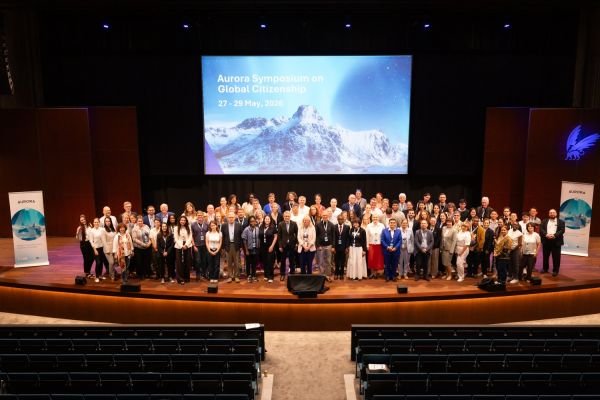
From 27 to 29 May, VU Amsterdam brought together educators, researchers, students, and societal partners from the Aurora network and beyond for three days of discussion on a key challenge in higher education, that is effective approaches to teaching global citizenship.

The Aurora Symposium on Global Citizenship brought together over 160 registered participants from 40+ universities across 23 countries, including 120+ speakers and presenters. Over three days, the programme featured keynote presentations, two high-level panels, eleven workshops, eight paper presentation sessions, four panel discussions, a poster session, and a series of special events. Topics ranged from peace building and societal resilience to community service learning, democratic participation, and innovative pedagogies for global citizenship education. A shared conviction emerged which was that global citizenship is not a subject to add to a syllabus. It is a capacity built through real encounters, responsibility, and reflection.

Day 1: Opening Symposium and Keynotes


Dr Margrethe Jonkman, President of Vrije Universiteit Amsterdam, emphasised the centrality of global citizenship to VU Amsterdam’s strategy, stating: “Global citizenship is very important in our strategy. And I’m very happy that we are a proud member of Aurora, where like-minded universities want to work together and build the following steps on global citizenship.” — Dr Margrethe Jonkman, Aurora President and President of the Executive Board at Vrije Universiteit Amsterdam.

Ramon Puras, Aurora Secretary General, reinforced this ambition, noting that the Symposium expanded beyond its initial scope to include diverse participants and perspectives: “We not only extended the thematic reach of this symposium. We go beyond Aurora, and we should. That’s what academia should aim for. We remain open and ambitious whilst asking ourselves where our blind spots are” — Ramon Puras, Aurora Secretary General.

The first day started with the question at the heart of the Symposium: Does this work genuinely make a difference? Prof. Robert Bringle answered directly, drawing on education research to argue that service learning transforms students only when it works with communities rather than for them. Dr Augustin Aoudji from the University of Abomey-Calavi in Benin grounded that argument in practice, showing how a university becomes relevant when students co-create solutions in the field rather than observe from outside. The day closed with a presentation on radical uncertainty by Dr Ali Arnaout from Hochschule Wismar in Germany, who explained what it demands of graduates who can no longer rely on a world that behaves predictably.

Day 2: High-level Panel 1 – How Universities Contribute to the Development of Global Citizenship and Community Engagement

The second day shifted focus from theory to practical university programmes, starting with examples from VU Amsterdam. Govert Buijs introduced the A Broader Mind course, which integrates personal development with academic content. He emphasised that universities play a major role in shaping students over several years and that personal development should be embedded in the curriculum. Dr Frederique Demeijer presented the ICSL course, which extends this approach into the city by having students engage with Amsterdam’s New West neighbourhood to identify community needs. Finance student Zeel Kikani described collaborating with a local Protestant church on a project addressing belonging and the loss of community spaces.

The panel broadened the picture further. Dr Elvire Sossa described a programme where students from Abomey-Calavi lived in rural villages in Benin for six weeks, learning directly from farmers. Dr Joanne Kisaka from Makerere University in Uganda detailed a case where veterinary students and a dairy farmer collaboratively diagnosed a decline in milk production, building trust through repeated visits. The panel discussion addressed challenges such as community fatigue in Amsterdam, where multiple institutions operate in the same areas. The panellists agreed that reciprocity is not merely an ideal but a practical necessity for sustained engagement.

This collaborative spirit continued throughout the programme. Representatives from VU Amsterdam, the University of Abomey-Calavi in Benin, and Makerere University in Uganda provided concrete examples of community-engaged learning and openly discussed challenges, including language barriers, difficulties integrating field experiences into formal curricula, and missed business opportunities due to insufficient seed funding.

Day 3: High Level Panel 2 – The Role of Universities in Peace and Justice

The final day offered a broader perspective. Prof. Jeroen Geurts, Rector of VU Amsterdam, outlined what universities need to be committed to peace, defining peace as ongoing effort rather than just absence of conflict. “Being a peace university doesn’t mean that you’re always peaceful. It means that you never give up, always trying anew to give your students and staff the right tools to reflect on themselves, build connections with others, and jointly take care of the world.” — Prof. Jeroen Geurts, Rector of VU Amsterdam.

Furthermore, Alma Mustafic, a member of the ‘Access to Justice’ research group at University of Applied Sciences Utrecht (HU), contended that universities often shield students from discomfort instead of preparing them for real-world challenges, noting the costs involved. Jan Jorrit Hasselaar from Vrije Universiteit Amsterdam provided a unifying perspective, suggesting that in a world marked by radical uncertainty, universities should cultivate hope that is relational and grounded, recognising that some challenges are ongoing processes rather than problems to solve. Erika Vodvárkova, a master’s student at Sciences Po and recent graduate of Amsterdam University College, urged participants to consider who benefits from global citizenship education and who remains excluded.

The Symposium also included the presentation of awards recognising outstanding contributions to teaching for societal impact across Aurora.

For Aurora’s Teaching for Societal Impact team, led by Prof. Marjolein Zweekhorst and Dr Sarju Sing Rai, the Symposium was both a taking-stock moment and a starting point. The conversations will continue across Aurora’s channels in the weeks ahead.

Aurora Joins Sector-Wide Call for Adequate Erasmus+ Funding

Aurora has joined sixteen other higher education organisations in responding to the European Parliament’s draft report on the 2028-2034 Erasmus+ programme.

The joint statement welcomes the CULT Committee’s ambition, particularly its call for a €47.39 billion budget, but flags a critical concern. The proposed budget share for education and training would represent a reduction of up to ten percentage points compared to the current programme. That would limit mobility opportunities and undermine targets that member states have already committed to.

Aurora supports the sector’s call on the European Parliament to restore the education and training budget share to its current level.

Read the full joint statement (PDF).

The signatories are:

Exploring Collaboration And Impact In European Universities Alliances With FOREU4ALL

The FOREU4ALL Workshop on “Aligning Project Management and Impact” brought together representatives from European Universities Alliances to reflect on how to design, manage, and evaluate impact within  collaborative projects. Matthieu Danteny, Deputy Head of the Strategy and Major Projects Unit at Université Paris-Est Créteil (UPEC) and Co-lead of the Aurora 2030 Impact team, shared his experience during the two days in Granada. 

Restitution of a collaborative workshop on impact by Matthieu Danteny

Stepping Into A Shared European Space Of Exchange

This event was an opportunity to step outside the day-to-day project environment and engage directly with peers facing similar challenges across Europe. From the very beginning, what struck me was the openness of the discussions. The workshop created a space where participants from different alliances could speak freely about what works, what does not, and what remains difficult when it comes to linking project management with impact.

Rather than formal presentations, many of the exchanges took shape through interactive formats, which made it easier to engage with others and compare approaches in a very direct way. It quickly became clear that, despite institutional differences, many of us are working with similar constraints and trying to answer the same questions.

Learning From Others’ Approaches To Impact

One of the most valuable aspects of the workshop was the opportunity to observe how other alliances approach impact in very practical terms. Discussions on data collection, planning, and reporting revealed a wide variety of tools and methods, some of which offered interesting perspectives for our own work within Aurora.

What stood out to me most was the idea that impact is not only something to be reported at the end of a project, but something that needs to be considered continuously throughout its implementation. This shift in perspective was reinforced through the exchanges with colleagues from other alliances.

Poster session and workshops on project management and impact

Turning Exchange Into Perspective

Beyond the technical discussions, what I took away most from this experience was the value of collective reflection. Being able to discuss openly with peers across Europe made it easier to step back from operational constraints and look at broader patterns in how alliances function.

The workshop also highlighted the importance of combining different types of understanding when working on impact, not only quantitative indicators, but also shared interpretations and qualitative insights.

Tools in impact assessment are also game changers That’s what I learned from various discussion with impact manager from other alliances, and from the poster they made. Thanks to the workshop about this topic, I left the event with new tools, and ideas to improve our own impact assessment.

FOREU4ALL Workshop 2 participants at the Universidad de Granada

Looking Ahead

This experience reinforced my belief that European Universities Alliances are not only cooperation frameworks, but also spaces for learning and transformation. Within Aurora , these exchanges contribute directly to how we think about project management and impact in a more integrated and collaborative way.

Returning from Granada, I left with a stronger sense of the importance of continued dialogue between alliances, and of the value of shared tools and common understanding in strengthening European cooperation in higher education.

Josep Pallarès Marzal Re-elected as Rector of Universitat Rovira i Virgili

Josep Pallarès has been re-elected as Rector of Universitat Rovira i Virgili for a new six-year term. Following the recent university elections, Pallarès will continue leading the institution and guiding its academic and strategic development in the years ahead.

As an active member of Aurora universities, Universitat Rovira i Virgili continues to contribute to Aurora’s mission of advancing socially impactful higher education and research across Europe and beyond. Aurora looks forward to continued collaboration with Rector Josep Pallarès and the wider URV community in strengthening shared initiatives and partnerships.

Students Make Their Voices Heard: Aurora At The European Student Assembly 2026

Leading up to the European Student Assembly 2026, students from all over the world worked together on recommendations addressing current European challenges. From 20 to 22 April, and after four months of digital collaboration and intensive discussions, participants gathered at the European Parliament in Strasbourg, France, to further develop and vote on their proposals during plenary sessions.


From left to right: Lilli Fee Schulz, Lucie Badurová, Eliška Karasová and Marko Darabos. 

The European Student Assembly 2026 (ESA 2026) provided students with a unique opportunity to contribute their perspectives, collaboratively develop ideas, and experience the importance of participation in shaping Europe. In addition to the substantive work, ESA 2026 also created plenty of space for exchange, new points of view, and networking with students and university alliances across Europe.

Reflections On The ESA 2026 Experience

Aurora was represented at ESA 2026 by four participants at different levels: Aurora Student Council (ASC) representatives Eliška Karasová and Marko Darabos, ASC alumna Lucie Badurová, and Aurora Student Ambassador Lilli Fee Schulz. They summarised their experience below:

Eliška Karasová, ASC Vice-president and student at Palacký  University Olomouc

As Vice-president of the ASC, I had the opportunity to represent our alliance at the 5th edition of the European Student Assembly together with a colleague from the ASC. As part of an international panel focused on defence and security, I collaborated with motivated students from different parts of the world while discussing some of the most pressing challenges facing European society.

From months of collaboration to our final discussions in Strasbourg, the ESA provided valuable insight into both the topic and intercultural cooperation, which lie at the core of the project. I am grateful to have been part of such an inspiring initiative and to have met so many passionate young people committed to making a difference.


European Student Assembly 2026. Photo © Guillermo Alba Buitrón

Marko Darabos, ASC Member and student at Vrije Universiteit Amsterdam

I had a great time at this year’s European Student Assembly, where I discussed many current European issues. I was particularly interested in discussions on EU project funding, especially how it could be used more effectively to create real impact, particularly in light of the current defence situation and possible implications for the new Multiannual Financial Framework.

I also enjoyed talking to members from other alliances, learning how they work, how they engage students, and which methods seem most effective.

Lucie Badurová, ASC Alumna and student at Università degli Studi di Padova

I am a former Aurora Student Council Communications Officer at Palacký University Olomouc. My journey with the European Student Assembly started in 2023, when I represented Aurora as a Panel Coordinator focused on the EU’s approach to mental health. With my background in psychology and neuroscience, topics connected to the brain and mental health have always been close to me.

The experience was incredibly meaningful, which is why I was happy to return in 2026 as an alumna speaker to discuss neurodegenerative diseases and their wider impact on Europe. ESA has given me a unique opportunity to speak about topics I truly care about while meeting students from across Europe who share the same passion for change. I am very grateful for the space ESA creates for young people to share their ideas on a European level, as well as for the welcoming community that makes the experience so special.

Lilli Fee Schulz, Aurora Student Ambassador and student at Universität Innsbruck

I am an Aurora Student Ambassador from Universität Innsbruck. The past months were intensive, but above all, incredibly educational. I learned how political measures and recommendations are developed and formulated, and how international collaboration can succeed in digital formats.

It was especially valuable to engage deeply with topics shaping Europe today. ESA and Aurora allowed me to actively contribute to a process that can initiate change, and I am very grateful for this experience.

The European Student Assembly clearly demonstrated that student voices can be heard and play an important role in discussions about Europe’s future, drive transformation, and catalyse positive societal impact.

Aurora Student Council Launches Inclusivity Events Across Aurora Universities

The Aurora Student Council (ASC) framed inclusivity as the key focus of their work in Aurora this year. During the semester, Simona Gibalová, ASC President and student of Pavol Jozef Šafárik University in Košice, introduced an initiative aimed at promoting inclusivity across Aurora universities.


Left to right: Kristýna Raimerová and Eliška Karasová, ASC Board members and organisers of the inclusivity event at Palacký University Olomouc (UP)

Launch Of The First Inclusivity Event

To get this initiative off the ground, each ASC member was tasked with organising an event at their home university. These events aim to address inclusivity in a way that reflects local needs. The first event launching the initiative was held in March 2026 at the Student Club of Palacký University Olomouc (UP).

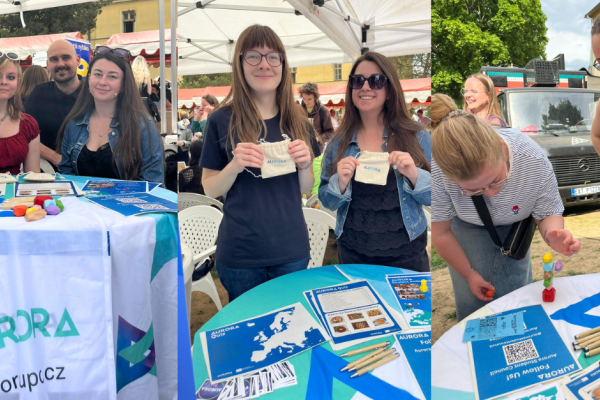
Organised by ASC Vice-president Eliška Karasová and Secretary General Kristýna Raimerová, the event gathered UP students around a shared Easter dinner with homemade meals, traditional Easter sweets and cookies, and fun quizzes. 

“It was my pleasure to bring such a great initiative to my home university and create an event that benefited our students while also starting a tradition for future ASC representatives,” said Eliška. “What I truly appreciate about this concept is that my colleague and I were able to take the initiative, add our own touches, and create something original and creative in a way that suited us. We truly enjoyed the event, and I feel fortunate to be part of such an inspiring alliance.”


Introducing Aurora and Aurora Student Council representation to UP students

The inclusivity event, and Aurora as a whole, received positive feedback from UP students. Many participants had the opportunity to learn more about Aurora, as well as gain an introduction to the world of student representation in the Aurora Student Council

Leverage Unique Strengths For Collective Power, Says Aurora President Veronika Sexl At THE Europe Universities Summit 2026

Veronika Sexl, Rector of Universität Innsbruck and Aurora President, represented Aurora at the Times Higher Education (THE) Europe Universities Summit in Milan, Italy, from 5 to 7 May 2026, contributing to key discussions on the future of European higher education.


Rector Veronika Sexl at THE Europe Universities Summit 2026. © Times Higher Education Events

The global higher education landscape is undergoing profound transformation. Universities today are no longer assessed solely on academic excellence and research output, but increasingly on their international visibility and ability to contribute to solving global challenges. Against this backdrop, the THE Europe Universities Summit 2026 in Milan brought together leading representatives from universities, research institutions and policymaking bodies across Europe to discuss the future of European higher education.

The summit focused on key questions surrounding the strategic positioning of European universities, the growing importance of international collaboration and the evolving role of higher education institutions in an increasingly interconnected yet highly competitive global environment. Throughout the discussions, one central theme emerged clearly: universities must balance international visibility with regional responsibility while remaining true to their academic mission and public value.

Aurora’s presence at the summit reflected this broader dialogue on collaboration as a driver of academic excellence and societal impact.

© Times Higher Education Events

Rethinking Reputation: Aurora In A Leadership Panel

As part of the wider programme of the summit, one of the panel discussions focused on unearthing institutional competitive edge and building global reputation. This session brought together senior university leaders from across Europe to discuss how institutions can define and strengthen their distinct position in an increasingly competitive global higher education landscape. It explored how institutional reputation is shaped through the interplay of identity, performance, and external perception, and how leadership can ensure that strategy and narrative are closely aligned.

Among the panel participants was Veronika Sexl, Rector of the Universität Innsbruck and Aurora President, who contributed to the discussion on the role of European Universities Alliances (EUAs) in strengthening the global positioning of their member institutions.

Within this context, the Rector’s contribution at the THE Europe Summit in Milan emphasises how EUAs like Aurora serve as a strategic multiplier for the global reputation of universities. She argues that these networks act as a central entry point for international partners, making collaboration opportunities more visible than individual institutional efforts could achieve alone.

As she stated during the discussion: “We must dare to be different and lead with our unique strengths. Within Aurora, this individual uniqueness becomes a collective power: our collaboration acts as a global entry point that amplifies our distinct strengths for partners worldwide.”

By leveraging the collective reputational capital of Aurora, individual members can amplify their unique institutional stories —showcasing their specific strengths and expertise — on a global stage while tackling shared challenges like climate change and digital transformation in a complementary manner.

From Ambition To Practice: Aurora At The EARMA Conference 2026

From 5 to 7 May 2026, Marie Jadrníčková, Aurora Research Officer at Palacký University Olomouc (UP), represented Aurora at the EARMA Conference 2026 in Utrecht, The Netherlands. Together with colleagues from the EDUC and SEA-EU European university alliances, she participated in a panel discussion on behalf of the EARMA Thematic Group on the European Universities Initiative.


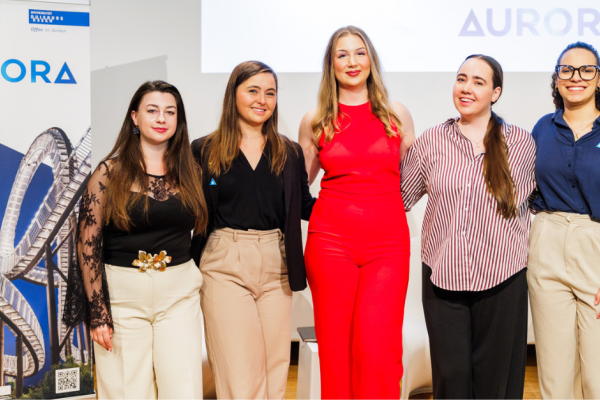
Aurora representatives at EARMA Conference 2026: Sedef Iskit (VU Amsterdam), Marie Jadrníčková (Palacký University Olomouc) and Svandis Halldórsdóttir (University of Iceland)

Bridging Ambition And Everyday Practice 

During the panel session, Marie delivered a presentation titled “From Ambition to Practice: How Alliances Shape Universities”. She raised the key question of how European university alliances can become an integral part of long-term institutional strategies and development. The discussion that followed focused on the challenge of translating European-level ambitions into meaningful institutional change.

While governance structures and legal frameworks often dominate discussions on European university alliances, the session also explored how these initiatives are implemented in practice and how they influence the day-to-day functioning of universities.

Research managers and professional staff play a crucial role in connecting policy and practice. They help translate alliance objectives into concrete processes, align stakeholders, and support the integration of new structures into institutional environments. The discussion also addressed challenges such as ensuring continuity beyond project-based funding, retaining skilled staff, and managing financial uncertainty.

Integrating Research And Innovation In Erasmus+ Projects 

In addition to the conference, Marie also contributed to a webinar hosted by the EARMA European Universities Initiative Thematic Group. The webinar, titled “Integrating the R&I Agenda in Erasmus+ Projects”, brought together more than 100 participants from across Europe to exchange perspectives on the research and innovation landscape within European university alliances and on the role of Erasmus+ funding in this context.
 
Moderated by Ladislav Cocek from EDUC, the webinar featured Marie alongside Nina Shiel from CHARM-EU. Together, they shared practical insights into how institutions can better connect research and education within Erasmus+ frameworks and make use of funding synergies to strengthen research capacity. The webinar highlighted the importance of more integrated approaches within European university alliances, particularly at the intersection of research and education.

As European university alliances continue to evolve, the role of research managers remains central to embedding alliances within institutions and supporting their long-term implementation in practice. Aurora’s engagement in platforms such as EARMA contributes to the exchange of practical experience, supports discussions on how alliances function in everyday academic environments, and helps strengthen their long-term sustainability.