Aurora Endorses Joint Amendments to Next Erasmus+ Programme

Aurora Endorses Joint Amendments to Next Erasmus+ Programme

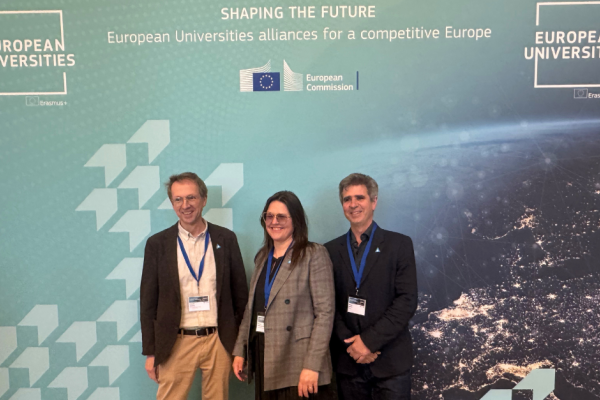
Aurora Universities has formally endorsed a set of joint amendments to the European Commission’s proposal for the Erasmus+ programme 2028-2034, which will be submitted to EU policymakers as they consider the legislative text for the next programme period.

This collaboration calls for greater flexibility and ambition in the next Erasmus+ cycle and reaffirms the key role of Erasmus+ in developing the European Education Area alongside the Union of Skills. The amendments were developed in collaboration with 16 other European higher education organisations. Together, the 17 signatories represent Europe’s universities, higher education institutions, student organisations and stakeholders.

A central demand is increased investment in Erasmus+. The organisations call for at least €60 billion for the 2028-2034 period with a guaranteed budget share of 34.6% for higher education. The amendments also address programme governance and third-country association, including the UK and Switzerland. They include support for students and staff at risk and a sustained role for European Universities Alliances in international cooperation.


Read the full cover letter here and detailed amendments here.


Shared Journey Across Borders: Reflections from the Aurora Student Conference 2026

The Aurora Student Conference is an annual event for students to exchange ideas and collaborate on improving student experiences across Aurora universities. Together, the Aurora Student Council and Aurora Student Ambassador programme support student engagement by increasing awareness, sharing opportunities and fostering connection within the alliance. Andy Li, student from the first cohort of European Joint Master Degree DIGISOC, shares his experience during the Aurora Student Conference hosted by University of Iceland.

Aurora, viewed from the sky. Photo credit: Klaudie Simeckova (fellow Aurora Student Ambassador)

As our plane drifted toward Reykjavík, a pale movement outside the window caught the corner of my eye. At first, it looked like the sky was breathing. A moment later, lights unfolded beyond the glass. Aurora had greeted us midair.

I first heard about Aurora through my study program DIGISOC. It is a joint master program made possible by Aurora, carrying Aurora values of innovation, inclusion, and societal impact. Enthusiasm led me to explore further and applied for an Aurora Student Ambassador role. What began as a simple interest turned into a meaningful journey, taking me beyond the classroom to a wider community built on openness, trust, and shared purpose.

Learning to Unlearn: From the Classroom toward a Living, Collaborative Space

At the Aurora Student Conference, the idea of learning to unlearn became reality. Students from across Aurora universities came together to represent their peers, share concerns, and support each other. Despite our different backgrounds, there was a shared enthusiasm and more importantly, a shared respect. What stood out was not just the diversity of voices, but the way each one was genuinely heard. At my first Aurora event, I realized that this was more than an international gathering, it was a space for stories, perspectives, and genuine listening.

Through discussions, intercultural workshops, and social activities, I learned to step back from my carried perspective and engage to listen openly, as every moment offers a chance to see the world through someone else’s eyes. There was no pressure to be the loudest voice or to give the best answer, only a space to pause, listen, reflect and collaborate. Beyond the conference, Aurora has evolved into a living, collaborative space shaped by the people within it.

Moments from the DIGISOC class and Aurora Student Conference

A Community Beyond Borders

What makes Aurora special is its strong sense of community, bringing together the unique perspectives and strengths of university alliance members.

Being an Aurora Student Ambassador gave me the chance not only to increase awareness about Aurora initiatives to more students, but also to listen to what students were looking for in their learning experience. What mattered most was not just sharing information, but initiating conversations. It is the conversations that made Aurora feel approachable and open to everyone. During intercultural activities, each student brings something unique: a way of thinking, a cultural value, or a personal story which together enrich the community. Within and beyond classroom activities, stories shared during conferences find their way into conversations, and connections made during the event continue to grow at home.

In-class and beyond-class conversations that bring us together

Looking Ahead Together: Cross-University Collaboration

Looking forward, I imagine Aurora as a space where these connections that were formed continue to grow. Peer learning and joint projects build understanding across differences and strengthen a sense of belonging within the alliance. Through initiatives like Blended Intensive Programmes and hybrid classes, students remain connected across universities while pursuing their own paths. Borders may still exist, but they no longer divide. What remains is a shared journey, shaped by dialogue, respect, and the willingness to listen.

A snapshot of collaboration today, with more to come in the future

I am ready to move forward with gratitude for the people I met, the conversations we shared, and the reminder that Aurora is not just a network of universities, but a shared journey built on connection, respect, and the courage to navigate across border, together.

Aurora Winter School in VU Amsterdam: Use of Generative AI in Academia

The Winter School ‘Generative AI in Academia’ is an Aurora winter course within the Digital Society and Global Citizenship hub at Vrije Universiteit Amsterdam. Open to students and faculty across all disciplines and nationalities, it focuses on integrating generative AI into academic work and research.

Hosted at the Vrije Universiteit Amsterdam, the programme teaches participants how to use models like GPT and Llama for tasks such as data analysis, hypothesis generation, and literature summarisation. The curriculum is divided into a lecture-heavy first week followed by a collaborative second week where teams design a formal scientific study. Beyond technical skills, the course emphasises ethical responsibility, addressing concerns like bias, fairness, and the transparency of AI-generated results. Students are ultimately evaluated through a project pitch and a written proposal, ensuring they can apply these transformative tools to their specific fields of study.

Bridging the Gap in the Use of Generative AI

This insightful video documents the experiences of both the participants and the teacher. This course, a collaborative effort within the Aurora network, was born out of a necessity to bridge the gap between researchers using Generative AI tools and understanding how to use them properly, systematically, and considerably.

Course coordinator Dr. Ivano Malavolta, Associate Professor in Software Engineering and Director of the Network Institute, is joined by two PhD students from the University of Iceland, and a PhD student from VU Amsterdam to discuss the transformative nature of the programme.

Key highlights of the discussion include:

  • The Power of Interdisciplinary Collaboration: Xin Chen (a sociologist) and Ahmed Hamdi Abdrabou Moghazi (a geologist) moved beyond their individual “bubbles” to co-design a project exploring the link between past climate change and human migration. In addition, Niels van der Heijden expresses the value of interdisciplinary composition of the participants.
  • Moving Beyond the Basics: The participants reflect on how the course shifted their perspective from randomly writing prompts to a systematic A-Z approach for gathering information, verifying data, and structuring research proposals.
  • Learning by Doing: Dr. Malavolta explains the deliberate design decision to combine theoretical lectures with intensive hands-on labs. This approach allowed researchers—even those without technical backgrounds—to use AI for coding, statistical analysis, and creating complex data visualisations.
  • Ethical and Technical Depth: The group discusses the intense first week of lectures, which covered everything from the technical machinery of Large Language Models (LLMs) to critical debates on the ethics and perceived risks of AI in society.

Aurora Micro-credential Coordination Committee (Aurora-MCC) Moves from Framework to Implementation

The Aurora Micro-Credential Coordination Committee (Aurora-MCC) formally constituted itself in November 2025, marking an important step in translating the Aurora Guidelines for Setting Up Micro-Credentials into coordinated practice across Aurora.

Participants at the second Aurora-MCC meeting. Photo credit: Aurora-MCC, Raab 

The constitutive meeting chaired by Christina Raab from Universität Innsbruck, confirmed the committee’s mandate, composition, and operational arrangements. With this, the Aurora-MCC was established as a permanent, cross-institutional coordination body focused on facilitation, peer learning, and ecosystem-building rather than quality control.

Moving from Framework to Implementation

The committee’s work builds directly on the Aurora Guidelines for Setting Up Micro-credentials, published in 2025 as a living document aligned with the European Council Recommendation on a European approach to micro-credentials. These Aurora guidelines provide a shared European framework for the quality-assured design, implementation, recognition, and visibility of Aurora micro-credentials, while fully respecting institutional autonomy and national regulatory contexts. The Aurora-MCC ensures continuity between this strategic framework and its operational interpretation across Aurora.

At its second meeting in January 2026, conducted online, the Aurora-MCC discussed a proof of concept for the implementation of jointly offered Aurora micro-credentials. The discussion addressed overarching principles and workflows, including coordinated academic collaboration, issuing arrangements and digital and administrative processes. The proof-of-concept discussion served as a structured test case to explore how the Aurora guidelines can be applied in practice and how joint Aurora micro-credentials could be implemented in a scalable and interoperable manner.

The Aurora-MCC currently works predominantly in an online format, enabling regular monthly meetings and continuous exchange. Through its ongoing activities, the Aurora-MCC is actively advancing the implementation phase of the Aurora guidelines, contributing to the development of a trusted, interoperable, and future-oriented micro-credential ecosystem within the Aurora.

For questions related to the work of the Aurora-MCC, the committee can be contacted via aurora-courses@uibk.ac.at

Aurora Students Gather in Reykjavík for the 2026 Student Conference

Hosted by the University of Iceland (UI) in Reykjavík, the Aurora Student Conference 2026 marked the first in-person student event of the year. Over the course of three days from 12 to 14 January 2026, the conference brought together students from across Europe for an immersive experience focused on cultural exchange and collaborative learning.

Students from Aurora universities were fortunate to experience the northern lights (aurora borealis)

Open to members of the Aurora Student Council and Aurora Student Ambassadors, the conference aimed to strengthen intercultural exchange and cooperation within the Aurora network. The programme combined workshops on intercultural communication, public speaking and student engagement with informal activities designed to foster connection, including city tours, karaoke and peer-learning discussions.

The conference opened with the Aurora Student Council (ASC) meeting, during which ASC members discussed key topics such as the Student Rights Charter, the Code of Conduct and future student-led initiatives. The day concluded with an informal welcome aperitif at the university, offering participants the opportunity to connect in a relaxed setting.

Connecting Students Across Europe

On day two of the conference, participants were officially welcomed by the Institutional Coordinator and the Rector of the University of Iceland. The day continued with an open session addressing topics such as future communication strategies within Aurora, followed by an intercultural communication workshop. In the evening, students explored Reykjavík through a city tour led by local students and guides.


Reykjavík city tour with local students and guides

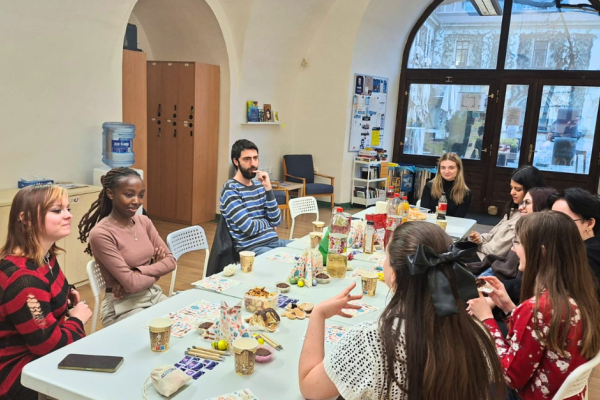
Day three focused on active participation and exchange. The programme included a student community engagement workshop, which highlighted the diversity of Aurora universities and their national contexts, as well as peer-to-peer learning and public speaking workshops. The conference concluded with a cultural exchange moment: students shared traditional food from their home countries, creating a vibrant space for informal dialogue and mutual discovery.

Aurora Student Council Board members present achievements of the student community in the last year

Overall, the Aurora Student Conference 2026 proved to be an intense and enriching experience, fostering open-mindedness, dialogue and collaboration among Aurora students, and further strengthening the sense of community within the alliance.

Joint Statement – A stronger Europe needs a properly funded Erasmus+

07 January 2026

Aurora Universities has joined forces with 16 other European higher education organisations to issue a joint statement calling for an Erasmus+ budget of at least €60 billion for 2028–2034. The statement, published on 7 January 2026, urges the European Parliament, the European Commission, and Member States to significantly increase Erasmus+ funding to meet the programme’s ambitions.

Aurora is fully committed to the success of Erasmus+. The Aurora 2030 programme has made great progress on international cooperation and student and staff exchanges. However, the proposed budget will not suffice to maintain mobility and cooperation at scale, nor to broaden efforts and societal impact.

This joint statement, therefore, highlights the importance of securing funding aligned with Erasmus+’s ambitious objectives. This will allow the higher education organisations to secure one of Europe’s most tangible success stories, which will positively impact employability, innovation capacity and civic engagement across Europe.

Read the full statement here 

For more information, please contact Pim de Boer (senior policy advisor) or Ramon Puras (secretary general)

Aurora in 2026: New Year Message from Aurora Secretary General Ramon Puras

Ramon Puras, Aurora Secretary General, meets 2026 with a message focused on major achievements in Aurora, future developments and gratitude to the Aurora community. 

Looking back on 2025, Aurora continues to be a shared space to experiment, learn, and rethink how higher education institutions serve society.

Some of our key achievements as a community:

As we move into 2026, we aim to build on this momentum to:

  • Further develop our Aurora 2030 alliance projects
  • Sharpen our educational roadmap
  • Expand collaboration with like-minded networks, such as the City Science Initiative
  • Deepen our work with the University of Sussex, made even stronger by the renewed academic collaboration between the UK and the European Union.

Most of all, we would like to express gratitude to the Aurora community.

To our universities’ visionary Presidents and Vice-Rectors.
To our fantastic Institutional Coordinators.
To our Aurora Student Council, who keeps us abreast of our students’ needs.
To our Aurora Central Office team, the motor of Aurora.
To all academics, staff and students involved in Aurora.

Their commitment and energy make Aurora what it is.

Our 10 years together in Aurora is coming up! We will be marking this moment during the Aurora Annual Conference 2026 at the University of Duisburg-Essen from 19 to 22 May.

Ramon Puras
Aurora Secretary General

With our universities: Vrije Universiteit Amsterdam (VU Amsterdam), University of Iceland, University of Duisburg-Essen, Universitat Rovira i Virgili, Universität Innsbruck, Università Federico II of Naples, Palacký University Olomouc, Université Paris-Est Créteil, Copenhagen Business School, Simon Fraser University, V. N. Karazin Kharkiv National University, South-West University “Neofit Rilski”, Pavol Jozef Šafárik University in Košice and University of Tetova.

A Broader Mind event at VU Amsterdam

On 15 October 2025, educators and academic leaders from across Aurora gathered at VU Amsterdam to explore an innovative approach to interdisciplinary education: the A Broader Mind Course. Organised by the Digital Society and Global Citizenship Hub, the event offered Aurora partners a unique opportunity to experience first-hand how VU Amsterdam prepares students to engage with complex societal challenges through cross-disciplinary thinking.
Developed by Prof. Govert Buis, the A Broader Mind Course challenges early-stage students to look beyond their primary discipline, guided by more advanced peers. Through diverse academic perspectives, students develop a holistic understanding of pressing societal issues: a mindset they carry throughout their academic journey.

From Concept to Collaboration

The day brought together teachers, students, educational advisors, researchers, policy staff, and programme directors to dive deep into the A Broader Mind methodology. Prof. Buis introduced the course’s pedagogical foundations, followed by a hands-on session where participants engaged with a concrete course assignment, experiencing the interdisciplinary approach from a student’s perspective.
The heart of the event was dedicated to ideation: working groups explored how A Broader Mind could evolve into a true Aurora-wide initiative. Participants discussed various implementation models: from flex mobility arrangements and local course variants to student exchange opportunities and joint programme development across partner institutions.

Building a Broader European Education

The event concluded with plenary feedback sessions where groups shared their visions for bringing A Broader Mind to their own universities, creating a roadmap for follow-up collaboration.
The A Broader Mind Event demonstrated how peer-guided interdisciplinary learning can make teaching more engaging, curricula more relevant, and institutional societal impact more profound. It marked an important step in the Aurora community’s shared mission to transform higher education across Europe, preparing students not just for their chosen fields, but for the complex, interconnected challenges of our time.

Aurora Showcased at CEEDUCON Conference in Prague

On 19 and 20 November 2025, Palacký University Olomouc (UP) represented Aurora at CEEDUCON 2025, one of Central Europe’s leading conferences on the internationalisation of higher education. The seventh edition of the event, formerly known as CZEDUCON, brought more than 900 participants to Prague’s O2 Universum.  Over the course of two days, they participated in expert lectures, interactive sessions, and exchange among practitioners and policy makers.

The Czech National Agency for International Education and Research organised CEEDUCON, together with several other central European Agencies such as DAAD and OEAD. It serves as a key platform for advancing dialogue on global engagement in higher education. This year’s programme featured over 50 sessions and focused on themes central to Aurora’s mission. These included Internationalisation for All, strategic Global & Regional partnerships, Smart & Sustainable International Cooperation, and Alumni, Employability & Future Skills.

Representatives of Palacký University Olomouc participated in discussions, panels, and workshops. They shared their institutional experience and achievements, contributing Aurora’s perspective to the broader European conversation on higher-education cooperation.

Strengthening Stakeholder Engagement

The UP Aurora Office prominently highlighted Aurora in two sessions, also featuring Aurora associate partner Pavol Jozef Šafárik University in Košice (UPJS).

Selma Porobić, Aurora Institutional Coordinator at UP, chaired a panel “Advancing Strategic Global & Regional Partnerships: Insights and Lessons from European University Alliances”. It featured contributions from Silvia Ručinská (UPJS), as well as Magdalena Sikorska (EUNICE Alliance) and John Gardiner (Ulysseus Alliance). The discussion drew on experiences from the FOREU4ALL Topical Group – Internationalisation and Global Outreach, chaired by Selma, Magda and John.   

The panel featured three concrete case studies of best practices:

  • Aurora  – a regional cooperation model focused on structured outreach and capacity-building in the CEE region;
  • Ulysseus – showcasing global strategic programmes and multi-continent partnerships;
  • EUNICE – presenting global gateway initiatives and innovative formats for inclusive stakeholder collaborations.

Additionally, Niels Hexspoor, Aurora Engagement and Impact Leader at UP, led an interactive workshop that explored how European university alliances can create inclusive and future-proof student communities in “Next Gen Student Communities: Futures Thinking for European Universities”. In the workshop, participants were challenged to imagine different possibilities for inclusive student engagement.

UP’s active presence at CEEDUCON 2025 was a great opportunity to demonstrate Aurora’s commitment sharing and learning with other higher education professionals to shape the future of European higher education—foregrounding openness, inclusivity, and strategic partnership building as shared priorities across Europe.

From City to Countryside, From Laboratory to Practice: Palacký University Hosts Dual BIP on Sustainability

At the end of November 2025, Palacký University Olomouc hosted two Blended Intensive Programmes (BIPs): Cultivating Futures and From the City to the Country. Participants from across Aurora took part in a week of lectures, workshops, and field activities. These focused on sustainability, urban resilience, and cultural heritage.

The programme was coordinated by the Faculty of Arts with support from the Faculties of Science and Law and CATRIN. It was led academically by Assoc. Prof. Pavlína Flajšarová, and organised by Marie Sieberová.

The week began with sessions on natural resource management, circular economy, and biotechnology, followed by a field visit to the Molitor House and the Cathedral District. Subsequent days covered urban archaeology, urban heat islands, and nanotechnologies, along with structured spaces for sharing research and building international cooperation.

Then, a full-day excursion to the Lavender Farm in Bozděchov and Úsov Castle placed environmental topics in cultural and historical context. Additional workshops addressed plant physiology, examples of green urban development, and environmental law.

Throughout the programme, students engaged in training for the Three Minute Thesis (3MT) competition, aimed at improving skills in communicating scientific research clearly and concisely.

The week concluded with the 3MT final. Under the guidance of Suzanne Whitby and Prof. Toby Wikström, students presented their projects to a jury.

Winners:

  • 1st place: Grigor Vrhovac (Universität Innsbruck)
  • 2nd place: Livia Hökl (Universität Innsbruck)
  • 3rd place: Julia Kianzad (University of Duisburg-Essen)
  • Audience Award: Xin Chen (University of Iceland).

After the competition, a closing lunch provided space for informal exchange and reflection. The event demonstrated the value of interdisciplinary learning and cooperation across Aurora institutions.