News
April 16, 2026
Introducing the Doctoral Candidates of the seizmic Doctoral Network
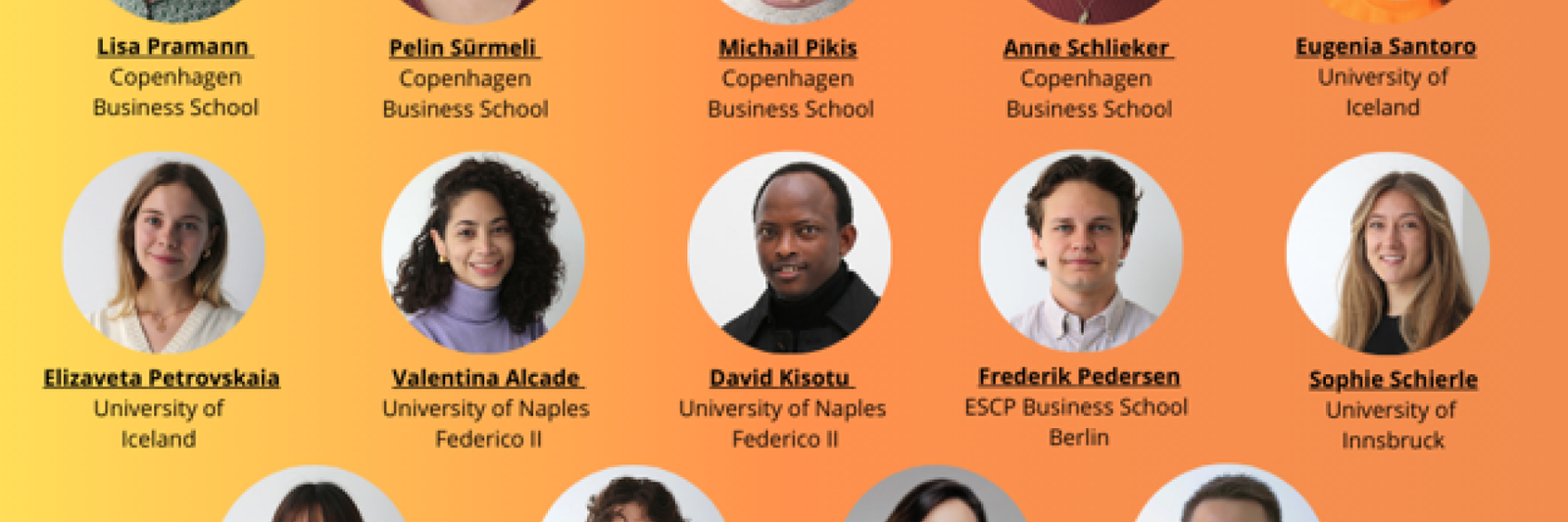
The seizmic Doctoral Network, developed within Aurora Universities, engages 15 early-career researchers working on the theory and practice of scaling social entrepreneurship. Funded by the Marie Skłodowska-Curie Actions (MSCA), the network integrates expertise in impact investing, business model design, education, and AI-driven technology. The seizmic Doctoral Network is a project developed within Aurora Universities, involving several universities in Aurora and more than 15 non-academic partners. It aims to connect research across member institutions and reinforce Aurora’s commitment to social impact and sustainability.
The network is structured into four interconnected research-based work packages and the 15 doctoral candidates are distributed across these work packages. To enhance research impact and strengthen doctoral training, the Doctoral Network is based on international mobility, requiring at least two secondments per doctoral candidate, including one academic and one non-academic placement. This cross-institutional collaboration supports the career development of doctoral candidates and fosters scientific exchange.
The seizmic Doctoral Network Candidates and their projects
Social Business Models Work Package 2, “Shifting Paradigms to Social Business Model Design,” examines how innovative and sustainable business models can enable social enterprises to grow while maintaining their social mission. This work package investigates design practices, foresight approaches, and collaborative frameworks that facilitate scaling in diverse contexts.
- Frederik Hovmark Pedersen ESCP Business School, Germany — Supervisor: Florian Lüdeke Frederik studies business model design and cross-sector collaboration, classifying design patterns and collaborations to understand their effect on scaling social entrepreneurship.
- Eugenia Santoro University of Iceland — Supervisor: Lára Jóhannsdóttir Eugenia uses qualitative, case-based methods to explore how transparency and impact measurement influence the design and scalability of social business models, and to understand their interplay in social entrepreneurship scaling.
- Valentina Alcalde Gómez University of Naples Federico II, Italy — Supervisor: Ramon Rispoli Valentina researches alternative design practices that support healing and regeneration in communities undergoing socio-ecological transition, with a focus on the Global South.
- Anika Keils Université Paris-Est Créteil, France — Supervisor: Felipe Koch Anika investigates social foresight methods supporting the design and scaling of social business models, using participatory, future-oriented approaches.
Impact Investing Work Package 3, “Impact Investing for Social Entrepreneurship Scaling,” explores financial mechanisms that sustain and accelerate the growth of social enterprises. It examines interactions between impact investors and social enterprises, the role of hybrid financing instruments, and the management of tensions between financial returns and mission fidelity throughout the investment cycle.
- Lisa Pramann Copenhagen Business School, Denmark — Supervisor: Kai Hockerts Lisa examines how impact investors can drive systemic change and scale social entrepreneurship by analysing how financial actors serve as catalysts for societal transformation.
- Elizaveta Petroskaja University of Iceland — Supervisor: Magnus Torfason Elizaveta investigates how social enterprises maintain mission throughout the investment lifecycle, focusing on the tension between scaling ambitions and social fidelity.
- Zhihui Chen Universitat Rovira i Virgili, Spain — Supervisor: Xiaoni Li Zhihui examines the role of impact investment in social enterprise scaling, aiming to identify financing strategies that balance the needs of enterprises and investors.
- Bao Toan Le University of Aalborg, Denmark — Supervisor: Svenja Damberg Bao Toan investigates financial instruments driving social enterprise growth, with a focus on the effectiveness of hybrid and impact finance mechanisms in scaling.
Education & Competencies Work Package 4, “Competencies and Education for SE Scaling,” looks at the human and educational dimensions of scaling. It studies the role of educators, mentoring structures, and competency frameworks in preparing social entrepreneurs to navigate complexity. Special attention is given to inclusive education practices and to the integration of emerging tools, such as AI tutors, into pedagogical settings.
- Anne Schlieker Copenhagen Business School, Denmark — Supervisor: Kristian Roed Nielsen Anne researches social entrepreneurship education, integrating futures thinking and systems thinking to strengthen teaching practices that prepare students for complex entrepreneurial challenges.
- Pelin Sürmeli Copenhagen Business School, Denmark — Supervisor: Florence Villesèche Pelin examines the macro-level impact of social entrepreneurship through Institutional Theory, focusing on FemTech and how social ventures drive systemic change in gender-specific sectors.
Digital Ecosystems & AI Work Package 5, “Digital Ecosystems and Artificial Intelligence Use,” investigates how digital platforms, ecosystems, and artificial intelligence tools foster the scaling of social enterprises. It addresses topics such as AI-driven mentoring systems and the role of digital ecosystems in marginalised or conflict-affected regions, aiming to develop technological solutions that are socially inclusive and mission-oriented.
- Michail Skalistiris Pikis Copenhagen Business School, Denmark — Supervisor: Torkil Clemmensen Michail examines how GPT-based AI mentors can support creativity and learning among social entrepreneurs, helping them identify social issues and design innovative business models.
- David Melubo Kisotu University of Naples Federico II, Italy — Supervisors: Vincenzo Rispoli David investigates digital ecosystems in marginalised contexts, focusing on how AI and social media platforms shape social enterprise innovation in Kenyan startups and contribute to innovation at the margins.
- Sophie Schierle University of Innsbruck, Austria — Supervisor: Johann Füller Sophie explores how AI-driven tools can support social entrepreneurship and sustainable innovation, with applications in resource allocation, impact measurement, and stakeholder engagement.
- Sarbinaz Nagyzkhan University of Innsbruck, Austria — Supervisor: Johann Füller Sarbinaz analyses how communities in conflict zones create digital ecosystems of self-organised networks and develops practical recommendations for municipalities supporting local resilience.