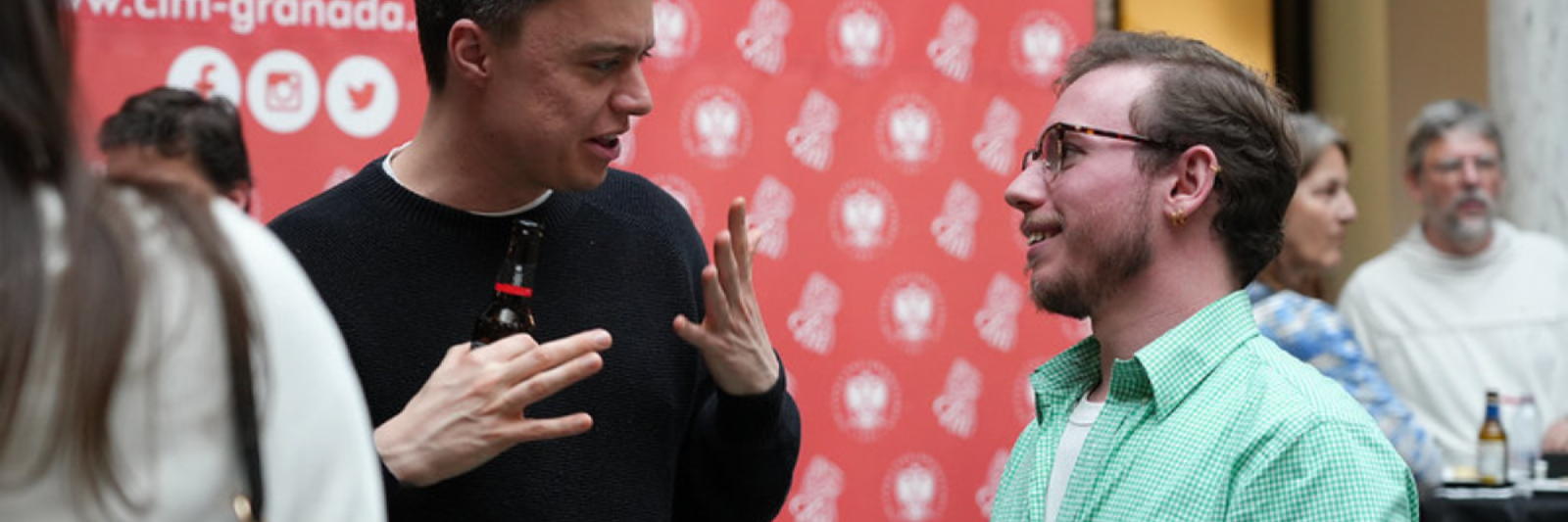
Two Aurora representatives from the Aurora Central Office and Université Paris-Est Créteil (UPEC) attended the FOREU4ALL Workshop on “Aligning Project Management and Impact: A Practical and Strategic Dialogue for European University Alliances”. Held from 15 to 17 April 2026 at the Universidad de Granada within the Arqus Alliance, the event brought together more than 140 representatives from across Europe to exchange on the link between project management practices and impact measurement in the context of European cooperation.
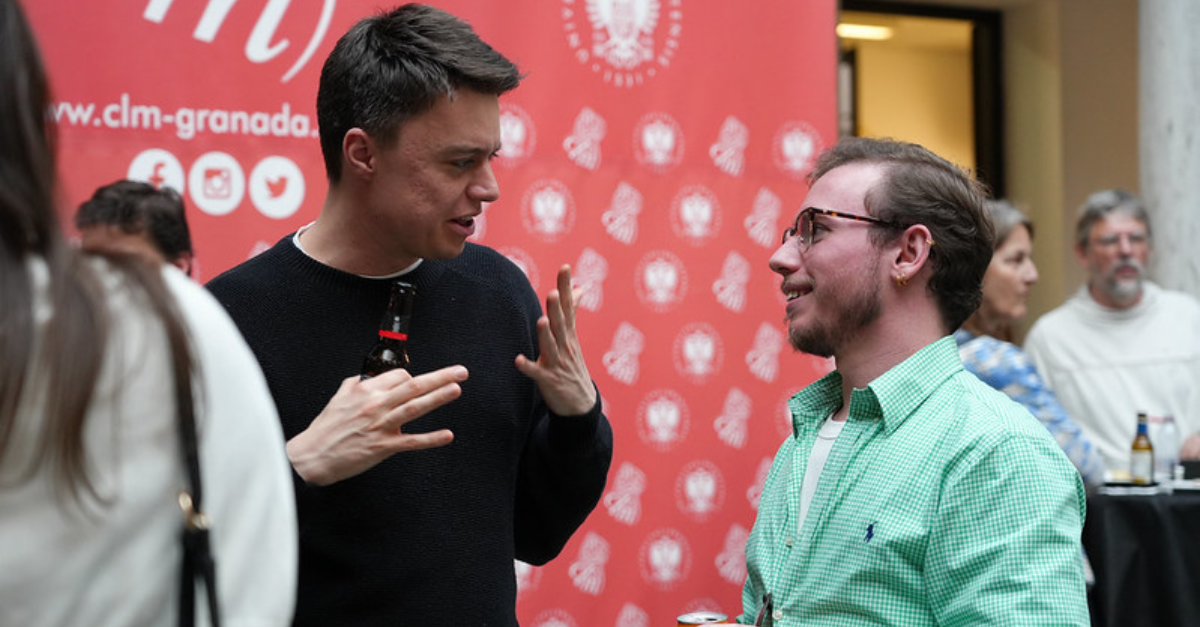 From left to right: Alexander Lindemans (Aurora Central Office) and Matthieu Danteny (Université Paris-Est Créteil)
Project Management And Impact Across European Universities Alliances
The first day of the workshop focused on key dimensions of project management and impact, including planning, data collection, communication, and strategic coordination. Through a World Café format, participants shared practices and reflected on common challenges across alliances. These exchanges highlighted the diversity of institutional approaches while also underlining the need for more coherent and aligned frameworks to support collaboration at scale.
A recurring theme throughout the discussions was the growing importance of impact in European projects, alongside the continuing complexity of defining and assessing it across different institutional contexts. Matthieu Danteny, Deputy Head of the Strategy and Major Projects Unit at UPEC, highlighted this convergence of challenges across alliances:
“Thanks to this World Café format, I was able to quickly discuss with people from other alliances and share my vision on the current state of impact assessment in Aurora. I never had the chance to exchange with counterparts about this topic, and I learned that the majority of them has the same issues, questions, and needs for clarification.”
Developing Operational Tools For Measuring And Structuring Impact
The second day of the workshop shifted towards more operational discussions, focusing on tools and methodologies for integrating impact into project management practices.
In the session “Tools for Challenge 1 – Planning for Impact”, participants explored ways to anticipate, structure, and monitor impact across projects. Outcome of the discussions emphasised the need for flexible and adaptable tools capable of supporting both strategic planning and day-to-day implementation across different alliance settings.
A poster session complemented the workshops, enabling participants to compare approaches and share tools already developed within their respective alliances, further strengthening peer learning and exchange of best practices.
Shared Reflections Across Aurora
From Aurora’s perspective, the workshop contributed to broader reflections on the challenge of ensuring coherent and meaningful approaches to impact across alliances, as well as on the need to combine quantitative indicators with qualitative understanding of project outcomes.
Alexander Lindemans from the Aurora Central Office underlined that impact cannot be fully understood through quantitative indicators alone. He said, “At the same time, it became clear that impact is going to be a key element in final reporting, and not an easy one. Measuring it is complex, and there was a shared recognition that numbers alone don’t tell the full story. Qualitative insights are just as important in capturing what projects actually achieve.”
He further stressed on the importance of aligning internal processes with external expectations, a difficulty shared across European university alliances as they continue to develop their cooperation frameworks, particularly in relation to reporting requirements and long-term coordination.
The workshop concluded with the development of a joint roadmap aimed at strengthening data management and improving impact reporting practices across alliances. Informal exchanges throughout the event also played a key role in fostering dialogue, trust, and peer learning among participants.