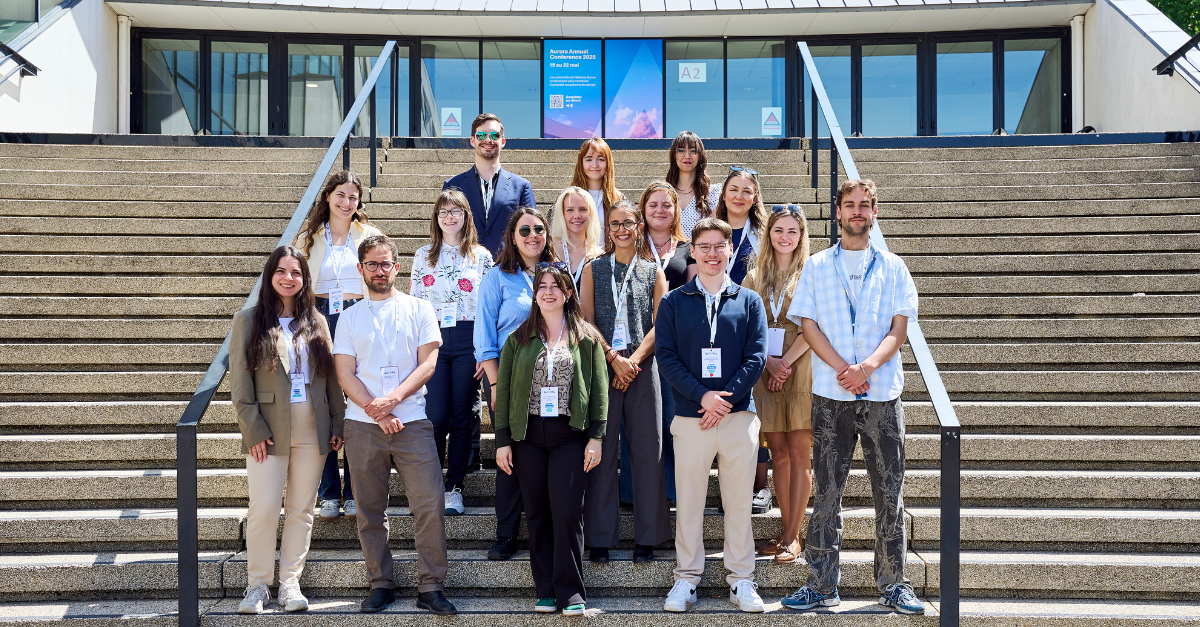
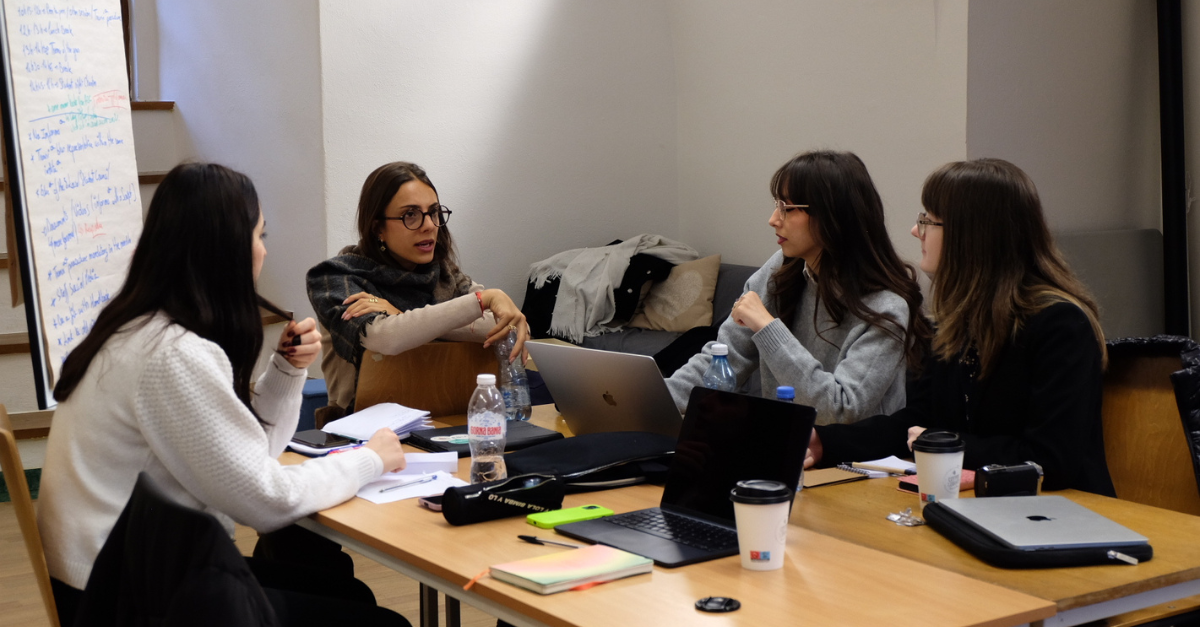
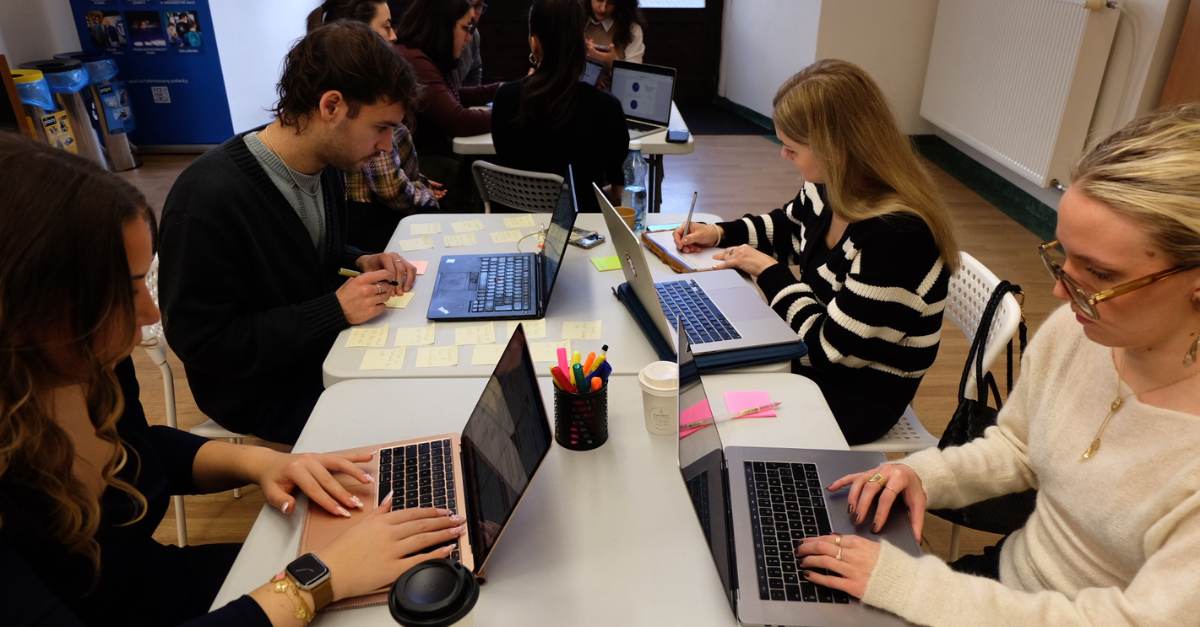
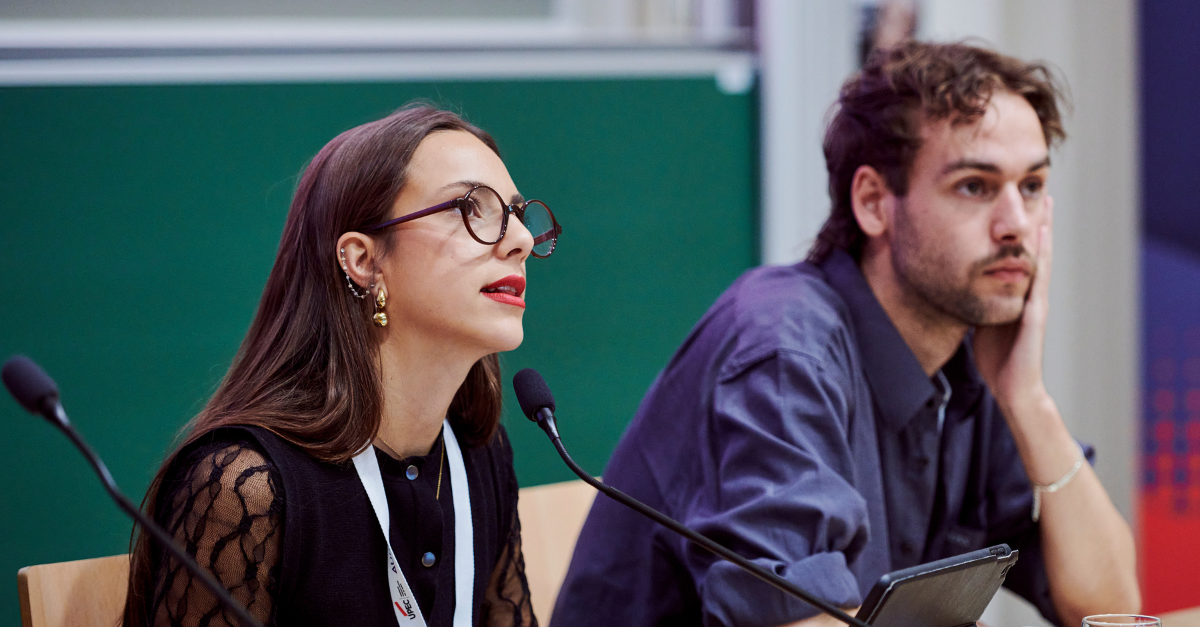
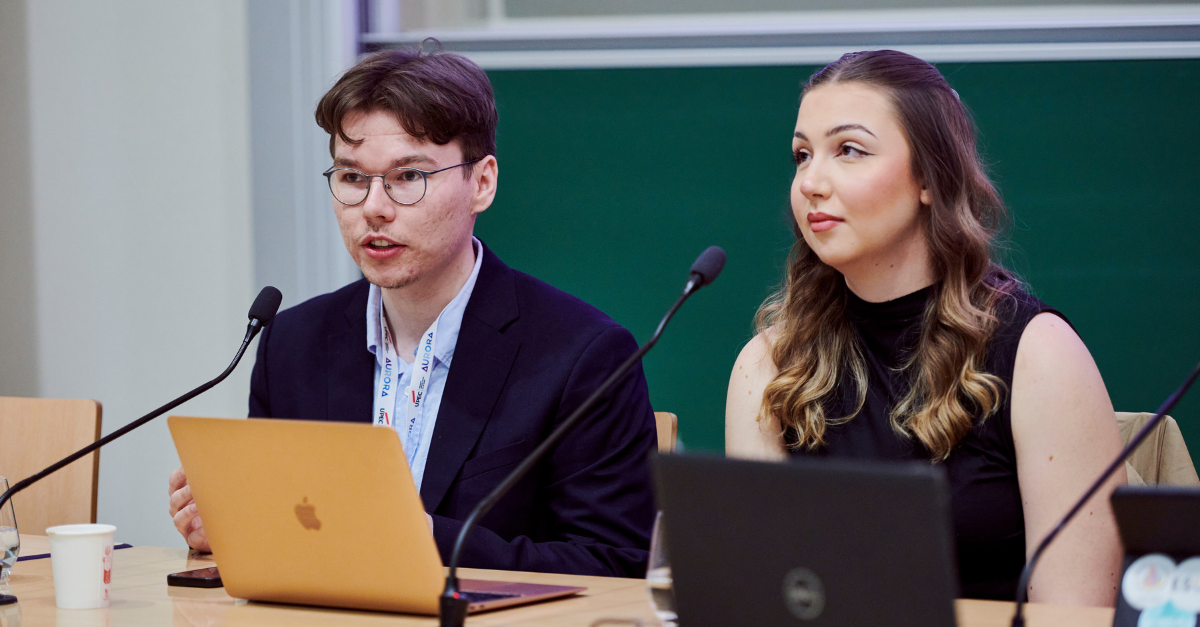
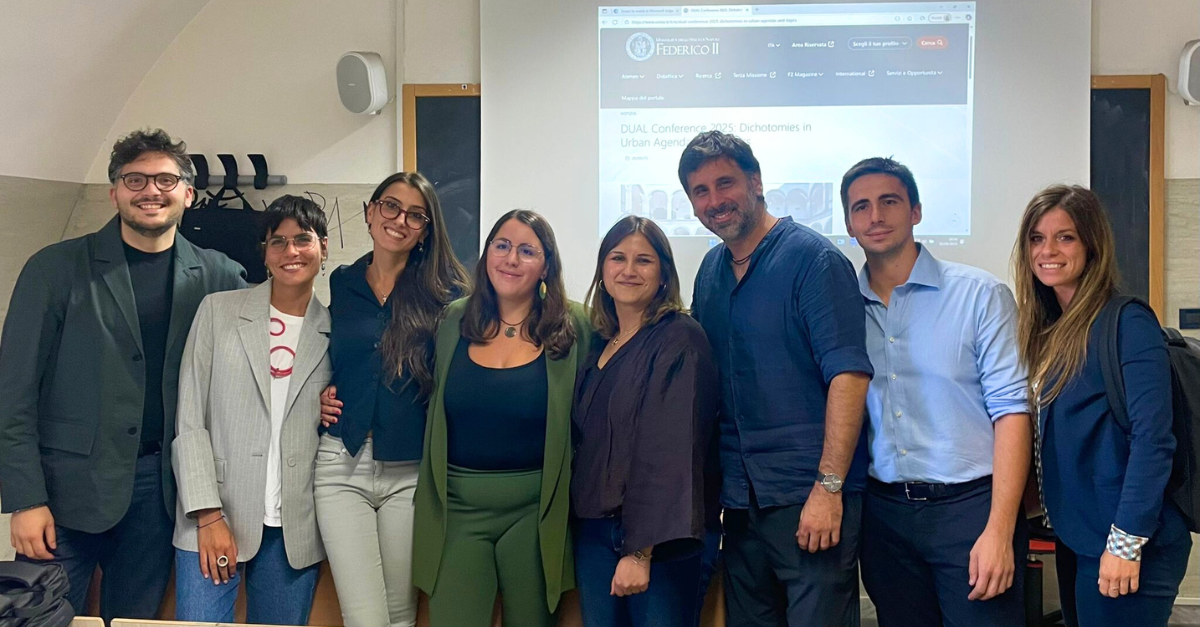
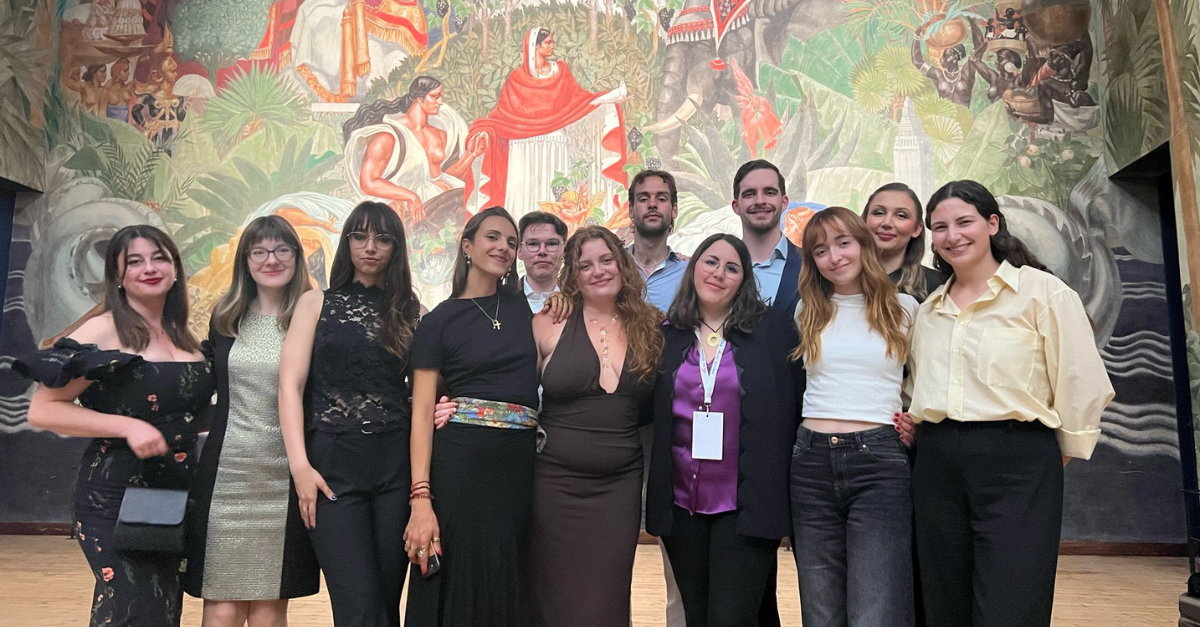
On 29 and 30 September 2025, the Università Federico II of Naples (UNINA) hosted the Aurora Academic Conference DUAL: Dichotomies in Urban Agendas and Logics, bringing together distinguished scholars, researchers and practitioners. Jointly organised by the University of Duisburg-Essen (UDE) and UNINA, the conference reflected Aurora network’s commitment to collaborative research and dialogue across European institutions.
Held at the Department of Humanities, the two-day event explored the complexities of urban design, cultural identities, and social well-being. It provided a unique forum for dialogue on how cities embody and negotiate contrasting dynamics between branding and dissent, identity and transformation, and aesthetics and functionality.
The opening session was introduced by Alessandro Arienzo, Aurora Institutional Coordinator and UNINA. His introduction was followed by Francesca Scamardella, Coordinator for Aurora 2030 task team on the Aurora hub for Cultures: Identities and Diversities. For the purpose of the conference, Scamardella framed the upcoming discussions within the broader context of establishing this Aurora hub.
Rich Transversal and Transdisciplinary Sessions
Over the two days, the conference covered four major sessions, and included a keynote lecture that set the tone on the multiple dichotomies existing in cities and urban spaces, that cut across its material, social, political and symbolic dimensions:
Urban Design and Dichotomies
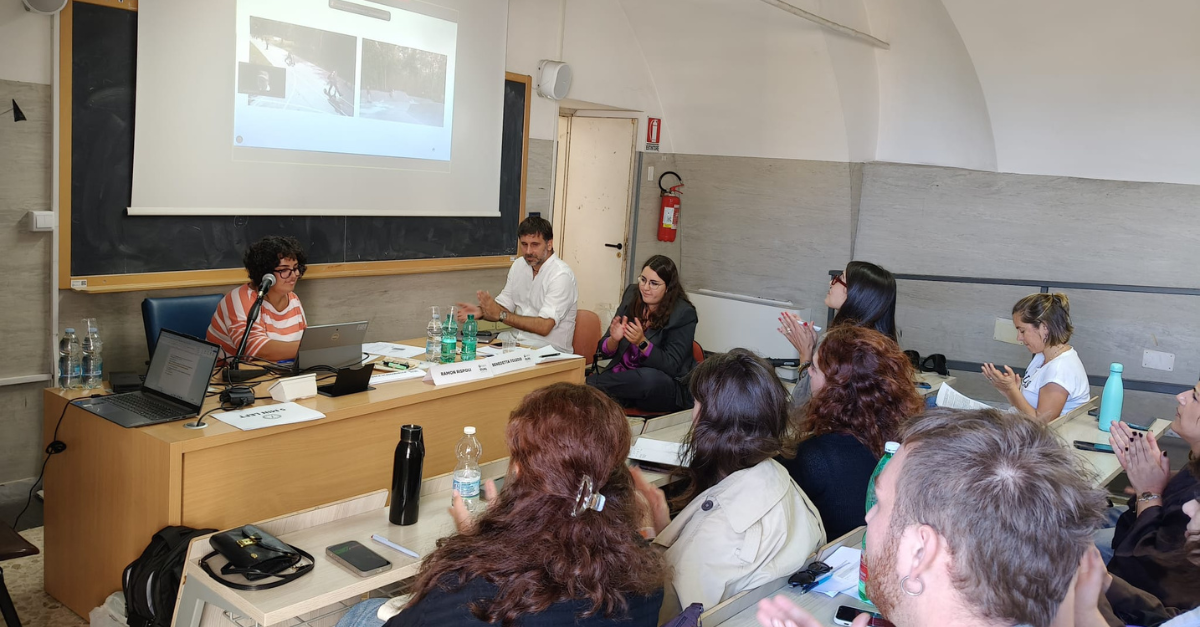
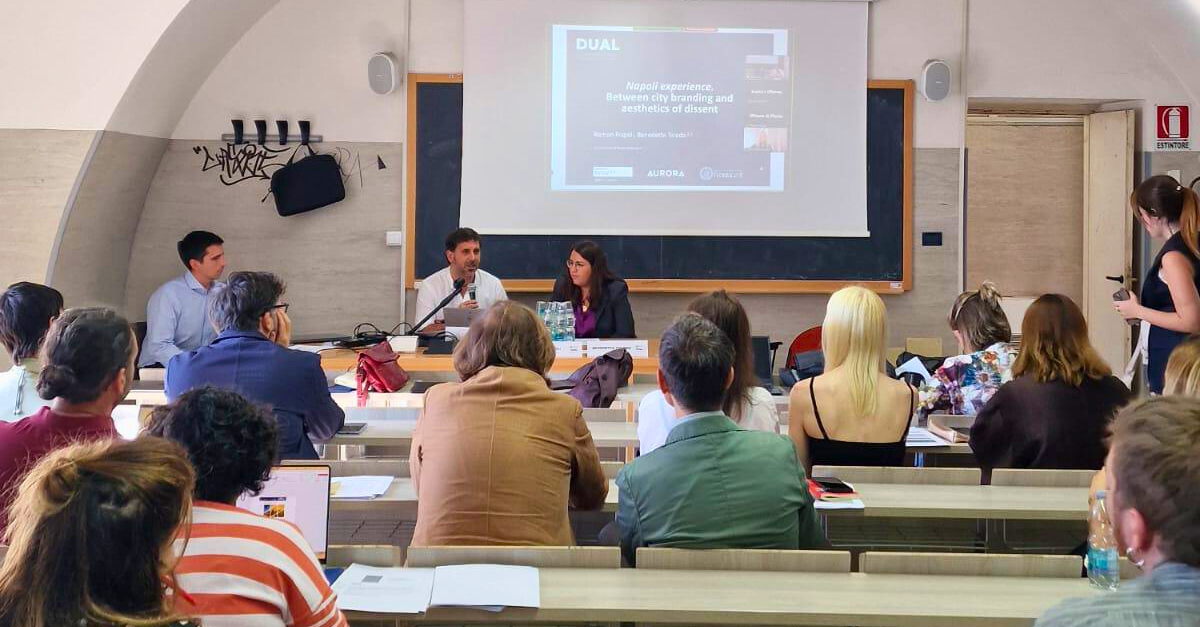
Chaired by Ramon Rispoli, Associate Professor of Design at the Department of Architecture, and Benedetta Toledo, doctoral candidate from UNINA, Session 1 examined “Urban Design and the City’s Dichotomies”. The session opened with a reflection on the “Napoli experience. Between city branding and aesthetics of dissent” (Rispoli and Toledo). The conversation highlighted Naples as a living laboratory where urban narratives are continuously redefined by its cultural and social tensions.
Humanities Perspectives in Dialogue
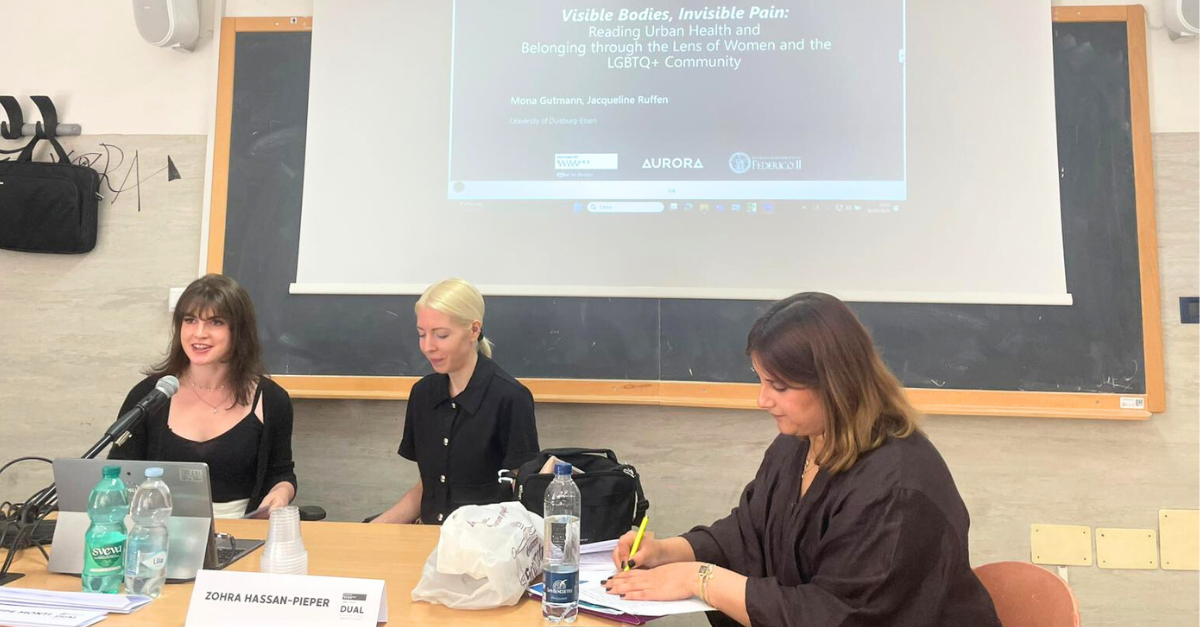
Session 2 was chaired by Zohra Hassan-Pieper, Aurora 2030 Work Package 2 Project Manager from UDE. It explored “Humanities Perspectives on Urban Dichotomies”, beginning with the thought-provoking introduction “Urban Dichotomies in the Arts”. Their interdisciplinary approach emphasised the centrality of culture and artistic expression in shaping collective urban imaginaries.
Holism, Wellbeing, and Case Studies
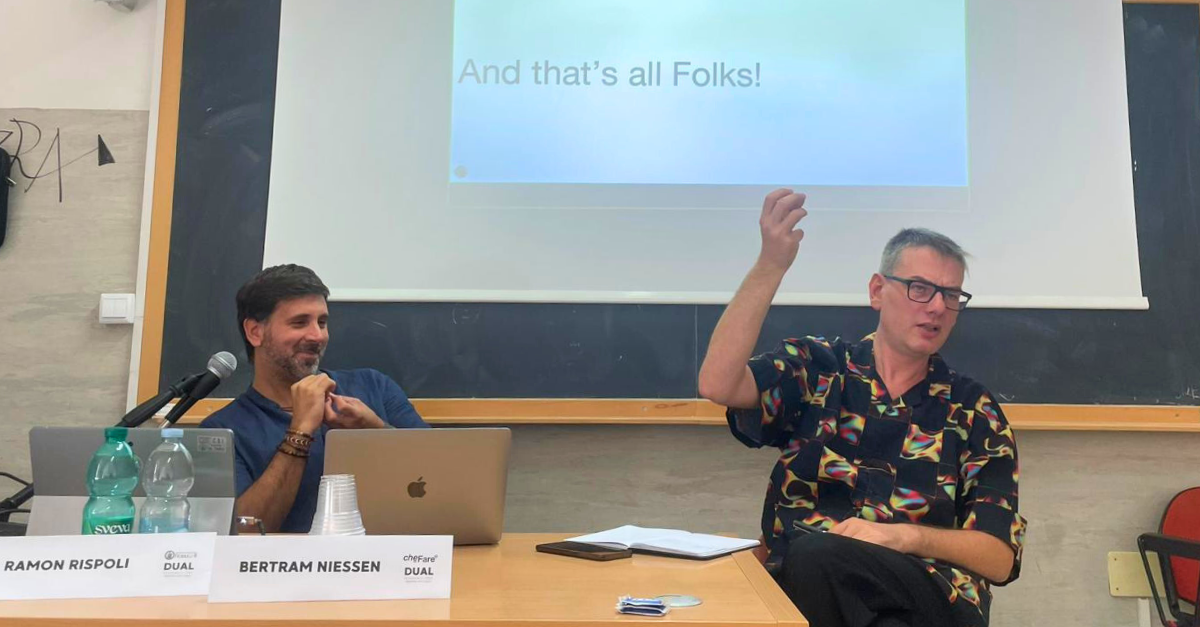
The second day opened with a keynote lecture by Bertram Niessen, President and Scientific Director of cheFare. Entitled “Heaven, Hell and the Microcosms. Dualism and holism in metaphors and imaginaries of the City”, Niessen’s contribution invited participants to reconsider the metaphoric and symbolic dimensions of urban life.
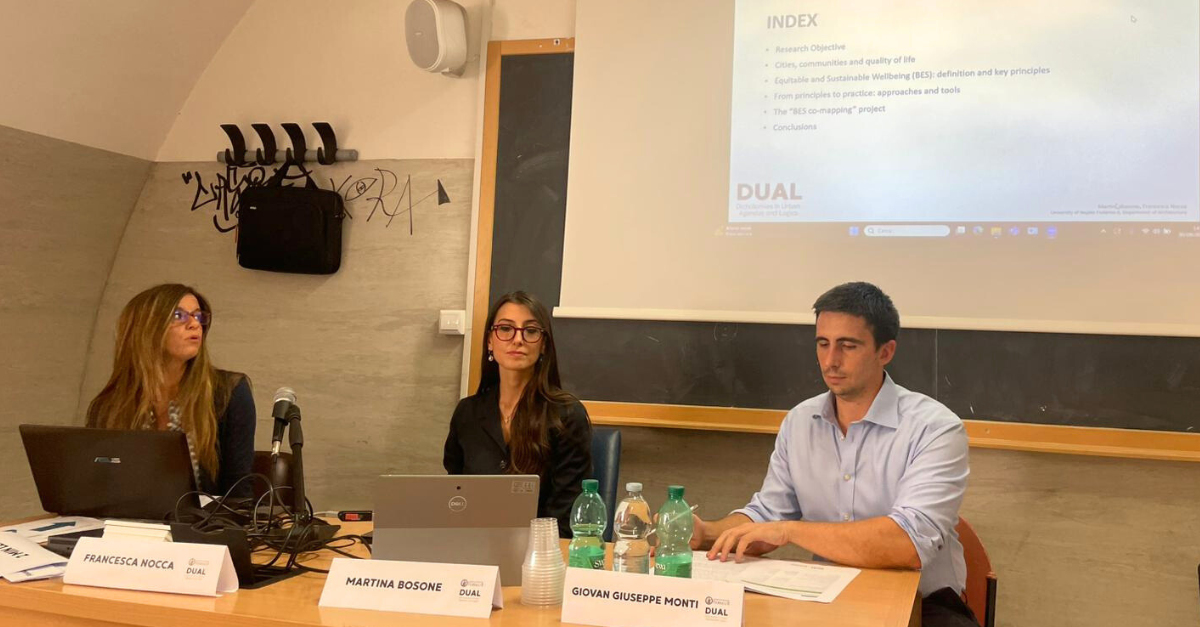
Session 3 further deepened the discussion with an introduction by Martina Bosone and Francesca Nocca, both from the Department of Architecture at UNINA. They presented “Wellbeing and not-wellbeing in Naples: the community’s perspective. Development of a collaborative map”. Giovan Giuseppe Monti from UNINA followed with a historical perspective through “The Republic of Venice in the 17th century as a case study”.
In the final session, all themes from the first three sessions and the keynote lecture converged to bring “Grounded Dichotomies: Case Studies”. Chaired by Martina Bosone and Giovan Giuseppe Monti, the session underscored the importance of case-driven research for understanding how dichotomies manifest in specific urban contexts and how they can inform policy, planning, and community engagement.
Closing Reflections
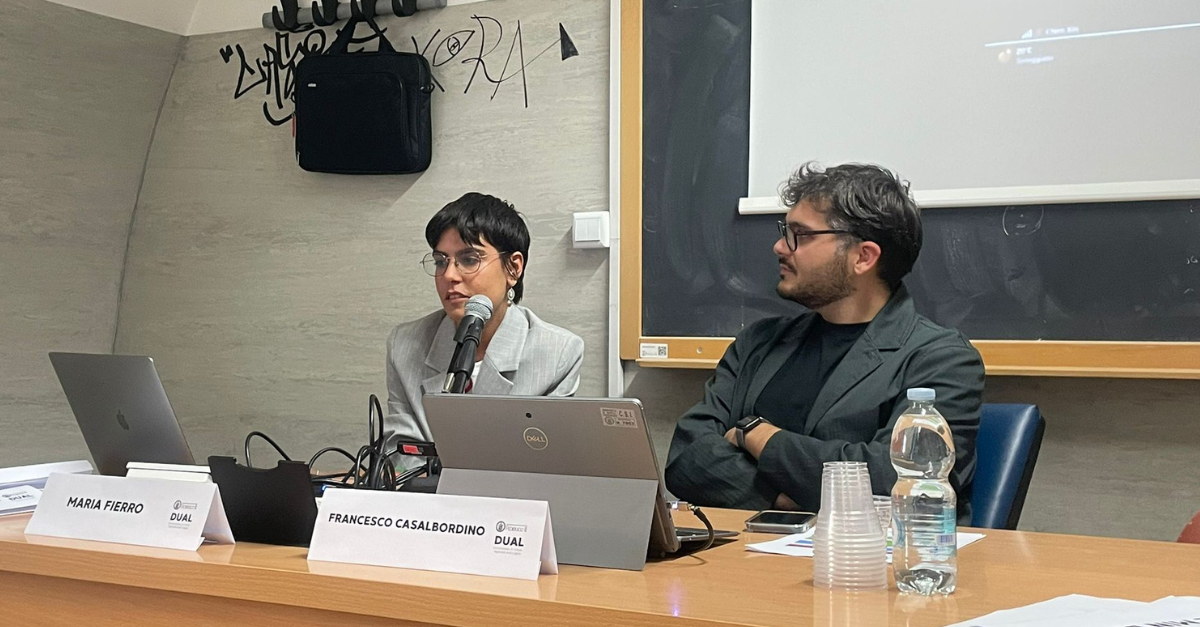
The conference concluded with final remarks by Francesco Casalbordinio and Maria Fierro of UNINA, who emphasised the collaborative spirit of Aurora in fostering interdisciplinary and transnational dialogue.
Numerous abstracts from researchers and student presentations enriched the conference, spanning diverse themes and institutional affiliations, and exploring the many fascinating dichotomies of urban life. All contributions—both abstracts and full papers—will be collected and published in the conference proceedings, ensuring that the insights generated during DUAL remain accessible to the broader academic community.
The DUAL conference reaffirmed Aurora’s mission to integrate diverse perspectives and methodologies, advancing research and education that respond to the challenges of contemporary urban life. Through the contributions of chairs and speakers, the event highlighted the power of academic cooperation in addressing the complexities of our cities, making visible the tensions and opportunities that shape the future of urban societies.
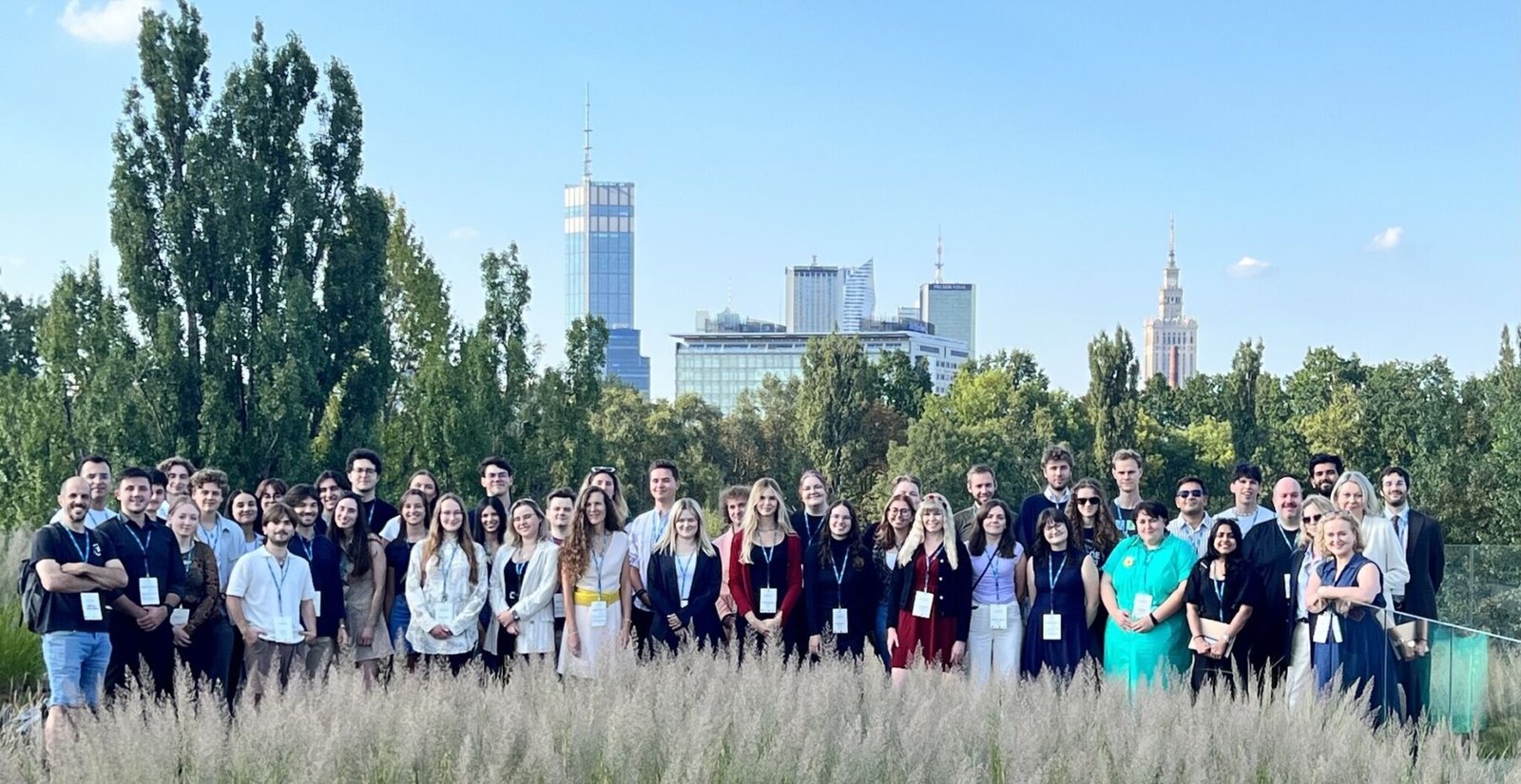
From 4 to 6 September, Aurora Student Council President Simona Gibalová from Pavol Jozef Šafárik University in Košice, represented Aurora during the EUSAF 2025 meeting at Warsaw SGH School of Economics.
EUSAF 2025 gathering of student representatives from European Universities Alliances across Europe
EUSAF (European Universities Student Ambassador Forum) meetings are all about connection and collaboration. They bring together students, alumni, and young professionals from across Europe to swap ideas, share experiences, and spark new projects. More than just formal sessions, these gatherings create a lively space for networking, learning, and building friendships that last well beyond the event.
Each European Universities alliance sends one representative to share good practices with students who may experience the same issues and create solutions to the problems that alliances may face together. By enabling students to create a unique space to exchange different perspectives, these in-person meetings are vital moments in ensuring a better collaboration on a European level.
Setting the Stage on International Student Engagement
EUSAF sessions were opened by the following engaging keynote speakers:
Constance Chevalier-Govers, Erasmus Project Coordinator from EUC Voices
Katarzyna Aleksy, Director of Higher Education Programmes Department from National Agency for the Erasmus+ and ESC Programmes
Malgorzara Chromy, Director of SGH International Centre.
They brought the students a professional perspective on international student engagement and how these roles function from the perspective of national agencies.
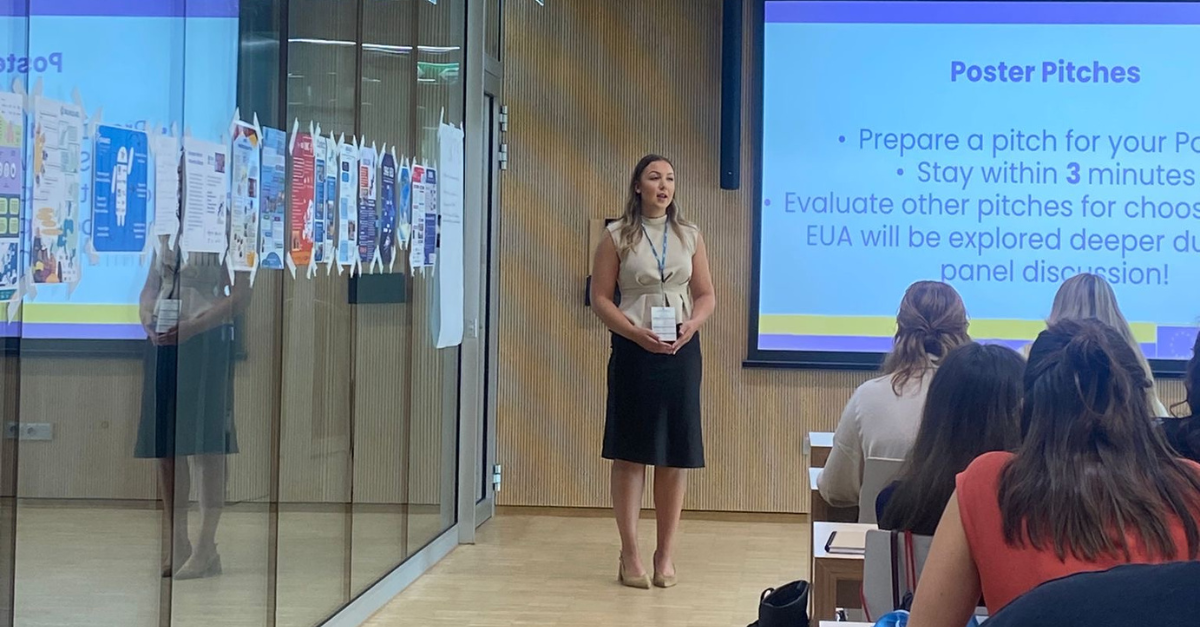
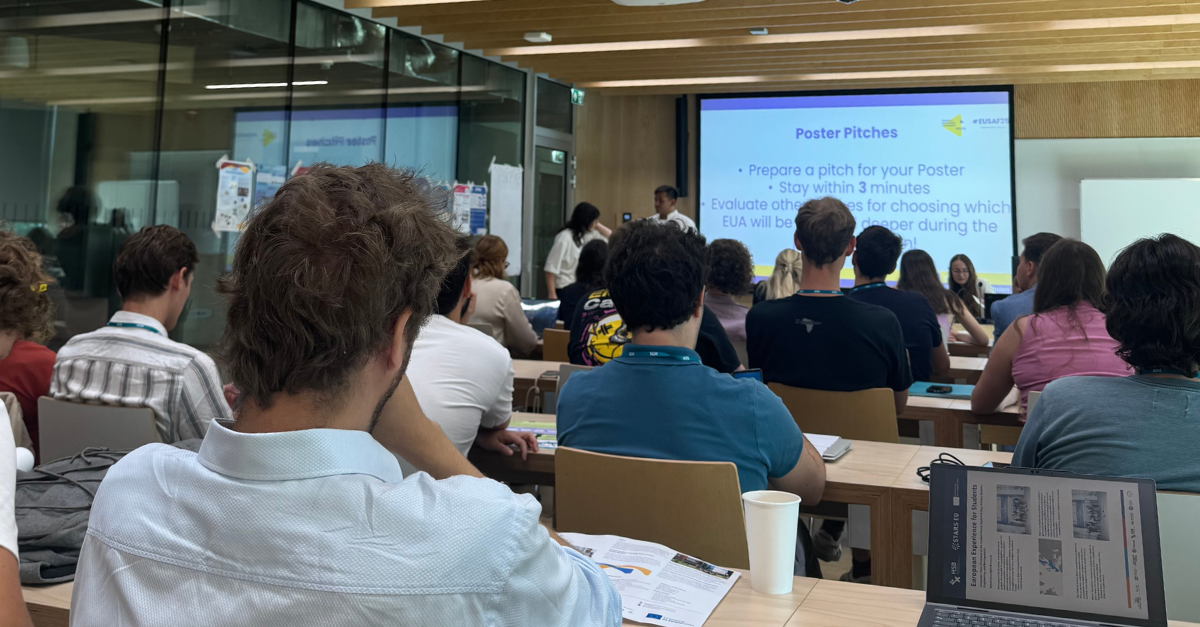
EUSAF 2025 poster pitch session and presentation
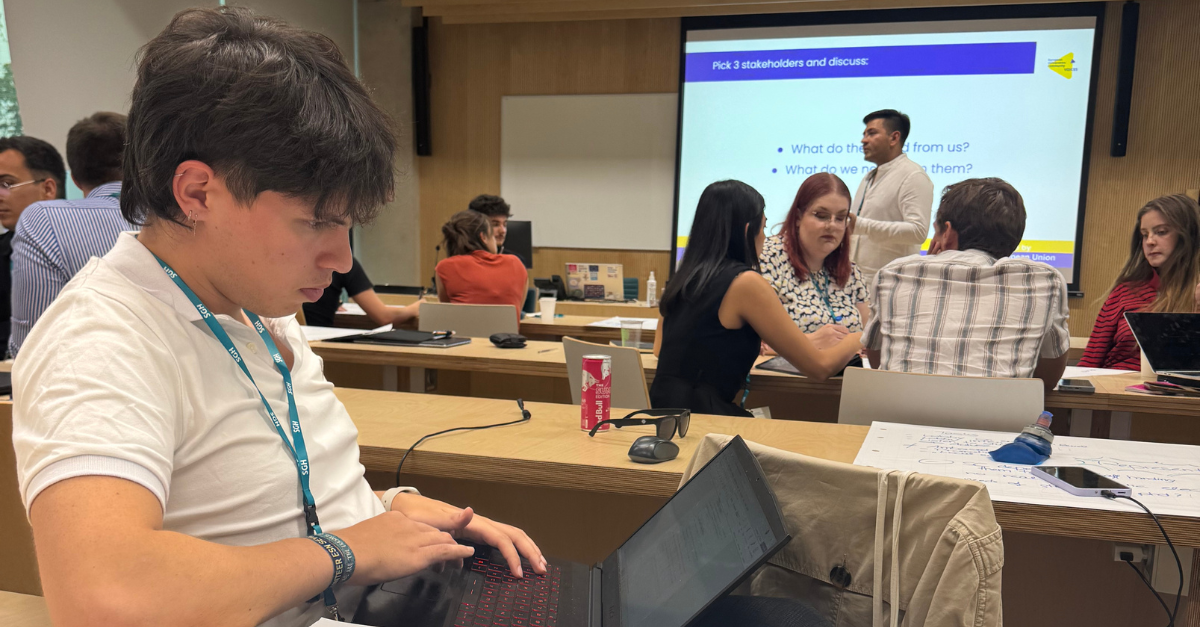
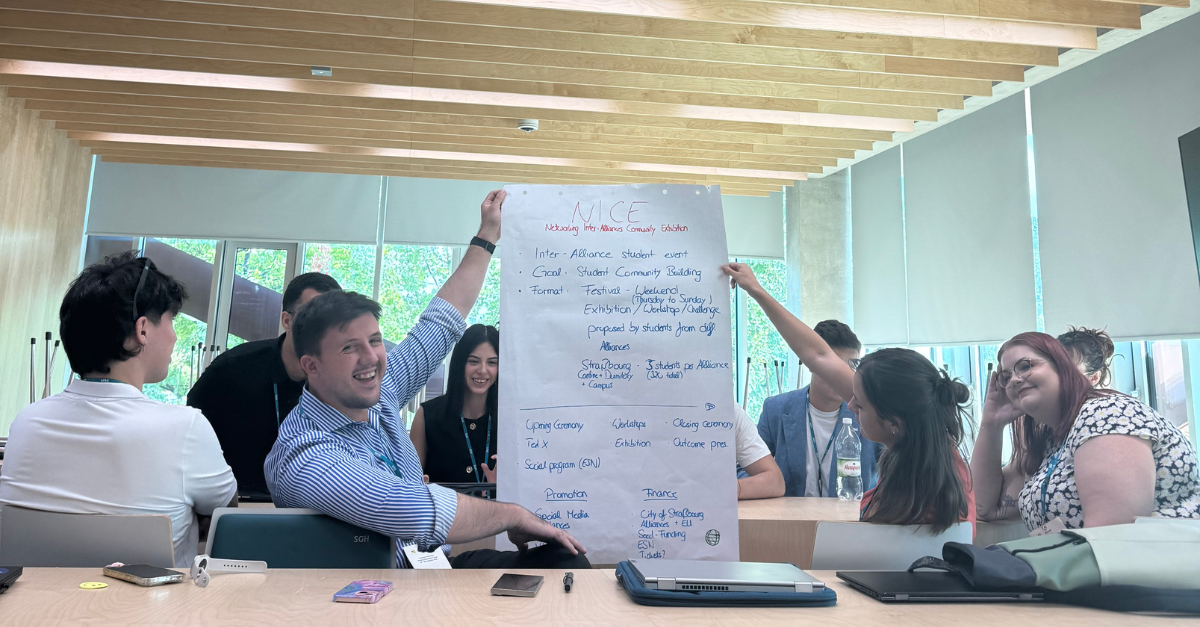
During the workshop, the first session focused on students’ journey from election to action and about what it means for student council members to represent their peers. The workshop zoomed in on the organisation of activities on a local level, and how to make such opportunities attractive for a large pool of students. They also discussed collaboration with stakeholders and how student representation can lead to meaningful partnerships.
Overall, these few days sparked many new ideas, which will continue to fruition during this year’s follow-up EUSAF meetings. Furthermore, these ideas will be brought to life through the Aurora Student Council Board.
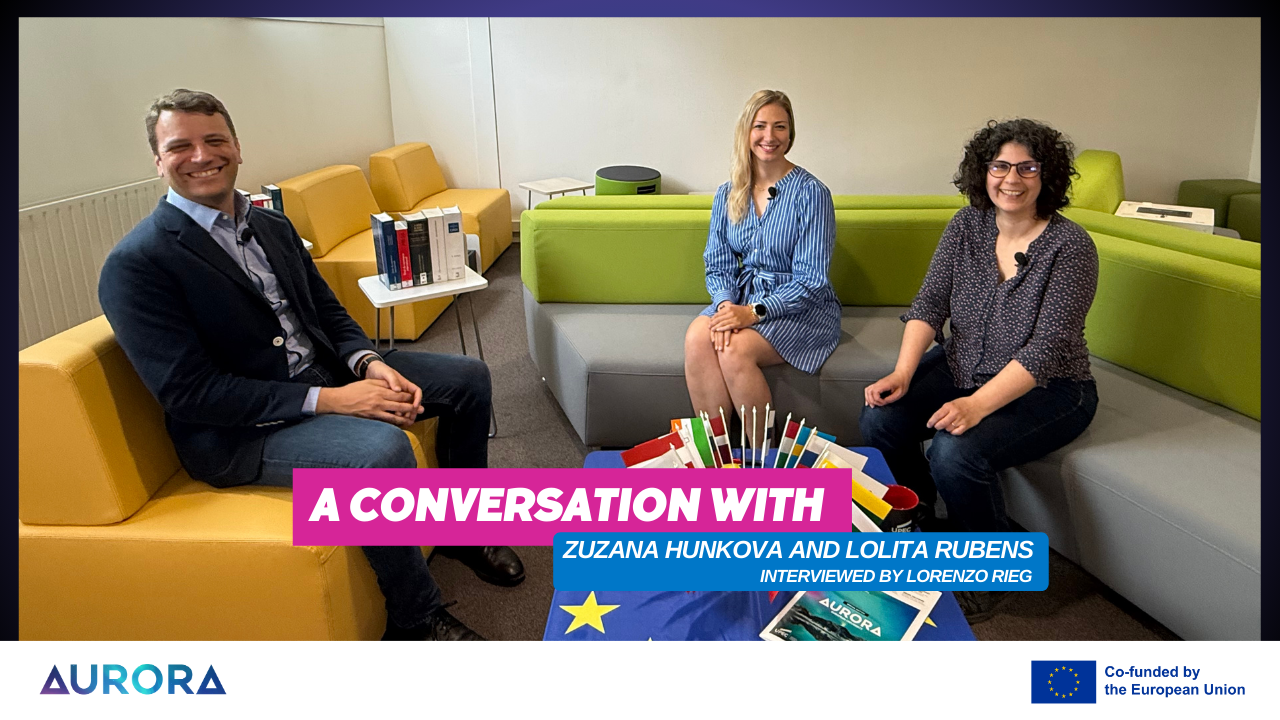
Sustainability and social responsibility are essential priorities for higher education institutions. In this insightful conversation, Lorenzo Rieg, Zuzana Hunkova and Lolita Rubens shared their perspectives on what sustainable and socially responsible campuses look like today, the challenges that must be addressed, and their expectations for the future.
From Strategy to Impact: Institutional Approaches to Sustainability in Aurora
Lorenzo: Zuzana, maybe you can start by telling us a bit about yourself, how you ended up in your current role in sustainability development at your university, and also what you are doing within Aurora.
Zuzana: At the Palacký University Olomouc, I’ve been doing coordination for sustainable development for four years. I oversee the sustainable development strategy of the university, and ensure that I undertake all the actions connected with this. We have a team of four people working part-time on sustainability. Our strategy has 15 goals; we work on the basis of a two-year action plan that we follow very closely, and we change our goals every two years.
Lorenzo: Lolita, you’re Vice-president for Social Responsibility. I think it’s unusual to have this role at the Vice-president level of the university. Tell us a bit about what you do at UPEC, and also within Aurora.
Lolita: In France, we have a certification label for higher education institutions, called “Sustainability and Social Responsibility”. In UPEC especially, we have this project or objective to be a committed university, a civic university with social and societal impact. So, it was important for the President of UPEC to show that social responsibility is also central to our mandate. We also have a Sustainability and Social Responsibility team working here in UPEC, which I’m part of. Through our work in UPEC and in Aurora, we try to be inspired by all the measures taken to reduce carbon footprint, and attempt to include those elements in the plan that we voted for last year.
Social responsibility is about the impact that we can have on the regional territories, students and society. For instance, we work on equal opportunities where every student should have the same chances to succeed. Students that we have may face challenges, like they may work while studying, so they might not have as much time as other students to study properly. In this case, solutions could be some financial aid, or additional classes to help them succeed.
It’s also about the impact that we can have on employees and their well-being. Within research, this could be the social impact of research. UPEC being Lead in the Aurora 2030 Work Package on social impact of research, we’re working on another way of measuring the social impact that research can have. This is the same for teaching as well; trying to teach our students to become unique citizens and yet be part of the world, and society.
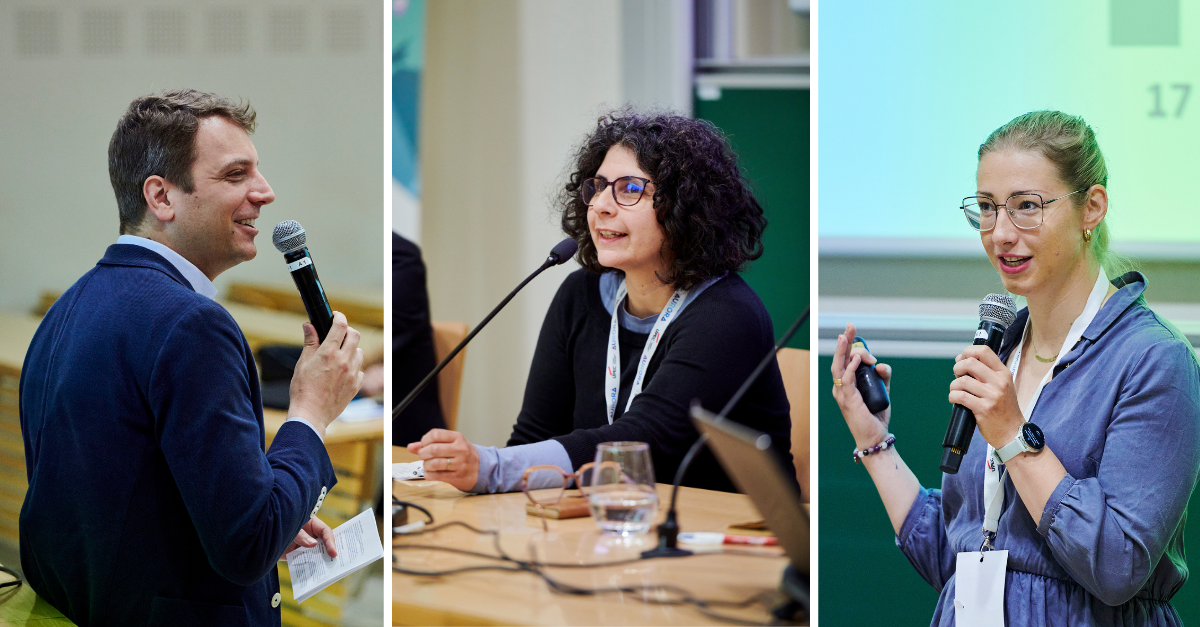
From left to right: Lorenzo Rieg, Lolita Rubens and Zuzanna Hunkova speaking at the Aurora Sustainability Summit 2025
Sustainability Challenges: From Awareness to Action
Lorenzo: Sustainability is now, I would say, very well established. A lot has been going on in the last ten years or even a bit more with individuals, but especially companies, also public institutions being very aware and paying much more attention to being more sustainable. We talk a lot about sustainability, but we still see that many things are not happening. What do you think are the reasons for that?
Zuzana: Sustainability has become such an important topic, and I think that’s the first thing that had to happen. We talked about it a lot, but it also very often just stops there. We talk about it, we prepare plans, strategies and goals. But what I very often see, especially in the Czech Republic, is that we’re missing the concrete actions to reach those goals. We have strategies for everything, but maybe we are now postponing to achieve them. That’s the core problem that we should press on further. Because we’re really losing time by just talking in the Czech Republic. We’re still sometimes coming back to the question if sustainability is important! I see this as a waste of time. We could already focus on what can we do without. So I would suggest maybe to take more actions, and less on preparing strategies and goals.
Lorenzo: It’s the case that people have a very good idea of what would be needed, but then for some reason it doesn’t happen. So do you think that’s because people are afraid of changes or because that it’s actually about money?
Zuzanna: I think that people in general are lazy, but in a good sense. First of all, it’s hard for us to change, and we don’t want to change so much because we are comfortable with our lives right now. In Europe especially, we have everything: we can go to the shops and buy anything we want, we can order whatever we want online, and we can have everything at home in 30 minutes. But we don’t realise the consequences of all this comfort: how much it costs not only in terms of money, but also in terms of the harmful emissions that we produce.
We need to change people’s behaviour, and that’s really hard to do. This is the hard goal. Changing behaviour doesn’t take one year; it takes decades, maybe even 100 years. Now, we’re already starting to realise. A basic example in the Czech Republic, where we’re really good in sorting waste, but it took us 20 years to get there. We needed time to realise that we shouldn’t waste water. I think we’re doing good, but I’m just afraid we’re not as fast as we should be right now.
Lorenzo: Lolita, your work with communities is a nice way to bring action to maybe not the whole world, but to your area, to your group of people, which you might be able to influence. Can you comment on this?
Lolita: I agree that it’s difficult to change for individuals, but I think one of the obstacles that we have is that the issues are so complex that it’s not only one element that we have to change. We have to consider this question about partnerships and other actors. Many things don’t depend only on the university. We have to speak with communities, cities and partners outside of the university. Of course, working all together could be difficult and could take a long time, especially in big public institutions, where we can have difficulty to go forward quickly.
For example, we have a project to encourage people to take public transportation, or use their bicycles. We can help them by ensuring that their bicycles are safely parked in the university. But the problem is that, this project will not work if they’re not allowed to ride their bicycles around the university. So, for this to work, we’ll have to speak with the cities, especially Creteil or the surrounding cities to make sure that these cities allow bicycles to circulate safely. We must ensure that it’s not only what we do in the university, but also outside, like we can be in touch with associations that help repair bicycles, for instance. But we have to think about all the actions, and speak with many people, to try to coordinate ourselves. This is where the difficulty lies sometimes.
Educating for a Sustainable Future: The Role of Universities
Lorenzo: That’s a nice way of leading to my next question about what universities should do, or focus on, not just as individual universities, but in the Aurora network as well. As you said, we cannot influence everything. I think universities also educate students, and do research. There’s a lot we can contribute to the discussion, in actually setting certain goals, and pursuing certain actions. What do you think about what universities should do to be more sustainable, and bring that into the communities and into the world, so to say?
Zuzanna: Universities, first of all, should focus on what their core is, which is educating right. I think education and sustainability are really the basic foundations. I’ve been working in this topic for five years, and the most important thing I see is, when we have young people educated and we try to involve them in all subjects because, often it happens to me that when I talk with people in the faculty of medicine, they tell me “Sustainability is not our topic”. I respond with: “That’s not true. Sustainability is everywhere”. We should also try to involve sustainability topics in teaching, in every subject we have. For example, I think it would be great if we could have a base education in sustainability for all faculties, for all university students, such as a core course over a semester.
Secondly, I believe that universities in general work as a good example for a society. So we should be leading in the sustainability topic, to show companies, political parties, and organisations how we should approach sustainability goals.
Lorenzo: Lolita, would you like to add your perspective?
Lolita: Teaching is important. In France, starting next year, every student in their first year will have a mandatory module on those topics. This is the idea of trying to teach everyone and not only those with a specialty in sustainability. It’s really important because many careers will appear in the next year, so we’re educating, teaching people who will have a professional life where they will have to maybe change their career, and adapt their jobs to the situation. They have to be aware of these topics. I think we should also be able to show the research and knowledge that we have in the university, to disseminate and speak about these topics.
Finally, in France especially, we have to spend public money well. We try to be an example as a university and to think about every aspect of our spending. To have an impact, we have to choose the people we work with, and choose who we give our money to. So, this has to be reflected upon as well and really thought about.
Lorenzo: Teaching or reaching students and keeping students with the skills relevant for the future, relevant for sustainability, and making it more accessible or bringing more into society are really important, not only to inform people, but maybe also to help companies and other institutions. Where we spend money or how we run operations is something universities actually often struggle with. It’s partly because of monetary or other constraints. It can be that we can change things and it doesn’t cost us much, but it can also be very expensive.
In my view, sustainability is now well-known. We already talked about that, but it’s not so strongly embedded in our daily life or also in the structures of public institutions like universities, where we will go in the years ahead. What do you think will happen in the future with sustainability at universities?
Lolita: It could be difficult to know what will happen because we know some other aspects, and especially political aspects, or aspects outside of the university, may have an impact. Either the situation is worse and maybe people will have to consider those elements more clearly because we will see the consequences more and more. So we have to change, but maybe not in the right way: it will be something that we’re not committed to, but that we will have to do. It’s not good when we have to change when it’s something that is mandatory.
Or we could be optimistic as well. I think that the students that we have are quite committed to the situation. In France especially, they speak about sustainability from primary school. So it has been a long time, and they can be quite bored with the subject or find that it’s not something joyful. We have to help them see something joyful, and maybe change the stories we tell, the things that we present, and the way we present them. With this module that I spoke about earlier, we try to make students act by trying to do things on their campuses, trying to make them change things, and see the results and consequences of what they are doing. This is something that we need to continue and involve everyone in these changes, and not limit it only to the people deciding for universities. With the deliberative assemblies that we have in UPEC and in Aurora, I see more people involved and more people working for the communities, for the society and for the universities.
Lorenzo: Zuzanna, how do you see sustainability developing?
Zuzana: I agree with Lolita that there are always two scenarios. In the years I’ve been in sustainability, I’m starting to worry because, with the latest changes in the European Union and among world leaders, we see that sustainability has become very important, and yet, I’m afraid it’s falling behind a little bit. Being a life optimist, I still believe we will take the the right path.
Research says that students are the next generation. The current students or even younger kids are very into sustainability. For them, it’s natural. They have been educated about this since elementary school, and they don’t consider it as something new. They consider it ingrained into themselves. For them it’s a core part of their values. They no longer choose their university according to the best rankings, but also how sustainable the university is.
Aurora universities come together during the Aurora Annual Conference and Sustainability Summit.
From left to right: Ramon Rispoli and Benedetta Toledo from Università Federico II of Naples, Zuzanna Hunkova from Palacky University Olomouc, Marjolein Zweekhorst from Vrije Universiteit Amsterdam, and Lorenzo Rieg from Universität Innsbruck.
Aurora as an Enabler of Sustainable Partnerships and Community Networks
Lorenzo: It’s also my experience that students are actually so much further in how they see sustainability, how they also act more than most older people. Before we wrap up this conversation, I would like to give you the opportunity to say something which I didn’t ask or which you want to bring in as your final statement.
Lolita: To go back to Aurora, I think that what is very good is to be able to speak with other universities and feel reassured that we have the same challenges. We find support, and also exchange best practises to be inspired with and by other universities. We also have more strength together to implement things that we don’t yet have, but know how it was implemented in other universities. So it is very good to see other universities with the same values that are really connected to those of sustainability, equality or fight against inequality.
Zuzana: I would say that it was really important for engaging the sustainability topic in my university. Partnerships are good examples, as we learn a lot from our partner universities. It also gives us the strength when we argue for sustainability at the university and we can show best practices from, say, UPEC, on the actions already taken and the way they have managed it. This helps me in my job.
We also have a partnership through the Czech universities. Four years ago when I started, we were maybe two or three universities out of 26 that were doing something for sustainability. But now, we have managed to bring together all 26 universities to work on a sustainability strategy. So you can see how partnerships and the community of the universities can really help push the topic forward.
Lorenzo: I can only agree that this exchange is quite important. It’s essential to highlight successes, and through best practises, underline good examples for other universities within the Aurora network and beyond.
This conversation is part of a series called “A Conversation With…” undertaken within the framework of the Aurora 2030 programme supported by the European Commission. It is an interview format that focuses on a specific topic and is meant to inspire its readers to reflect on and catalyse positive impact. The exchange is available in its original format on the Aurora YouTube channel.
Over 35 alliances, representing more than 300 higher education institutions, will gather in Gothenburg, Sweden, for the EAIE 2025 Conference, held from 9 to 12 September. More than 20 sessions and a special FOREU4ALL event will highlight the European Universities Initiative’s impact on the future of higher education.
Nearly double the participation from 2024, a record of 35 European Universities alliances – including Aurora – will come together at this major international conference. Together, they represent over 300 higher education institutions and showcase the evolution and impact of the European Universities Initiative (EUI), a flagship programme of the European Commission launched in 2019, now encompassing a total of 65 alliances and 8 Seal of Excellence alliances.
This year’s EAIE Conference’s theme, Go-Create, resonates deeply with the mission of alliances. Through more than 20 sessions, as well as a dedicated FOREU4ALL event, they will highlight their commitment to innovation and their pioneering work in shaping inclusive and collaborative higher education models across Europe. Specifically, representatives from alliances Aurora, ENGAGE.EU and Una Europa, will be discussing the complexity of shared leadership within alliances under the European Universities Initiative.
This roundtable session “Who is driving your EUI alliance? Perspectives on co-creating shared leadership” takes place on Thursday, 11 September from 14:00 to 15:00 CEST. Speakers include:
Anna Stina Sinisalo, Head of Development in international affairs and operative lead for the University of Helsinki in the alliance Una Europa
Furthermore, Aurora welcomes visitors in their space at the exhibition booth P143, from Wednesday, 10 September at 09:00 CEST to Friday, 12 September at 12:00 CEST. Activities at the booth include:
Poster presentation: “seizmic for Social Entrepreneurship & Innovation” by Casper Lindblad Andresen, International Programme Manager from Copenhagen Business School.
Poster presentation: “Collaborative Online International Learning (COIL) within Aurora and Beyond” by Marina Vives Cabre, International Projects Officer from Universitat Rovira i Virgili.
Poster presentation: “Building the Student Community Through the Aurora Student Ambassador Programme” by Niels Hexspoor, Sustainability & Impact Leader from Palacký University Olomouc.
European Universities Alliances And FOREU4ALL: Creating Value For The Wider Higher Education Sector
As part of the programme, FOREU4ALL – the Community of Practice bringing together all European Universities alliances – will host a special joint session with the European Commission on Wednesday, 10 September, from 13:30 to 14:30 CEST. This session, aimed at institutions not currently involved in the initiative, will explore how the community’s collective knowledge and tools can benefit the broader higher education sector.
The session will feature an interactive World Café format, inviting participants to discuss practical opportunities around micro-credentials, joint degrees, skills development, and new partnership models.
About The European Universities Alliances And FOREU4ALL
European Universities Alliances
Launched in 2019, the European Universities alliances are a flagship initiative of the European strategy for universities. It encompasses 65 European Universities alliances with more than 570 higher education institutions of all types, from all across Europe.
FOREU4ALL provides a collaborative and supportive platform where all 65 alliances come together to share good practices, exchange experiences, and strengthen cooperation. The community fosters a deeper collaboration by facilitating learning, joint initiatives, and the dissemination of results – enhancing knowledge, skills, and effectiveness of the entire higher education sector.
The EAIE Conference is the most important event dedicated to higher education in Europe and the second largest in the world. Its recent venues have been Rotterdam (2023), and Toulouse (2024). This year, EAIE 2025 will be held in Gothenburg, Sweden, from 9 to 12 September.
On 16 July 2025 the European Commission (EC) published its regulation proposals and plans for the next Multiannual Financial Framework (MFF) period 2028 – 2034, as well as the next EU research and innovation (R&I) programme called Horizon Europe (HEU), the tightly connected novel programme European Competitiveness Fund (ECF), and the Erasmus+ programme. Although the documents have been published, several details of the budgets and the programmes are still lacking. We need to keep in mind that this is the first proposal, whereas both the Member States and the EP will discuss with the EC in trilogues about the final outcome which should be ready by mid 2027. This op-ed article by Pim de Boer, Senior Policy Advisor, and Ramon Puras, Aurora Secretary General, provides a first insight in some of the details and possible consequences for universities including Aurora universities.
What’s New, With What Budget?
The EC proposed a total 7-year budget for the EU of almost 2 trillion (!) euro, spread over the major headers: “National and Regional Partnership Plans”, the “ECF”, “Erasmus+ and AgoraEU”, “Global Europe”, and “others”.
The ECF is a novel programme consisting of HEU as a separate programme, and a merger of 14 current programmes like Digital Europe, EU4Health, LIFE and the European Defence Fund. AgoraEU is also a novel programme streamlining the EU intervention in the areas of culture, media, equality, citizens, rights and values. It comprises the current programmes Creative Europe and Citizens, Equality, Rights and Values (CERV).
A budget of about 409 billion euro is reserved for the new ECF programme, and out of this a 175 billion euro is proposed for the HEU programme. Which is less than the 200 or more billion euro requested for the R&I programme by the EU Member States, the European Parliament (EP) and e.g. the academic sector including Aurora network. Nevertheless, it is almost a doubling of the current HEU budget. For Erasmus+ an increased budget of about 41 billion euro is foreseen, and 9 billion euro for AgoraEU.
These programmes need to address the EU policy priorities: a free and democratic Europe, a strong and secure Europe, and a prosperous and competitive Europe. This includes the themes competitiveness, security, defence, resilience, democratic values, education, social fairness, quality of life, and a global Europe.
Notably, the European Universities Alliances are referenced across all three key publications on the ECF, HEU, and Erasmus+, with their primary anchoring in Erasmus+. This marks a significant evolution from the current programme period and opens promising opportunities for greater synergy between these programmes and associated co-funding schemes. Such alignment would represent a major step forward in integrating research, innovation, valorisation and education through EU funding instruments.
European Competitiveness Fund (ECF)
The ECF will contribute to this focusing on 4 policy priorities:
clean transition
digital leadership entailing AI, quantum, cybersecurity, and digital sovereignty
health, bioeconomy, biotechnology, and agriculture, and
defence, space, resilience and security.
In brief, the ECF will deal with integrated work programmes across these policy windows, including collaborative R&I, scale-up calls, deployment and accelerated interventions. It will integrate HEU results into downstream industrial and market deployment activities, stimulating the flow of results from basic science towards applied R&I and application. How this will interface with the HEU programme has not yet been detailed in full. Funding mechanisms comprise more complex and hybrid (public-private) funding tools (e.g. equity, guarantees, procurement).
For (Aurora) universities the ECF provides opportunities for taking research results and outputs further to start-ups, and their start-ups to scale ups and beyond, in the context of the given policy windows – clean energy, zero waste, digital technologies and applications, health resilience and (bio) technologies, agriculture, deep tech, security, space (including use of satellite data) and defence including dual-use technologies and civil preparedness. In general, this may require collaboration with business partners and other relevant stakeholders. Other opportunities lie within training and skilling students and staff related to (social) entrepreneurship and dedicated job skills and knowledge as mentioned in the Union of Skills.
Horizon Europe 2028-2034 (HEU)
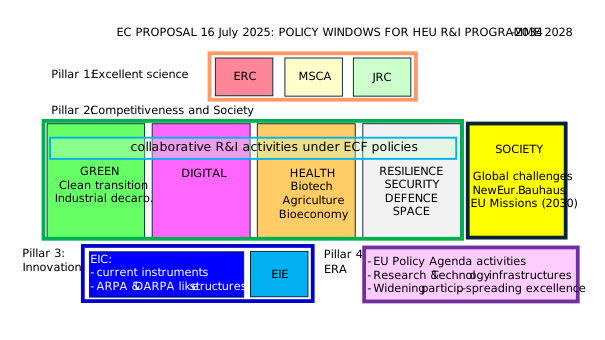
The HEU programme remains the core R&I programme, fundamentally based on academic freedom and openness, and looks familiar to the current HEU programme. However, it does have major changes as shown in the next figure on the proposed structure:
In brief, HEU will retain the ERC and its instruments with evaluation based on the excellence criterion, MSCA, and (new) the Joint Research Centres in Pillar 1. Aligned with our statement on non-directionality in MSCA instruments, the proposal focuses on research, training, interdisciplinarity in an international setting, and retaining talents in line with the “EU Choose Europe” strategy.
Pillar 2 is about collaborative research. It is unclear for research contributing to the ECF policy windows how this will be governed, which work programmes are acting, or whether early phase collaborative research (at low TRL/SRL) is exempted from the ECF policy windows as we recommended.
Pillar 3 on the EIC and innovative ecosystems retains its current instruments, and possibly new programmatic and extensive instruments like the USA (D) Advanced Research Projects Agencies (ARPA) to support transformative breakthrough projects to provide solutions and applications.
Pillar 4 contains the European Research Area (ERA) policy agenda, research and technology infrastructures, and to widening participation and spreading excellence funding instruments.
Specific aspects: integrating social sciences and humanities (SSH); adhering to Open Science; and simplifying procedures like reduced time to grant, common use of lump sum, and a funding rate of 100% for non-profit and SMEs. Calls will be more open, less prescriptive. In addition, HEU will have an emphasis on international cooperation (hence being connected to Global Europe), new European partnerships will be developed and the programme may “support dual-use actions”.
For (Aurora) universities new opportunities include the less prescriptive nature of calls and potential new types of programmatic financing within the EIC programme. As details on Pillar 2 are not clear yet, we do not know how calls for collaborative research will be developed, with whom, and how this will be governed as well as evaluated, as Pillar 2 apart from “society” is tightly linked with the ECF that has a different governance and separate work programmes. Hence, there is room for improvement as well as co-creation of the programme, its Pillars and work programmes between universities, researchers, and the EC.
Erasmus+ 2028-2034
The Erasmus+ programme will continue to support education and mobility contributing to the resilience and competitiveness of Europe, the green and digital transition, and social inclusion and values. Its goal is to promote high-quality lifelong learning, talent development, and skills for life and jobs. The new structure will contain two pillars:
learning opportunities including via mobility actions and scholarships in strategic fields, and
capacity building with partnerships building on e.g. the European Universities Alliances for cooperation, excellence and innovation, and providing support for policy development and systemic innovation in education and youth.
Other important activities include the European degree and/or label, microcredentials, the Union of Skills and lifelong learning, and synergies with HEU and the ECF. The programme supports the strategic areas mentioned under the ECF. This is substantiated by introducing new strategic Erasmus+ grants in key areas (digital technologies, green economy, AI). As mentioned above, the EU priorities mentioned in the Competitiveness Compass (and the ECF regulation) also include education, skilling & training.
Taken together, the European Commission’s proposals for HEU, the MFF and ECF, and Erasmus+ contain several elements of relevance to Aurora universities, most notably:
Increased Erasmus+, MFF and HEU budget with strategic emphasis
Continued and visible support for European Universities Alliances through ECF, HEU and Erasmus+ synergies
Focus on talent, skills, and lifelong learning
Promotion of democratic values and social inclusion
Strengthened global dimension through ‘Global Europe’
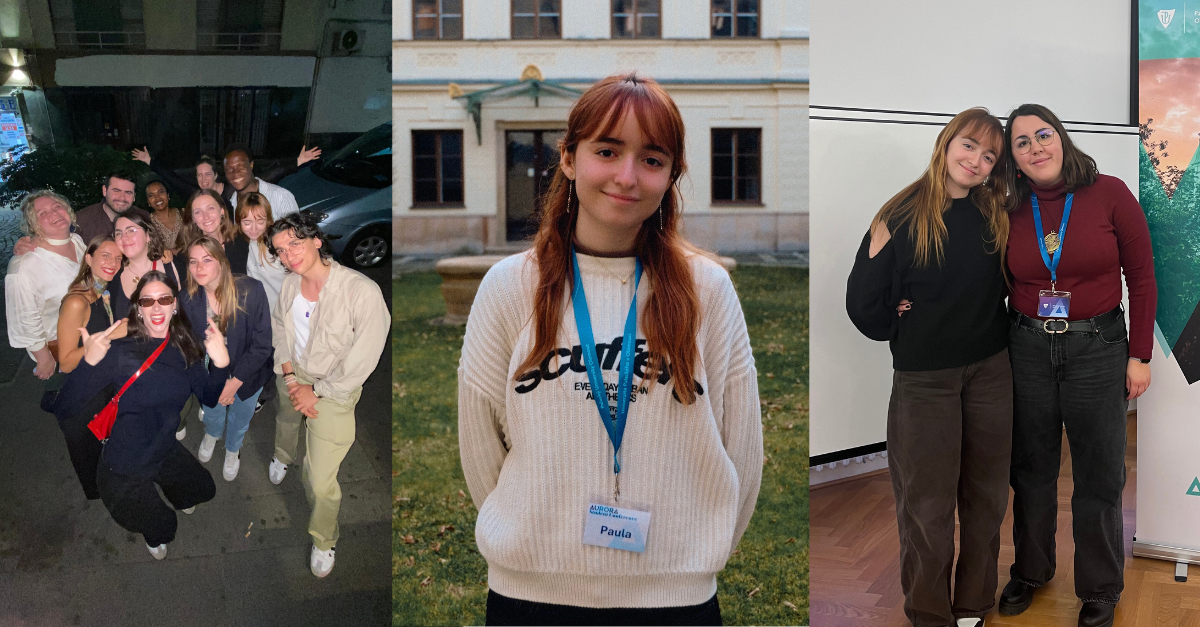
The Aurora Student Council (ASC) is made up of two elected student representatives from each university within Aurora. Its role is to focus, and collectively decide, on priorities for the student population. The ASC ensures that the student voice is heard and integrated in decisions taken in Aurora. Paula Mora, student at Universitat Rovira i Virgili, talks about her year-long experience as Communications Officer for the ASC in the academic year 2024/2025.
Memorable moments with the Aurora Student Council
One day, I opened my inbox and came across an email about joining a student programme called the Aurora Student Council. I wasn’t entirely sure what it was about, but something in me felt drawn to it. A few days later, I found myself filling out an application form, then sitting for an interview and, just like that, I became part of something much bigger than I had imagined. At the time, I didn’t know it would lead to one of the most enriching experiences of my university life.
A Space of Possibilities
The Aurora Student Council (ASC) is a space where students from all Aurora universities come together to represent their communities, share perspectives, and work on joint initiatives to improve the student experience across the alliance. Through monthly meetings and events, students engage in real discussions about inclusion, mobility, and participation in higher education, contributing to a more connected and student-driven European university landscape.
At the beginning, everything felt new and slightly overwhelming. I was stepping into a space full of possibilities, an entire network of universities, projects, and people, but I wasn’t entirely sure how to find my place in it. However, after just a few meetings and thanks to the support of both the team at my university and the rest of the Council, I gradually found my rhythm. The sense of community made all the difference.
The Power of Dialogue and Meaningful Engagement
One of the most enriching lessons I’ve learned during my time in Aurora is the power of dialogue. There is something truly special about sitting at a table with students from different countries, fields of study, and cultural perspectives, and realising how much we can learn from one another. Every conversation opens a door to new ways of thinking, and that kind of exchange is something I’ll always carry with me.
Aurora Student Council at conferences in Palacký University Olomouc (Czech Republic) and Université Paris-Est Créteil (France)
Another key lesson has been about the value of meaningful change. With the right tools and the right environment, it is possible to create small but impactful improvements. Aurora, in this sense, is an essential tool. It connects universities in a way that allows ideas and best practices to circulate across borders. That connection creates a kind of collective intelligence, a system where solutions can be shared, tested, and improved together.
I’ve also learned the importance of clarity and communication when working in international teams. Expressing ideas, making space for others, being flexible and proactive, these are skills I’ve strengthened through my experience in the Council. Aurora gives you a space where students can take initiative and learn by doing, all the while being supported by others who care just as much as you do. At the end, student voices are powerful when they are heard, and even more powerful when they are united.
Another realisation has been how closely student engagement is tied to real-world impact. Many of my peers in Aurora are not only students, but also passionate individuals who follow politics, care about climate, education, inclusion…and who want to be part of the solutions.
Unforgettable Opportunities and Shared Moments
Of course, I’m also deeply grateful for the many travel opportunities and people I’ve met along the way. I’m fully aware that travelling is a privilege, and I feel lucky to have attended events like the Aurora conferences in Naples and Paris, and the Student Conference in Palacký University Olomouc. These are not just destinations, they’re memories shared with incredible peers. With Aurora, you don’t just discover new places, you discover them alongside ambitious and open-minded people. It’s hard to explain how many ideas we’ve exchanged around those tables, how much I’ve learned just by listening.
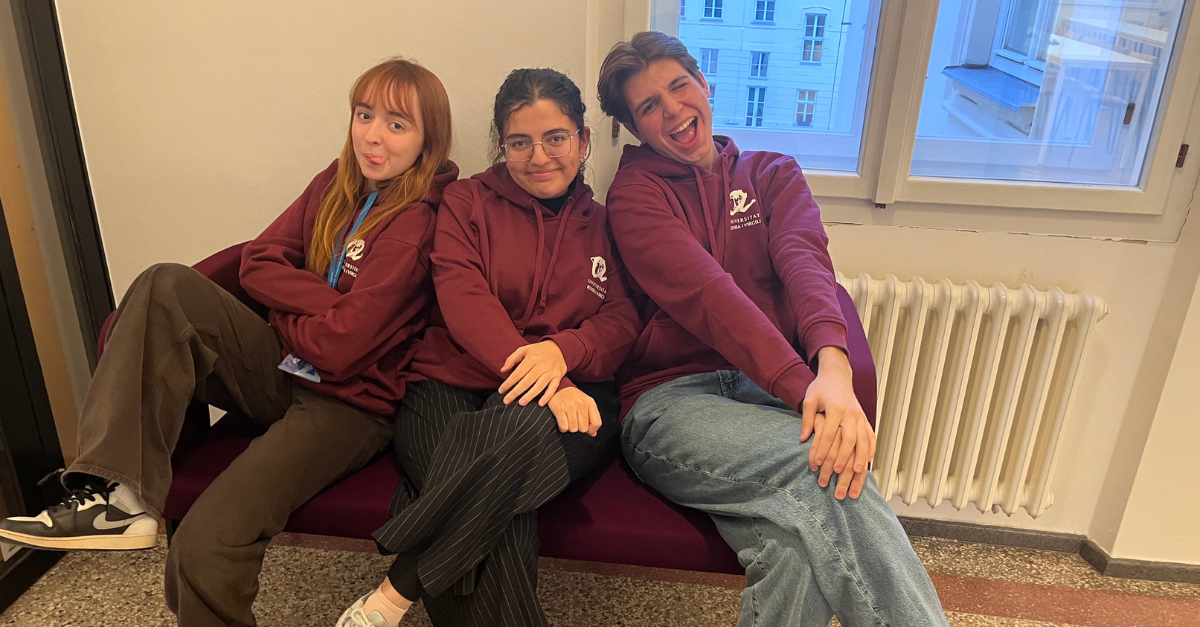
Shared moments with student representatives and members in the Aurora Student Council
Looking back, Aurora has been an incredible experience; one that I wholeheartedly recommend to any student. I leave with my backpack full of stories, lessons, and unforgettable moments. But more than anything, I leave with hope. Hope, because I’ve seen that there are entire generations of students across Europe committed to working for a better, more connected future.
With the new EU funding programmes starting in 2028, the preparations for the legislation and the outlines of the respective programmes is ongoing.
For research and innovation, the next framework programme FP10, Horizon Europe, several drafts have been published. Based on this, the academic sector shares its wishes, needs, recommendations and concerns over the plans. Among the concerns is the fear that early-phase, pre-competitive and collaborative research will not remain embedded bottom-up in the research programme but in the new European Competitiveness Fund (ECF). This would imply that this type of research falls under the ECF policy priorities and rules strongly connected to applied research, start-ups, scaling up, deployment and marketable activities.
This June, during the Aurora Open 2025 in Innsbruck, the Aurora Student Council (ASC) members came together to vote in the annual ASC Board elections. A new board has officially been elected to represent the Aurora student body for the 2025/2026 academic year! From fresh ideas for student events to stronger communication between students and staff, the newly elected council is ready to bring positive change.
For the first time a new role has been introduced in the board: the Human Resources Officer, who will be responsible for the onboarding process of new ASC members throughout the academic year.
Curious who’s leading the way this year? Meet the new Aurora Student Council board — full of energy, ideas, and spirit!
Simona Gibalová (4th year General Medicine student at Pavol Jozef Šafárik University in Košice) as President, will be at the forefront of the student council for the upcoming year. Using her extensive experience working within ASC in the past few years, from collaboration on creating the Aurora Students’ Rights Charter to representing Aurora in the European Student Union, she will be bringing a unique perspective of an associated university to the ASC board for the first time. Her vision for this year involves deepening the student collaboration on a local but also European level, improving the Aurora Student Ambassador programme and bringing forward the needs of students from associated universities. She believes that the ASC is a unique opportunity for every student involved to gain new, outside-of-classroom knowledge, share good practices and gain growth on both personal and professional levels.
Eliška Karasová (MA student at Palacký University Olomouc) will take on the role of Vice-President with a focus on ensuring smooth collaboration and communication across the Aurora Student Council. She is passionate about a new ambassador model that values quality over quantity and is dedicated to promoting equal opportunities for all Aurora members. She deeply appreciates the system that has already been established and aims to ensure that every member has the chance to fully engage and benefit from all that Aurora has to offer. For her, the ASC is also a unique space to experience and celebrate cultural diversity.
Kristýna Raimerová (MA Student at Palacký University Olomouc) as Secretary General, will be responsible for ensuring the smooth and efficient functioning of the ASC, with a strong focus on organisation, documentation, and internal coordination. Known for her detail-oriented approach and reliability, she plays a key role in maintaining accurate records, managing council schedules, and keeping members up to date with the latest developments and decisions affecting the Council and the wider Aurora network. Committed to transparency and effective communication, the Secretary General ensures that the Council’s work is well-documented and accessible to both its members and the broader student community.
Benedetta Toledo (PhD Student at Università Federico II of Naples), as Communication Officer, will be responsible for promoting the work and initiatives of the ASC across various platforms, ensuring that students from across Europe stay informed, connected, and engaged. She has previous experiences as UX & UI Designer and Social Media Manager. She believes the ASC is a special space for meaningful dialogue, mutual learning, and personal growth. Her role also involves increasing awareness of the Aurora network and encouraging more students to take part in its diverse opportunities. In doing so, the Council continues to promote an inclusive and dynamic environment where student voices are empowered and valued.
Alexandra Valsan (Law student at Universitat Rovira i Virgili) will serve as Human Resources Officer on the ASC Board for the upcoming year. With a strong interest in inclusion, team dynamics, and internal cohesion, she brings a people-centered approach to her role. Alexandra has previously been involved in student engagement activities at her home university and now looks forward to contributing to the ASC’s internal development and support structures. Her priorities this year include ensuring a smooth onboarding process for new members, promoting transparent and effective communication within the Council, and creating a safe and welcoming environment where every student feels empowered to contribute. She also aims to strengthen the sense of belonging among ASC members through well-being initiatives and team-building efforts.
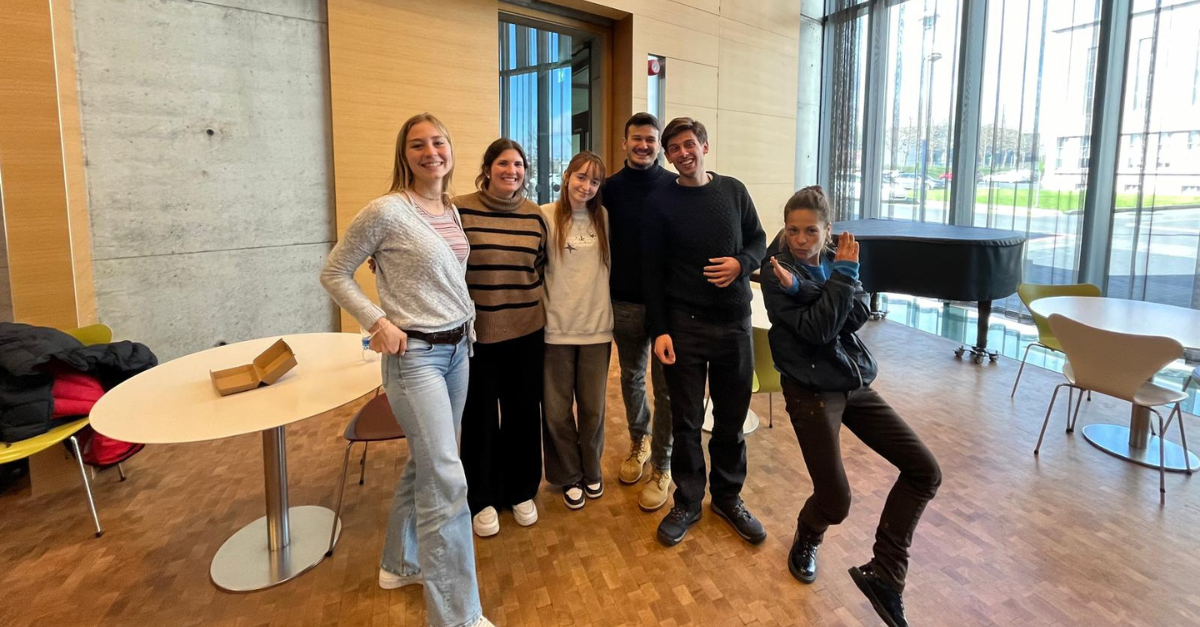
On July 7, 2025, members of the Aurora UDE Community came together for an informal meet-up to connect, exchange ideas, and welcome new faces. Colleagues from various Aurora work packages based at the University of Duisburg-Essen (UDE), as well as several Aurora student ambassadors, took the opportunity to share insights about their work and their experiences, and learn more about each other’s activities within the Aurora network. The gathering provided an open space for networking, questions, and inspiration, particularly for newcomers interested in contributing to Aurora’s mission of combining academic excellence with societal impact.
Thank you to everyone who joined and made the exchange so enriching. The Aurora Community at the UDE looks forward to continuing these conversations and strengthening connections across disciplines and departments
For further inquiries about the UDE Aurora Community, please contact the Aurora Alliance Office here.
The Aurora Student Council (ASC) is the representative body of students within Aurora, bringing together voices from all partner universities to ensure student perspectives remain at the heart of Aurora’s strategic direction. Through monthly meetings and continuous collaboration, the Council enables students to engage in joint discussions, share experiences, and contribute actively to Aurora’s development as a European university alliance.
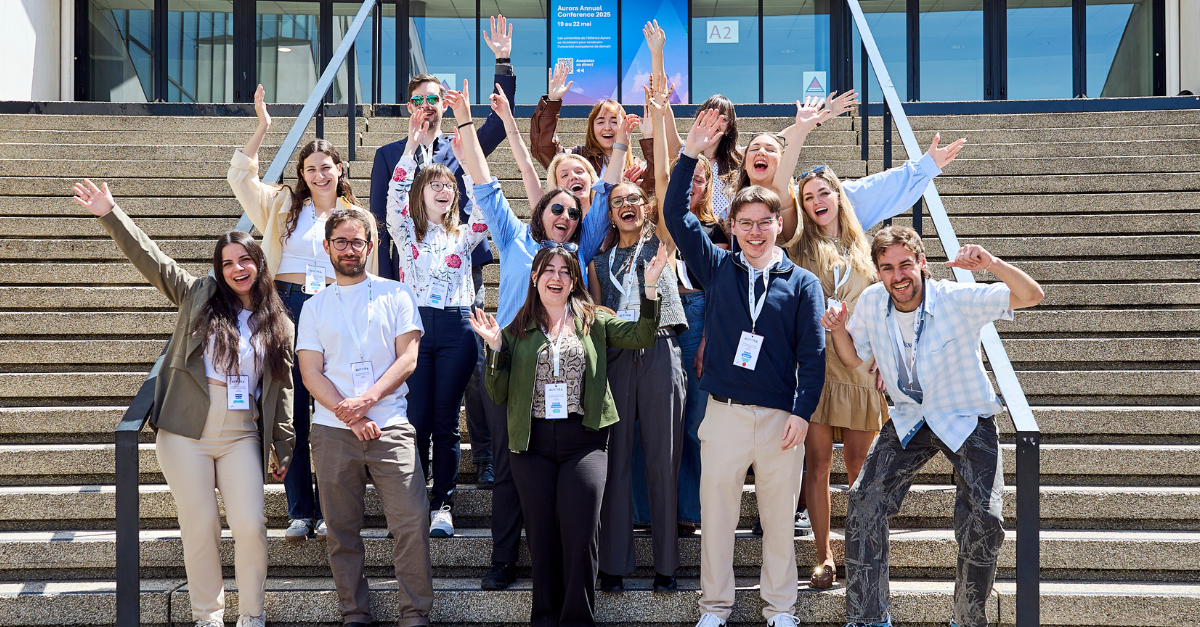
Aurora Student Council at the Aurora Annual Conference 2025 in Paris
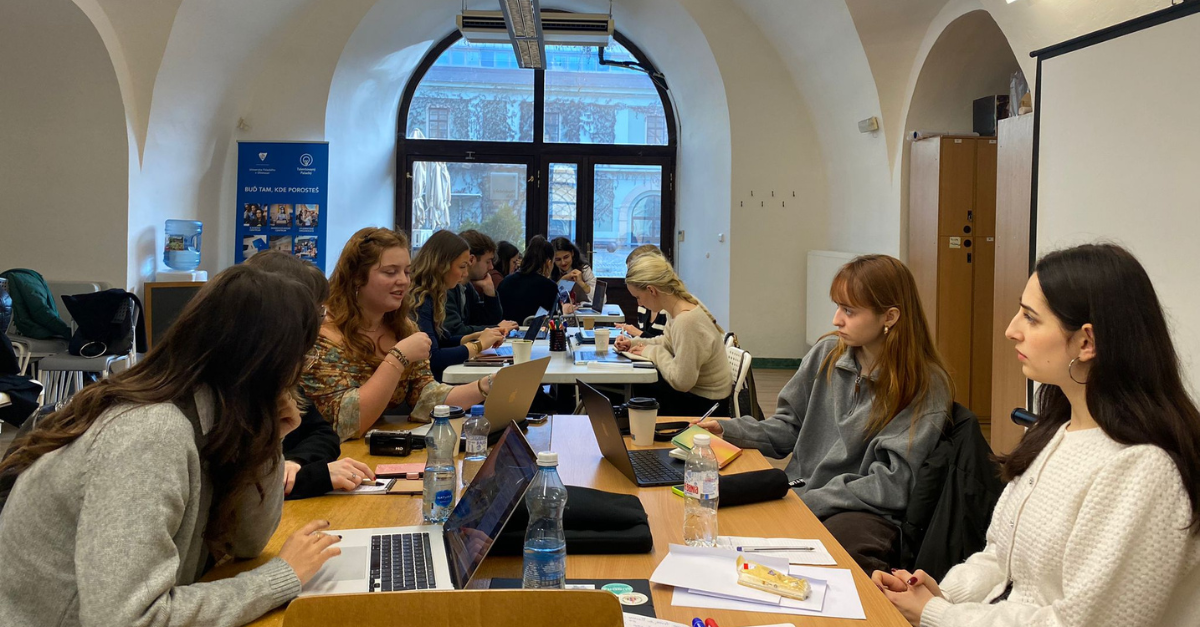
As part of this ongoing work, the ASC met in-person during the Aurora Annual Conference, hosted by Université Paris-Est Créteil (UPEC) in May 2025 in Paris. The meeting served as a space to review progress, exchange ideas, and continue working on several key initiatives.
Strengthening European Collaboration: Aurora and the ESU Candidacy
One of the main points discussed was Aurora’s potential candidacy to become a member of the European Students’ Union (ESU), an umbrella organisation representing over 20 million students across Europe. Membership in the ESU would allow Aurora to increase its visibility within the broader network of European university alliances, foster collaboration on shared student issues, and take an active role in shaping policies relevant to higher education at the European level.
Aurora Students’ Rights Charter: Establishing Shared Standards
The central focus of the Paris meeting was the development of the Aurora Students’ Rights Charter (ASRC). This charter is the result of joint work by the ASC to define the fundamental rights students believe should be respected across all Aurora universities. Once adopted, the ASRC will serve as a reference document, an example of shared commitment that universities can uphold to ensure transparency, protection, and student empowerment throughout the alliance.
Supporting International Students: Exchanging Best Practices
Building on the year’s strategic focus on the integration of international students, the ASC revisited a previous proposal to collect and share examples of best practices related to student mentoring, buddy programmes, and welcoming systems. During the Paris meeting, students presented their contributions and discussed initiatives currently in place. One recurring topic was the implementation of buddy programmes, with several universities already recognising student participation in these initiatives with ECTS credits, an approach that highlights the value of peer support and community building.
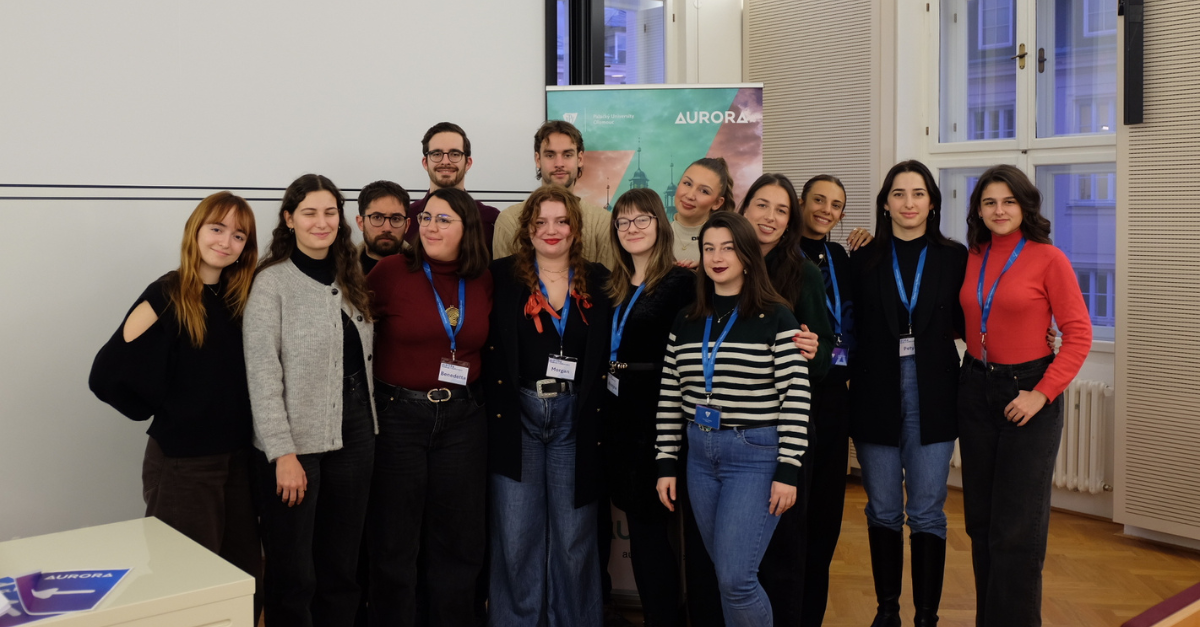
Aurora Student Council members working on the initial proposal for the Aurora Students’ Rights Charter
Preparing the Next Elections: Ensuring Fair Representation
The ASC also discussed the timeline for the upcoming elections of the Student Board, which consists of the positions of President, Vice-President, Secretary, and Communications Officer. This year, these roles were held by Mathilde Chaumont, Sören Daehn, Andréa Gaucher and Paula Mora, respectively.
As in previous years, a democratic voting process will be held to select new representatives for the upcoming academic year, ensuring continuity and fair representation for all students within Aurora.
Reflections and Local Reports
Each university delegation was invited to share a brief report on their activities over the past academic year. These reflections highlighted achievements at the local level while also identifying areas for improvement. The exchange allowed students to learn from one another and helped the Council assess its collective progress in key areas of student engagement and communication.
Student Representation in the Plenary Session
As part of the conference programme, Student Council members also participated in a plenary session on the topic: “Empowering Voices: Advocating for Students’ Rights Across Europe”, followed by a round-table discussion on “The University of Tomorrow”. These sessions provided a valuable opportunity for students to present their perspectives to the wider Aurora community and receive constructive feedback from academic and institutional stakeholders.
The discussion focused on the potential impact of the Aurora Students’ Rights Charter, the challenges encountered during its development, and the varying national contexts that shape student experiences across Europe. Participants also explored future avenues for cooperation with student organisations from other European alliances, underlining the importance of building stronger links at both the international and local levels. Strengthening these connections is seen as a key step toward sharing good practices and amplifying student engagement within and beyond Aurora.
Left to right: Mathilde Chaumont (UPEC), Simon Westhoff (VU Amsterdam), Sören Daehn (Copenhagen Business School) and Simona Gibalová (Pavol Jozef Šafárik University in Košice)
The Aurora Annual Conference in Paris was both productive and dynamic. In addition to advancing shared goals, students enjoyed moments of connection, informal conversation, and laughter. After all, when students from different fields, ages, and countries come together around the same table: just imagine the conversations that can spark.
Manage Cookie Consent
We use cookies to optimize our website and our service.
Functional
Always active
The technical storage or access is strictly necessary for the legitimate purpose of enabling the use of a specific service explicitly requested by the subscriber or user, or for the sole purpose of carrying out the transmission of a communication over an electronic communications network.
Preferences
The technical storage or access is necessary for the legitimate purpose of storing preferences that are not requested by the subscriber or user.
Statistics
The technical storage or access that is used exclusively for statistical purposes.The technical storage or access that is used exclusively for anonymous statistical purposes. Without a subpoena, voluntary compliance on the part of your Internet Service Provider, or additional records from a third party, information stored or retrieved for this purpose alone cannot usually be used to identify you.
Marketing
The technical storage or access is required to create user profiles to send advertising, or to track the user on a website or across several websites for similar marketing purposes.



 From left to right: Lorenzo Rieg, Lolita Rubens and Zuzanna Hunkova speaking at the Aurora Sustainability Summit 2025






 Eliška Karasová (MA student at