Author: Anna Klas

Aurora 2030 – Kicking off a New Era of Collaboration

At the end of November 2022, an extraordinary event unfolded at the University of Iceland, ushering in a new era of collaboration within Aurora and the higher education sector. The kick-off of the Aurora 2030 project marked a milestone in the journey of the Aurora European university alliance – a consortium of nine member universities and four Associate Partner universities across Europe. This alliance is a testament to the transformative power of collaboration, co-creation, and social responsibility within academia.

The Aurora 2030 project, an ambitious chapter in this alliance’s narrative, commenced with immense enthusiasm and a promise of great potential. It embarks on a mission to redefine educational practices, foster social entrepreneurship, and confront societal challenges head-on.

Notably, the University of Iceland has been honoured with the leadership role in this alliance and received a significant grant from the European Commission, amounting to approximately seventeen per cent of the total 14 million Euros. This substantial investment will undoubtedly expedite efforts to revolutionise teaching and learning methodologies and nurture future socially conscious innovators and entrepreneurs.

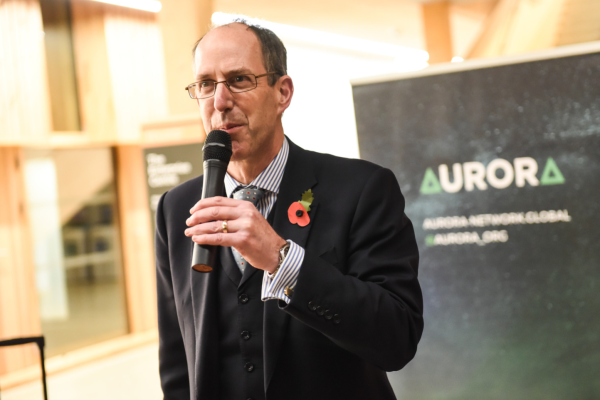
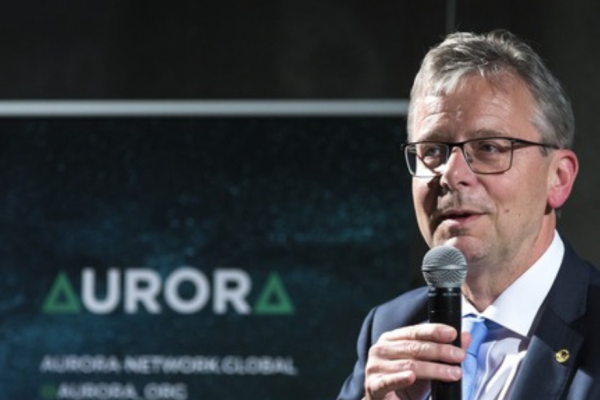
According to Jón Atli Benediktsson, Rector of the University of Iceland and President of Aurora, the primary goal of the Aurora cooperation is to provide students with an education that cultivates the mindset and proficiencies of social entrepreneurs and innovators, equipping them to tackle society’s most pressing global challenges. Jón Atli Benediktsson made this declaration as he formally kicked off the new phase of cooperation in the University’s Ceremonial Hall.

The Aurora 2030 project embodies the essence of interdisciplinary approaches in education, research, and social innovation to equip students to address global challenges. It aims to enhance research support, particularly for early-career researchers, through international cooperation and resource sharing. The alliance also seeks to strengthen partnerships with higher education institutions worldwide to foster diverse research and collaborative initiatives, particularly in Central and Eastern Europe. Emphasizing sustainability aligned with the European Union’s 2030 goals and the United Nations’ Sustainable Development Goals, Aurora 2030 sets ambitious targets for sustainable education, research, collaboration, and institutional practices, with a focus on creating a sustainable campus.

Let us take a moment to acknowledge this significant milestone. It marks the culmination of past efforts and signifies the dawning of an inspiring new chapter. As we forge into the future, we do so with anticipation and excitement, confident in our collective ability to make meaningful societal contributions through exceptional education.

If you wish to rewatch the live stream, you can find it here.
Please find a visual recap of the kick-off here.

European Universities Associations Response to Council’s Research Career Recommendations

Based on the outcomes of the European Research Policy Agenda Action 4 on research careers and talents, the European Commission has proposed EU Council recommendations regarding the implementation of activities related to research careers and retaining talent.

As part of the university sector Aurora Universities, together with four university associations (EUA, The Guild, Coimbra Group, and YERUN), supports the proposal. Although this proposal is about recommendations to EU Member States, the actual implementation of the activities and use of tools mentioned in the proposal, including the Research Competence Framework, a revised Charter for Researchers, a pension scheme (RESAVER), and an observatory on research careers (ReICO), may not be optimal for the sector. We recommend further steps to include:

  • The presence of enabling framework conditions for institutions and the stability granted by long-term core funding needed for sustainable research careers;
  • Envisioning a holistic and long-term perspective for flexible and multiple career pathways;
  • The empowerment of universities to offer stable and more predictable research careers;
  • And the need to develop the evidence base for monitoring research careers in an open and sustainable manner.

We also conclude that the Charter for Researchers, the Research Competence framework, the HRS4R label and the Agreement on Reforming Research Assessment are incentives that should remain voluntary and inspirational. Finally, it should be noted that the voluntary status of the Council Recommendations may lead to further divergence in career pathways and talent retainment strategies between countries already having mechanisms in place versus countries not implementing the recommendations.

The full statement can be read here.

Aurora signs Joint Statements on the updated NIH Policy Guidance for Subaward

Over 85 universities and research-performing organisations, including the Aurora Universities Network (and of its member universities, University of Duisburg-Essen, University Federico II Napoli, University of Iceland, and Vrije Universiteit Amsterdam) signed a joint statement coordinated by KU Leuven on the updated NIH Policy Guidance for Subaward/Consortium that will become active for grants starting as of 1 October 2023.

According to the new policy guidance, such awardees must provide copies of all lab notebooks, all data, and all documentation supporting the research outcomes described in the progress report at least every six months. For EU awardees, this implies legal obstacles (Personal Data Protection Regulations, Clinical Trial Regulations), IPR constraints, issues with using the transferred data by the Pass-Through Entity, increased costs and administrative burden, and a hampered continuation of ongoing grants.

In this statement, the signatories ask the NIH to reconsider implementing these requirements.

For more information, please read this statement

Digital Nomads Workshop Sparks Collaborative Action

In June 2022, a workshop focused on the growing phenomenon of Digital Nomads within the digital workforce was organised. This collaborative effort between Aurora Universities and the Network Institute at VU Amsterdam served as a forum for European Commission policymakers and early career researchers to discuss how society, employers, and employees can adapt to this new way of working.

The workshop highlighted four key objectives: firstly, to identify the necessary actions from policy-makers and scientists; secondly, to foster connections between researchers and European Commission policy-makers; thirdly, to catalyse research collaborations; and finally, to generate a publicly accessible written report encapsulating the discussions and findings.

The comprehensive white paper titled “Digital Nomads: Opportunities and Challenges for the Future of Work in the Post-Covid Society” emerged as the tangible outcome. This document will inform policy and strategy-making efforts, potentially influencing regulations and Research & Innovation (R&I) calls. It has been shared with policy officers in DG Employment and DG RTD for input and consideration and is scheduled for publication in a semi-scientific journal.

The lessons learnt from this whitepaper underscore the value of engaging early career researchers in EU policymaking related to R&I, given the tangible results that can be derived. However, executing such workshops requires a long-term commitment from organisers and participants alike. While the discussion topic needs to resonate with policymakers to ensure early engagement from the European Commission, the autonomy to choose the topic should lie with the organisers, upholding the principle of academic freedom.

To ensure the participation of early career researchers, a limited travel budget is crucial. In this case, the Network Institute commendably provided about 300 euros per person upon request, facilitating their attendance. This act of generosity highlights the importance of funding in enabling such workshops. As such, a heartfelt appreciation goes out to the Network Institute for their invaluable support and sustained enthusiasm, as well as to all the participants who played a pivotal role in the workshop’s success.

Aurora’s European University programme secured continued funding

Aurora is delighted to announce that its European University programme has secured a second round of funding under the 2023 European Universities Initiative Call by the European Commission. This ensures that Aurora can deepen its existing cooperation and continue its mission in higher education transformation.

The upcoming Aurora 2030 consortium, led by the University of Iceland, has been granted a substantial fund of 14.4 million Euros for a four-year period. This programme, which received 90/100 evaluative points from the Commission, builds on the significant progress made during the 2020-2023 pilot phase. Aurora President Jon Atli Benediktsson joyously shares:

“I am delighted that Aurora 2030 has been awarded a four-year continuation grant by the European Commission. This is a strong vote of confidence in Aurora’s mission to equip students with the skills and mindsets needed to address societal challenges. This new grant will allow us to continue working closely with our partners across Europe and beyond.”

In this renewed commitment, Aurora’s focus will narrow down to four priority areas, each carefully selected with the intention of driving meaningful societal transformations through its students, staff, academics, and communities at large:

  1. Aurora Teaching and Learning for Societal Impact

In the first priority area, Aurora will work on teaching, research, and social entrepreneurship, generating synergies and interdisciplinary programs to tackle societal challenges and foster growth in its collective communities– well-aligned with the European strategy for universities. Aurora’s objective is to refine the educational experiences further, focusing on societal necessities and the enhancement of student competencies. We believe in a student-centred and comprehensive method emphasising internationalisation practices to prepare students for a globally diverse integrated world.

  1. Aurora Excellent Challenge-based Research and Innovation

In the second priority area, Aurora aims to cultivate an environment conducive to academic collaboration and build a strong community focusing on supporting early-career individuals. As a consortium of research-intensive universities with significant societal influence, we will promote diversity and inclusion by extending opportunities to academics from underprivileged backgrounds. The alliance’s research support services will act as a catalyst for fostering cooperation, talent development, and facilitating knowledge exchange.

  1. Aurora Collaboration and Engagement through Inclusive Communities

In the third priority area, Aurora 2030 will continue and strengthen our connection with partners across and beyond Europe, aiming to reduce research disparities and to learn from each other. Aurora 2030 will focus on outreach initiatives in Central and Eastern Europe while also creating new global relationships with a diverse array of stakeholders.

  1. Aurora Sustainability Pioneers

In the fourth and final priority area, sustainability will continue to remain at the heart of our mission. Aurora aims to set new sustainability benchmarks through education, research, and collaboration, in line with the EU 2030 Agenda and on the United Nations Sustainable Development Goals. Aiming to reduce the carbon footprints of our universities, Aurora is committed to fostering sustainable practice across its campuses, including measures focusing on Sustainable Campus and footprint reduction.

About Aurora
The Aurora 2030 consortium comprises the University of Iceland (UI), Vrije Universiteit Amsterdam (VUA), University of Innsbruck (UIBK), University of Duisburg-Essen (UDE), Copenhagen Business School (CBS), Palacký University Olomouc (UP), Universitat Rovira i Virgili (URV), Université Paris Est Creteil (UPEC), and the University of Napoli Federico II (UNINA) as well as seven associated academic and non-academic partners including University of East Anglia (UEA), South-West University “Neofit Rilski” (SWUNR), Pavol Jozef Šafárik University in Košice (UPJSK), the University of Tetova (UT), Kharkiv National University, European Forum Alpbach, Information Centre on Academic Mobility and Equivalence (CIMEA) who together span 13 countries.

From 2020 to 2023, Aurora was one of the 24 European University Alliances funded under the Erasmus+ programme in the 2nd Call. Quoting from the assessment of our Mid-Term-Report:

“This alliance has made remarkable progress and can serve as a model of what is possible to achieve as an alliance. The alliance has delivered exceptional results with significant immediate or potential impact”.

Aurora offers ample opportunities for students, staff, and academics to partake in inclusive university communities.

Aurora in Action: Science with Society Festival at VU Amsterdam

In June 2023, the AURORA in ACTION: Science with Society Festival brought together a diverse group of individuals, including teachers, staff, and students from multiple universities, to address pressing issues related to sustainable development goals. Through collaborative ideation and co-creation, participants discussed solutions for energy transition, food systems transformation, mental strength, and positive psychology.

The festival was held in the bustling city of Amsterdam, specifically at the Public Library, where the first day was dedicated to the students of the Aurorized course – Interdisciplinary Community Service Learning (ICSL). The students were enthusiastic about showcasing their research and engaging in discussions with renowned scientists, experts, and societal stakeholders (residents, community partners, organizations, and policymakers). Attendees were also free to explore the Inspiration Market, where students, welfare organizations, and neighbouring initiatives showcased their work while seeking to gain and share knowledge.

The day was filled with productive discussions and insightful presentations, culminating in a plenary session highlighting universities’ critical role in society. “It was truly refreshing to witness many individuals committed to positively impacting and addressing societal issues. It was a true testament to the power of co-creation and the potential for positive change,” remarked Marjolein Zweekhorst of the Vrije Universiteit Amsterdam.

The festival’s second day took place at the VU campus, and it was just as exhilarating as the first. A reflection and co-creation session was held among colleagues, wherein universities’ role in societal engagement and impact was the primary focus. Participants engaged in meaningful discussions, sharing ideas and priorities to enhance societal engagement approaches, including service learning and co-creation, in educational practices across Aurora. Overall, it was an excellent opportunity for everyone to learn from one another and work towards creating a better and more just society.

The AURORA in ACTION: Science with Society Festival brought innovative ideas and solutions to the forefront. The event served as a platform for AURORA universities to come together and demonstrate their commitment to societal engagement and impact. It aimed to foster an inclusive environment where societal stakeholders (residents, community partners, organizations, and policymakers) and Aurora teachers and students (from VUA, URV, UDE, and UPOL) could collaborate to co-create solutions that would benefit everyone.

Professor Florian Freitag receives 2023 UDE Teaching Award

A highly contagious passion for his topics, high-quality lecture slides which engage students, clearly formulated learning outcomes, and topicality with respect to content are just a few reasons why the University of Duisburg Essen (UDE) student council nominated American Studies professor Florian Freitag for the 2023 UDE Teaching Award. The award was presented to him at the Dies Academicus in May.

UDE students praised Freitag‘s interdisciplinary and intercultural approach to teaching, which included collaborations with fellow students from the Aurora University partner Universitat Rovira i Virgili in Catalonia via the COIL (Cooperative Online International Learning) format.

“The nomination itself was a special honour since it came from the ranks of the students,” says Freitag, who has been teaching at the UDE since 2019. “And when not only ‘my’ students, but also my colleague Prof. Dr Barbara Buchenau spoke a few words during the laudatory speech, I was ready to cry. The award motivates me to continue to develop new tools and formats within Aurora.”

Along with this prestigious honour comes an award of 10,000 Euros. Freitag plans to establish a social fund to enable Master’s students in Anglophone Studies with a specialization in American Studies to take part in excursions to North America. In collaboration with colleagues from the University of Innsbruck in Austria, Freitag is also developing a “Survey of Canadian Literature” with instructional videos involving North American colleagues.

“Challenges in Europe” student conference in Amsterdam

From June 7-9, 2023, the Aurora Pilot Domain “Culture: Identities and Diversities” collaborated with Vrije Universiteit Amsterdam to host the inaugural “Challenges in Europe” student conference in Amsterdam. The Student Conference marked the culmination of the hybrid course, which is an integral component of the Understanding Europe module.

Since April, students from various Aurora universities participated in the online course, forming four distinct groups. Each group, led by a professor from an Aurora member university, concentrated on a specific challenge in Europe” connected to a particular Sustainable Development Goal:

  • “Religious Heritage: Claims and Contestations” (taught by Irene Stengs, VU);
  • “Place Attachment in Mobile Europe” (Ólafur Rastrick and Guðmundur Hálfdanarson, UIce);
  • “Sustainable Tourism” (Florian Freitag, UDE); and
  • “Sustainable Language Education and Critical Pedagogy” (Marián Arribas-Tomé, UEA; Ulrike Jessner-Schmid, UIBK; and Spyros Themelis, UEA).

Throughout the online phase, students designed research projects centred on these themes, with topics ranging from “Community-based Tourism in Tyrol” and “The Future of Summit Crosses” to “Place Attachment in Boarding Schools” and “How Can We Teach about Colonisation?” The conference served as a platform for participants to present and engage in discussions about their research with fellow students and instructors from six Aurora universities, spanning various disciplines and countries. Moreover, students had the opportunity to discover the picturesque city of Amsterdam and the state-of-the-art facilities at VU Amsterdam.

Students particularly enjoyed meeting and discussing with their peers during the conference: “I found the conference in Amsterdam absolutely perfect. It was brilliantly devised,” one student wrote in her class evaluation. Co-organizer Florian Freitag thought the conference was an extremely rewarding experience: “Witnessing the enthusiasm and dedication of the students in attendance, their eagerness to learn, ask insightful questions, and contribute their perspectives was genuinely inspiring.” His colleague and co-organizer Guðmundur Hálfdanarson agrees: “The student conference was an extraordinary event that enriched the students’ academic experience and fueled my passion for teaching and research in my field. I am confident that the knowledge on place attachment in Europe and connections gained during the conference will have a lasting impact on the student’s academic and professional trajectories, and I wholeheartedly recommend this event to my fellow educators and students alike.”

The Understanding Europe initiative will continue in Fall 2023 with “Perspectives on Europe in a Global Context.” The “Challenges in Europe” course will return in the Summer of 2024.

PhD students from Aurora universities completed course in scientific outreach

Almost 30 PhD students from Aurora universities attended a course on scientific outreach at the University of Iceland. They learned about the potential benefits of sharing research with the public in different ways and also took part in a competition to design the best research presentation.

The four-day course was entitled “PhD Impact, the Aurora Master Class on Public Outreach for Doctoral Candidates”. It was attended by students from a diverse range of subjects and 8 different Aurora universities. The course was designed to train these future scientists to effectively communicate their research and findings to the public. Academics are increasingly expected not just to conduct research and teach students, but also to share their research findings with the public in an accessible way and use their expertise to contribute to public debate.

This course was made up of a series of workshops in which the PhD students received guidance and advice from public outreach experts at the Aurora universities. Students learned about various outreach strategies, such as podcasts, videos and films, social media, exhibitions and family events, marketing, and engaging narratives.

The course concluded with a competition called the Three Minute Thesis (3MT). Each student had 3 minutes and 1 slide to present their thesis using accessible language. Experts from the University of Minnesota (UMN), where this kind of competition is well established, helped the students prepare their presentations, an example of the increased collaboration between Aurora and UMN described in the declaration of intent signed last year.

The contestants approached the task with imagination, humour and passion for their subjects, and it proved very difficult for the evaluation committee to select a winner. In the end, three winners were selected:

  • Dona Geagea, PhD student in water governance at Vrije Universiteit Amsterdam
  • Anna Selbmann, PhD student in marine biology at the University of Iceland
  • Lucie Kotková, PhD student in forensic genetics and epigenetics at Palacký University Olomouc in the Czech Republic

The competition was live streamed and is available to watch again here

Photo by Kristinn Ingvarsson.

Advancing Research Management in European Universities Alliances: Insights from the Aurora Universities Network

The recent workshop organised by the CIVICA European Universities Alliance brought together various European Universities Alliances and associations, including TORCH, EUt+, 4EU+, UNA Europa, Unite!, FIT FORTHEM, SEA-EU, ECIU, and the Aurora Universities Network, to explore research management practices within European Alliances. With a focus on understanding the development, implementation, and challenges encountered in research management at the alliance level, the workshop aimed to provide valuable insights and suggestions for improvement.

Context
The workshop took place in the context of ERA Action 17, a European Research Area policy action co-led by the Aurora Universities Network, which aims to strengthen the research support capacity in public research organisations. Some of the key findings of the workshop include:
Collaborative research support offices have proven to be highly beneficial for some alliances, as they offer valuable services such as training for research management, support staff, and early career researchers. Additionally, they provide an interoperable digital platform with local databases, primarily focusing on publications. While not all alliances have been able to establish joint research support offices, they are actively working on strengthening their research support activities and collaborations.

Most alliances have made a concerted effort to engage the broader research community of research support and management administrators (RSMA), including grants advice, knowledge transfer, open science, data stewardship, science communication, and research policy advice. However, there are still obstacles to overcome in the pursuit of a common research agenda. These challenges include late engagement of research support and management staff in proposal writing, different types of organisations involved in research support, varying resource allocations, and a lack of incentives for participation.

To address these challenges and improve the research support landscape, several recommendations can be made:

  • Early engagement of researchers, particularly early career researchers, should be emphasized in research management activities.
  • Co-creation principles should be adopted when developing research management activities to foster collaboration and inclusivity.
  • High-level university management should limit their involvement in the operational details of development and implementation, allowing research support professionals to take the lead.
  • Incentives, dedicated time, and adequate resources should be provided for researchers to participate in research support and management activities within alliances.
  • Awareness at all levels within universities about the roles and functions of research managers and research support and administration officers should be enhanced.

By implementing these recommendations, alliances can work together to create a more efficient and effective research support environment, ultimately benefiting the entire research community.

Vision for the Future
The workshop concluded with an inspiring vision for the future of research support and management activities in alliances. Pim de Boer, the EU Liaison representative from the Aurora Universities Network, shared an encompassing presentation that addressed many of the discussed aspects, highlighting the collective goals and aspirations of the participating alliances.

By fostering collaboration, early engagement, and effective resource allocation, European Universities Alliances have the potential to test and enhance research management practices and drive meaningful advancements in research support within the European higher education landscape.