As part of the Aurora 2030 Work Package 10, the Aurora Science and Society team announces a cycle of workshops, training events, and open seminars designed to foster awareness, skills, and discussion on the practical implementation of Open Science and Citizen Science across Aurora universities.
Running from November 2025 to May 2026, the series blends structured learning, hands-on training, and thematic debates. It is conceived as a coherent path to empower doctoral and master students, early-career researchers, and academic staff with the knowledge, competencies, and ethical awareness needed to integrate Open and Citizen Science practices in research and teaching.
Date: 23 January 2026 at 10:00–12:00 (CET)
Mode: Online
Registration
This training session explores the integration of Open-Source Software (OSS) and collaborative workflows within the framework of Open and Citizen Science. Participants will engage with open licensing models and tools designed for community-driven research projects. The session features practical demonstrations of tools that facilitate transparency and reproducibility, as well as an introduction to Open Access platforms specifically tailored for Citizen Science initiatives.
Core Topics Covered
- Open-Source Software (OSS): Understand the technical foundations of open research environments.
- Open Licensing: Navigate the various licensing models essential for community-driven and collaborative research.
- Tools for collaborative Citizen Science projects: Discover practical digital solutions for engaging participants and managing shared data.
- Workflow Integration: Acquire practical tools and best practices for embedding Open Data principles into your research workflow, maximizing transparency and reproducibility.
Speakers
 Sander Bosch is Open Science Coordinator at Vrije Universiteit Amsterdam, where his work centers
on connecting existing Open Science initiatives and managing projects focused on infrastructure, support,
and policy within the institution. His responsibilities include the initiation and management of projects that work towards necessary Infrastructure, Support & Training, Community Engagement, and Recognition & Rewards for Open Science. Sander is crucial to developing the scientific process to be more transparent, striving to make its pillars—research, education, communication, and leadership—more fairly appreciated. Demonstrating his commitment to national leadership in this domain, Sander represents the Universities of the Netherlands (UNL) as a steering board member for the National Initiative Open Science NL. He previously served as Portfolio Manager at the Dutch National Programme Open Science, where he was responsible for the creation of the NPOS2030 Multi-Annual Plan.
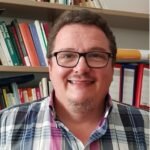 Thomas Haselwanter is responsible for web and information systems at the Information Technology Services (IT-Center) of the Universität Innsbruck, where his work centers on the strategic development and management of web applications used in research. His responsibilities include the design and execution of core institutional infrastructure, notably concerning the implementation of repositories for research data at the University of Innsbruck. Thomas helped developing and sustaining institutional digital services, having previously served as the project manager for the “e-Infrastructures Austria Plus” project, where he focused on the establishment of coordinated Austrian e-infrastructure networks. Demonstrating his commitment to professional resources in this domain, Thomas is a contributing author in the field. He co-authored, alongside Heike Thöricht, several practical guides and reports, including “Classification of research data and storage systems” and “Erste Schritte zum Repositorium für Forschungsdaten an der Universität Innsbruck”.
Chair
 Maria Luisa Chiusano is Professor of Molecular Biology at the Università Federico II of Naples and Associate Researcher at the Stazione Zoologica Anton Dohrn, where her work centers on the implementation of Bioinformatics services and the management of BIG DATA BIO. Her responsibilities include serving as the local technical coordinator for the European infrastructure ELIXIR and participating in the EMBRC and EMSO working groups for strategic data management. Maria Luisa is crucial to developing and sustaining the national scientific community, serving as a co-founder of the Italian Society of Bioinformatics and a board member of the BIG DATA in HEALTH Italian Society. Author of over 80 scientific articles and Principal Investigator for numerous national and international projects, she demonstrates a career long commitment to advancing comparative genomics and the study of molecular responses to stress. Her editorial expertise is reflected in her roles for prestigious journals including Frontiers, Gene, and The International Journal of Genomics.