Aurora Winter School in VU Amsterdam: Use of Generative AI in Academia
The Winter School ‘Generative AI in Academia’ is an Aurora winter course within the Digital Society and Global Citizenship hub at Vrije Universiteit Amsterdam. Open to students and faculty across all disciplines and nationalities, it focuses on integrating generative AI into academic work and research.
Hosted at the Vrije Universiteit Amsterdam, the programme teaches participants how to use models like GPT and Llama for tasks such as data analysis, hypothesis generation, and literature summarisation. The curriculum is divided into a lecture-heavy first week followed by a collaborative second week where teams design a formal scientific study. Beyond technical skills, the course emphasises ethical responsibility, addressing concerns like bias, fairness, and the transparency of AI-generated results. Students are ultimately evaluated through a project pitch and a written proposal, ensuring they can apply these transformative tools to their specific fields of study.
Bridging the Gap in the Use of Generative AI
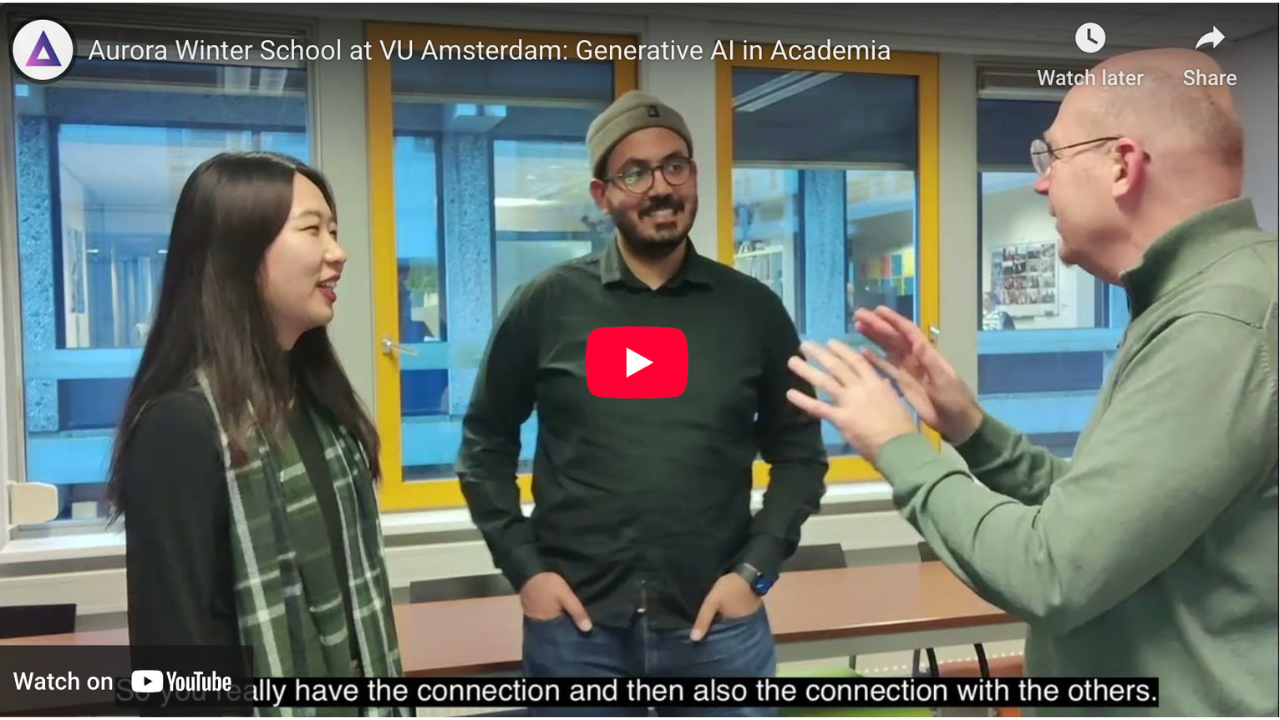
This insightful video documents the experiences of both the participants and the teacher. This course, a collaborative effort within the Aurora network, was born out of a necessity to bridge the gap between researchers using Generative AI tools and understanding how to use them properly, systematically, and considerably.

Course coordinator Dr. Ivano Malavolta, Associate Professor in Software Engineering and Director of the Network Institute, is joined by two PhD students from the University of Iceland, and a PhD student from VU Amsterdam to discuss the transformative nature of the programme.
Key highlights of the discussion include:
- The Power of Interdisciplinary Collaboration: Xin Chen (a sociologist) and Ahmed Hamdi Abdrabou Moghazi (a geologist) moved beyond their individual “bubbles” to co-design a project exploring the link between past climate change and human migration. In addition, Niels van der Heijden expresses the value of interdisciplinary composition of the participants.
- Moving Beyond the Basics: The participants reflect on how the course shifted their perspective from randomly writing prompts to a systematic A-Z approach for gathering information, verifying data, and structuring research proposals.
- Learning by Doing: Dr. Malavolta explains the deliberate design decision to combine theoretical lectures with intensive hands-on labs. This approach allowed researchers—even those without technical backgrounds—to use AI for coding, statistical analysis, and creating complex data visualisations.
- Ethical and Technical Depth: The group discusses the intense first week of lectures, which covered everything from the technical machinery of Large Language Models (LLMs) to critical debates on the ethics and perceived risks of AI in society.