Aurora is a cooperation between 11 universities across Europe that aims to increase quality and innovation in higher education in response to rapid societal change and strengthen the search for solutions to the biggest challenges facing humanity. To this end, Aurora Universities will create a variety of opportunities for students to gain international experiences as part of their studies and the skills, knowledge and drive to become social entrepreneurs and leaders.
Since the start of the cooperation, the universities have placed great emphasis on the students’ voices influencing all of Aurora´s policies, projects and innovation endeavours. To mobilize students, the Aurora Student Council has established The Aurora Student Champions and Ambassadors Schemes in collaboration with the universities and applications are now open until October 17th.
Alma Ágústsdóttir, president of the Aurora Student Council, says that this is a unique opportunity for students at Aurora Universities. Through their participation, students are directly involved in international cooperation and policy-making, develop skills that are in high demand by employers and have the opportunity to work with students from other universities and participate in Aurora events.
Alma also says that it is a great advantage how much flexibility Aurora offers students who are interested in participating. “Students can choose to participate as an Aurora Student Champion or Aurora Ambassador, depending on the level of commitment they want to take on and what type of projects they want to work on. Students can also suggest projects based on their own interests that help spread the Aurora message“. The aim is to find about 10 students at each university to participate in Aurora as either Student Champions or Ambassadors this academic year. When asked about what´s next, Alma says there are many exciting things going on for students within Aurora. “Yes, there are really exciting times ahead. For example, students are going to Spain in November to participate in a workshop to find solutions to improve student’s experience of higher education and enable more students to take part in their studies abroad. I am also going to promote a new project soon that Aurora students are invited to take part in, which is about presenting the students’ vision for the future in the context of an important conference next year, the Conference on the Future of Europe, organized by the European Union in Strasbourg”.
Group: Academics
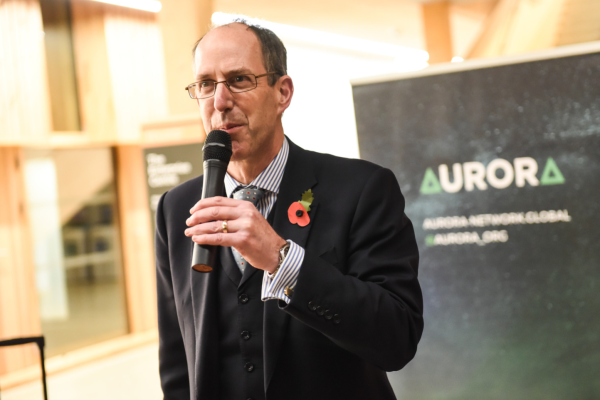
The Aurora community would like to express our gratitude and appreciation to one of the founding fathers of the Aurora Network, Professor David Richardson. Professor Richardson has been a pillar of the Aurora community and has played a vital role in the development of the Aurora Universities Network since its creation in 2016. Although he stepped down two weeks ago as Vice-Chancellor of the University of East Anglia, and therefore no longer represents his institution as a Board member of Aurora, his legacy and impact on Aurora remains strong beyond his tenure.
Professor Richardson has an impressive Aurora record of service. The University of East Anglia (UEA), under Professor Richardson’s leadership, was one of the founding institutional members of the network. He was also the Chair of the Aurora Board for four years from 2016-2020, and was recently re-elected again in 2022, serving as Board Treasurer. His belief in the added value of Aurora never wavered, including during the challenging period leading up to Brexit and the resulting changes this meant for higher education in the UK in the area of international cooperation and mobility. Despite these challenges, UEA remains committed to the Aurora Alliance as an Associate Partner in the new funding bid for the Erasmus+ European Universities Initiative.
“It has been a pleasure to work with David Richardson ever since we first started discussing establishing a new university network in 2016,” Aurora President Jón Atli Benediktsson states. “The Aurora Network thrived under his leadership and dedication. David was a strong supporter of Aurora expanding and applying to become one of the European University Alliances as he recognized the tremendous opportunities this would provide for our students, staff, and wider community.
David is a great friend and working with him has been a privilege. We very much appreciate his contribution to Aurora.”
Mirjam van Praag, President of Vrije Universiteit Amsterdam, said:
“As one of the founding fathers of Aurora, David is a long-time and dear friend to us. He excelled in keeping us all on track, from the start of the Network through the phase of forming the Alliance. With him on board, the road ahead was suddenly clear for everyone, redirecting us to more productive alleys whenever we went astray, looking at issues from a new angle, and all of that he seemed to do effortlessly.”
As the Aurora community, comprised of ten research-intensive universities, continues to strengthen our international cooperative partnership, we will carry forward Professor Richardson’s legacy through our continued commitment to academic and research collaboration, innovation in teaching and learning, positive student development and transformation.
University of the Future – Pedagogical Developments in Aurora
AURORA is a network of European research universities working towards creating universities of the future with systematic pedagogical development and innovation to meet current societal challenges.
Aurora aims to graduate students with the competencies and mindset necessary for future generations to thrive in ever-changing communities and a dynamic labour market. Emphasis is, furthermore, placed on students acquiring entrepreneurial and innovative skills, thus developing the mindset and drive needed to tackle the numerous societal changes the world currently faces.
Do you want to participate in the University of the future?
“The Aurora collaboration is an ambitious project that has been under development for years. The first phase of the project is been characterised by a lot of work on behalf of the universities staff; administrative and academic alike, to align processes in different institutions and find common ground for university collaboration,” says Sandra Berg Cepero, Aurora project manager at the University of Iceland’s Division of Academic Affairs and Task Team leader for Teaching for Societal Impact. Teams were formed and collaborative projects were defined. Sandra says that the next phase in the collaboration will revolve more around the substance, the actual work of creating Aurora courses, creating academic connections between the universities, and work- and pedagogical development among the teaching staff. Emphasis will also be placed on promotional material on educational vision and Aurora’s ideals. “Teaching staff is encouraged to keep abreast and can always contact me (sandra@hi.is) if they are interested in Aurora’s pedagogical development or even participate in creating Aurora courses, joint study programmes, or other exciting opportunities this collaboration entails.”Aurora’s educational vision in teaching and learning
The collaborative platform will be digital and, first and foremost, based on a virtual campus where students and staff will have mobility in various fields in diverse forms. Teaching and learning will be executed in the platform, simplifying the design and development of joint courses and degrees in line with the Aurora ideal. To realise its ideals, Aurora has created an educational vision to follow that supports both its goals and execution. The Aurora educational vision is based on four main pillars; the UN Sustainable Development Goals, pedagogical development, students’ competencies, and the internationalisation of study programmes, and the network universities are supposed to:- Tackle societal needs and challenges and find research topics across traditional academic boundaries of disciplines.
- Implement student-centred and inclusive learning – and teaching methods
- Strengthen students’ educational and personal competencies as well as academic ones
- Use internationalisation in education to enhance the quality in education and student competencies
First Aurora micro-credential “Sustainability & Climate Change” awarded
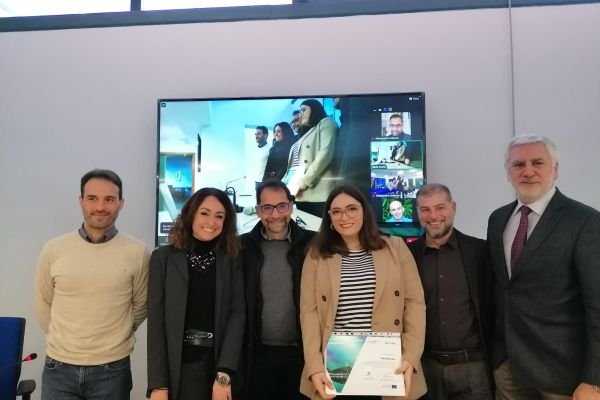
On 2 February 2023, Universität Innsbruck awarded the first micro-credential certificate to Giusi Merola from Università Federico II di Napoli. The micro-credential, part of the Aurora joint programme on “Sustainability & Climate Change,” was awarded for Giusi’s completion of 10 ECTS credits.
Giusi is the first student, not just at Federico II but throughout the Aurora European University Alliance, to receive a micro-credential, making her the trailblazer for a new era in higher education within Aurora. A micro-credential is a record of the learning outcomes acquired after a short course of study. The courses are designed to provide students with specific knowledge, skills, and competencies that meet societal, personal, cultural, or labour market needs. Micro-credentials are portable and can be shared with potential employers or higher education institutions.
Giusi’s experience with the micro-credential was overwhelmingly positive. She shares, “During the lessons, we learned about climate change from various perspectives: anthropological, social, cultural, and scientific. We were given the tools to identify the realities that truly care about sustainability. As a final test, we wrote a report identifying companies close to receiving the B-Corp certification and developed a social start-up project which was presented at the European Forum of Alpbach in Austria to hundreds of students and investors. The experiences enriched me as a person, added valuable skills to my CV, and created numerous online and offline connections.”
The “Sustainability & Climate Change” micro-credential is a unique and innovative approach to learning that aligns with the European Council Recommendations. The micro-credential allows participating universities to share the latest research results with students in real time through research-led teaching and challenge-based learning. The certificate not only strengthens opportunities for inclusive international learning but also engages all partners in the Aurora Alliance to provide quality education. Moreover, the micro-credential certificate represents the effort for interoperability of the Aurora universities’ IT systems and connection to common European interfaces and platforms, such as Europass and European Digital Credentials for Learning. This is a further step to help overcome recognition problems that still exist in some places, often due to national study laws.
Universität Innsbruck’s issuance of the first micro-credential certificate demonstrates the potential for a new and innovative approach to learning across Aurora universities. The “Sustainability & Climate Change” micro-credential provides students with a unique opportunity to gain specialized knowledge and competencies while simultaneously addressing the challenges posed by climate change.
Palacký University Staff participated in the Open Science Incubator
Tereza Motalová is the first person from within the Aurora Community to have successfully completed the Open Science Incubator organized by VU Amsterdam. Completion of this Incubator plays a crucial role in the creation and further development of Open Science communities within Aurora, and at Palacký University Olomouc in particular.
Building on the renowned Open Science expertise of the Vrije Universiteit Amsterdam, in the Open Science Incubator Dutch Open Science experts trained the participants in how to set up, develop and manage an Open Science community, over the course of a 12-week programme.
Based on the outcomes of the Open Science Incubator, a comprehensive Open Science Community strategy and action plan were created at UP, pioneering these developments in Czech Higher Education. This led to UP making a concrete plan towards the creation of the Open Science Community Olomouc, which aims is to generate interest form a core group of influencers and engage early career researchers and students informally, through a variety of methods.
According to Tereza, “participating in the Open Science Incubator was a great experience, which will be invaluable in developing Open Science at Palacký University. I look forward to putting everything we learned into practice!”
This development directly contributes to the completion of the activities in Aurora RI WP6, and ties into Aurora’s ambitions for the next phase and the activities of the proposes work package and Research and Open Science.
Aurora’s work on Eastern Partnership presented at ACAs “What’s New in Brussels?” Seminar
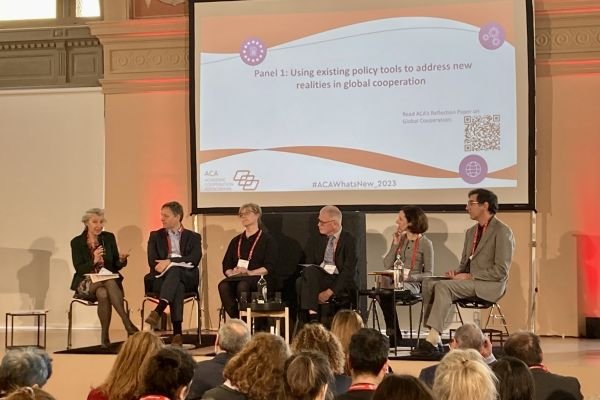
On the 2nd and 3rd of February, Selma Porobic was invited to ACA’s (Academic Cooperation Association) seminar “What’s new in Brussels? – Recent Developments in European Policies and Programmes” to introduce Aurora’s Capacity Development Support (CDS) programme with special focus on its institutional support to the V.N. Karazin Kharkiv National University in Ukraine.
After two consecutive years online, ACAs flagship seminar “What’s new in Brussels?” was this year organized in-person in Brussels, providing its speakers and participants with the full networking experience and overview of the latest developments regarding the European Higher Education Area in a global perspective. The 2023 agenda gathered various European Commission representatives as well as a variety of policy advisers and experts in the International Education thus offering a wide range of thematic sessions and panels: from the latest policy developments and priorities such as Diversity and Inclusion, to prospective projects involving the Eastern Partnership, Western Balkans, Sub-Saharan Africa & South Mediterranean.
In her session, “Working with Global Regions – Eastern Partnership“, Selma Porobic shared the results of the Aurora’s unique CDS programme in Central & Eastern Europe, and how it was transformed into a tailor-made support scheme to address the needs of the war-affected Aurora associate partner, V.N. Karazin Kharkiv National University. Since March 2022, as Ukraine Support Coordinator in Aurora, and in a close collaboration with Karazin’s leadership, she has been fully managing the emergency response as well as designing and implementing the long-term, systemic and institutional support for this partner university in Ukraine.
In this panel, Selma also introduced the continuation of this engagement in the next phase of the Aurora Alliance’s programme as part of the work package Capacity Building and Community Engagement. During the next four years, another dedicated task team, Karazin University Peace Education Hub, led by Palacký University Olomouc, plans to work towards further strengthening of the Karazin University’s capacity for education and training in conflict transformation, and peace building within the wider Kharkiv region.
Looking back at the European Universities Forum at Palacky University Olomouc
On the 1st and 2nd of December, Palacký University Olomouc organised the European Universities Forum. This high-level event, organised in the light of the Czech EU presidency, provided its participants an opportunity to discuss and assess the role of European Universities Initiative pilot phase in the Czech higher education context and within the European aims of building the Higher Education Area.
This forum was opened by the Czech Deputy-Minister for Education Radka Wildova, who stressed the importance of European Universities, which is a priority for the ministry, and praised the Aurora Alliance for its excellent implementation of the initiative’s lofty ambitions.
Following the Deputy-Minister, UP Rector Martin Prochazka’s opening speech pointed in the direction of expressing the importance of European university Alliances in the national higher-education framework as well as overall progress of Aurora Alliance inseparable from institutional contributions of each dedicated member of the Aurora team working together. He noted the excellent feedback received from the Commission for Aurora results so far, who described Aurora as an Alliance that “has made remarkable progress and can serve as a model of what is possible to achieve as an alliance.”
We welcome you to take a look at the aftermovie of the event. Below you can find a detailed report of the various panels and workshops.
Day 1 – High-level Panels
Panel 1: State of Multilateral Collaboration and Support to European University Initiative
This opening panel was moderated by Michal Malacka, Vice-Rector for Strategy and Regional Affairs at Palacký University Olomouc and featured contributions from Ioana Dewandeler, Higher Education Policy Officer at the European Commission; Emmanuelle Gardan, Director of the Coimbra Group of Universities; Tilmann Märk, Rector of the University of Innsbruck; Thomas Estermann, Director of the European Universities Association; and Thomas Baumgartner, Aurora Institutional Coordinator at the University of Innsbruck. The panel focused on the significance of the European University Initiative as a flagship program of European Higher Education with synergies concerning the European Research and Innovation Area, and its overall contribution to the European Strategy for Universities. It brought to the fore importance of a supportive multilateral environment for European University Alliances and their long-term sustainability. European Commission representative, Ioana Dewandeler shared a long-term vision and policy support for the European University Alliances stemming from EU Council’s conclusions in May 2021, stressing both finical support until 2030 but also how being part of Alliances contributes to strong and diverse universities which are crucial to the growth of higher education institutions in Europe aligned with European University Strategy and discussed priority areas such as inclusion, student-centered approach, international cooperation, future proof skills and green and digital transition. Rector Märk, representing both Aurora Alliance and his institution reminded us of institutional integration of the alliance results as a way forward to achieving a real transformative impact across our universities. Making alliance European level results strategically embedded within our universities as a way forward towards achieving the aimed goals of institutional relevance. Thomas Estermann pointed out right governance models – aligning institutional governance with overarching Alliance one and mainlining enthusiastic group of people running the programme brining n board more and more academic staff as crucial to continuity needed to achieve real change (bottom-up matching the top down). Other panelists discussed EUN Alliances being role models for the entire sector, inspiring institutions who are not part of the initiative to promote the necessary changes in society.Panel 2: Ambitions, Challenges & Best Practices of Pioneering European University Alliances
In this second high-level panel, moderated by Roman Klepetko and Lenka Procházková of the Czech National Agency for International Education and Research, Michal Malacka, Pavel Doleček, Břetislav Dančák, Zbyněk Škvor, and Snježana Prijić-Samaržija discussed the key elements for the implementation of the joint vision, mission and strategies of the European University Alliances by zooming in on the transformative leadership, co-engagement and governance models in a transnational European context, and with a reference to regional geopolitical challenges, including the war in Ukraine. The panel was preceded by an opening speech by Tetyana Kaganovska, Rector of V.N. Karazin Kharkiv National University reminding us how political context can force institutional challenges that need situational ad hoc solutions and how the strength of Alliances already working in the region such as Aurora with Capacity building programme proved to be crucial in urgent responses needed to adapt to new working circumstances. Rector Snježana Prijić-Samaržija from Rijeka University pointed out how a project-based approach vs an institutional-based approach (from vertical to horizontal) is important and introduced functional integration in the context of decentralised universities as relevant to the success of EUN goals. YUFE Alliance aims for alliance of faculties as well and in that way supports the institutionalisation of the EUN goals. The representatives from CVUT, Masaryk University, and Charles University focused on the Czech national context and collaboration across Alliances to create real momentum for change in Czech legislation toward facilitating more institutional internationalisation in education. The panel concluded how strategic alignment, policy and funding and scaling up programme managerial teams and bilateral institutional partnerships as well as sending off the right signal to active stakeholders in EUN initiative at national and European level is of crucial importance for the overarching ambition of the programme.Day 2 – Workshops
European University Alliances – Research and Innovation
This workshop brought together representatives from all Czech alliances focusing on the most tangible results of the Science with and for Society(Horizon2020) project on the institutional level. They discussed the challenges and best practices of aligning our research resources so far across the Alliances members, and how to move ahead beyond the pilot phase. Some conclusions of the workshop are that there are notable key differences and similarities; and that we are all tackling similar challenges: Engagement of researchers, Lack of funding, Cultural differences, and different structures: some universities have centralised bureaus for research support and infrastructures, others are decentralized, managed by individual faculties or other bodies, and National context, co-funding as well as Fragmentation of projects, described by Pavel Senderak as a “project jungle”. However, the joint discussion of values and objectives showcased a lot of similarities in terms of priority areas such as Sustainability, climate, environment, Health and Wellbeing, Digitalisation, Democracy and citizen engagement, Equality and Inclusion and more as well as common objectives of promoting Open Science, Sharing Infrastructure, increasing Research support collaboration, and aiming towards the HR transformation across the institutions.European University Alliances and Governance Models –Deepened Collaboration
In this workshop we had project managers from all Czech and guest Alliances engaging together in sharing the transnational cooperation models so far i.e., governance prototypes established, and how do they contribute to the implementation of the common vision, strategy, and activities of the EUN Alliances. The focus was also on student and staff participation and inter-university campuses after the pilot phase, focusing on improvements in the next phase. Aurora, YUFE, EDUC, EUROTEQ all presented their own innovative and new, systemic, cooperation models with new ideas in moving forward. The discussion has been most fruitful and revealed how project management and governance have been overlapping greatly from the beginning of all alliance programs. After the pilot phase, most alliances required detailed fleshing out of roles and responsibilities for key positions such as programme directors, institutional coordinators, governing board, and central offices, further defining the mandates and workflows. Daniela Trani, programme director of YUFE presented a governance model which recognised the growth of the project portfolio and with that revision of the governance too. Alma Ágústsdóttir, Aurora Student Council President reminded us of the active role of students in the governance model of Aurora which is also given more prominence in the next phase with the entire task team dedicated to this. Dr Selma Porobic, workshop moderator and Aurora Alliance UP Coordinator concluded the workshop by underlining how governance with decision-making process is a continuous effort with further elaboration needed in all Alliances and how this is in line with the very objectives of creating trans-institutional organisation that EUNs aspire to be.European University Alliances, Challenged-based Approach and Stakeholder Engagement
The third workshop featured a high-level round table discussion. Led Otakar Fojt, research attaché at the British Embassy and chair of the Palacky University Board of Trustees, the discussion brought together various local and international stakeholders to talk about how European Universities can better collaborate with external stakeholders. During the discussion, the group identified the three main levels of stakeholder cooperation: the global; the European; and the regional level. Moreover, the distinction between governmental and private stakeholders was highlighted. The global level poses many complications for European Universities, having to strike a balance between institutional preferences and geopolitical developments and tensions. On the European level, the discussion focused on the need for effective lobbying and engagement of various European stakeholders. It was concluded that in order to effectively reach the various European stakeholders, it is important to provide a unified message, using the appropriate channels, such as the ForEU-platform and established university networks. More can be done to connect European Universities to European-level industrial and business umbrella organisations. In order to facilitate cooperation on the regional level, the importance of careful matchmaking between the most compatible regions. To facilitate this, clear regional profiles should be made, featuring among other aspects the region’s strategic plans and particular regional strengths. The sharing of such information would allow for the targeted development of cooperation between the various concerned regions, allowing them to bundle forces where relevant. The overall conclusion was that European Universities can play an important role in connecting diverse stakeholders, by uniting and connecting various fragmented efforts. To achieve this, a clear and unified message is paramount. For more on the European Universities forum, place take a look a the short interviews and statements below: Interview – Radka Wildová: https://youtu.be/cJLMPlF80Bg Interview – Martin Procházka: https://youtu.be/pIKRn4bq1b0 Interview – Anne-May Jansen: https://youtu.be/wJiJm51rRh4 Interview – Thomas Estermann: https://youtu.be/F0hvOE0oqeM Interview – Pavel Doleček: https://youtu.be/aqHyF2Rs2UEPairing scientific excellence with social awareness and responsibility
Aurora universities share a commitment to social relevance and excellence in research. Aurora RI was created to build a platform to maximise Aurora’s research and innovation for societal impact. This means working together towards excellence in research with coordinated research support.
We want researchers and scientists in Aurora:
- to have an easy time collaborating with one another:
- Get assistance finding grants
- Share resources and equipment
- travel to meet one another
- to be evaluated fairly with a wider criteria
- to connect with citizens
- to have a positive impact on society
Collaboration is key
Auður Inga Rúnarsdóttir is one of those people, as she is the project manager of Aurora Research and Innovation. According to her, collaboration is key to changing the world of academia. “We can make academia fairer, evaluating researchers based on wider criteria, for example, not focusing only on the number of publications but also other factors. We make sure that research is societally relevant and in line with the SDGs,” she points out. The final goal is to develop a shared support plan for research and innovation where all the universities agree on joint next steps and what changes need to be made. “We work on open science policies, open access to data and publications. This allows researchers to use information that may otherwise not be available to them or blocked by a paywall. Institutions must choose which paywalls to break, and the selection is always imperfect. Wealthier institutions can grant more access, fostering inequality in academia,” says Auður on the importance of the project.Where do we stand now?
This is a three-year project, and we are one year in. The first year was focused on mapping, gathering information about policies, methods used for outreach, research support, best practices in HR, and citizen engagement. Entrepreneurial activities were analysed to set up plans for communicating and disseminating the work. “We have created a database for infrastructure and resources and are currently working on how to share it. In three years’ time, we will have action plans in place in multiple areas (HR, research support, entrepreneurial activities) as well as new structures for effective cooperation between science and society, thus pairing scientific excellence with social awareness and responsibility,” concludes Auður on Aurora’s dedication to develop platforms for academic collaboration and in the process, hopefully, making academia greener, fairer, and better for all. A video with Auður Inga made for the Autumn Virtual Aurora Biannual held 9 – 10 November on Sustainable Resources and Mobility in Europe:Pilot Domain “Sustainability & Climate Change” bears first fruits
“A journey of a thousand miles begins with a single step” this well-known quote highly resonates with the current transdisciplinary educational programme Sustainability & Climate Change, as it makes headway within the Aurora Alliance at Universität Innsbruck. The goal is to create an innovative, transdisciplinary educational joint program dealing with sustainability and climate change in a holistic way.
Christina Raab is an active member of the Pilot Domain Sustainability and Climate Change and is also Deputy Head of the Aurora European Universities Alliance Office at Innsbruck. When not working on all things Aurora and sustainability, she works at the Office for the Bologna Process & Teaching Development. Although the ongoing process has many stumbling blocks, Teaching Development is very dear to Christina.
“As part of my job, I have the privilege of developing new, innovative courses with colleagues and academics. For me, it is always important and very helpful that Aurora pays attention to learning outcomes and student-centredness and that I can accompany and monitor this focus with suitable tools”.
The biggest goal for Christina and the Pilot Domain Sustainability and Climate Change members is to create an innovative, transdisciplinary educational joint program dealing with sustainability and climate change in a holistic way — one that considers both ecological and economic concerns. Additionally, this programme will be designed to address complex societal problems in various ecosystems. With this in mind, students will need to learn skills and develop mindsets that enable them to take responsibility for their work and life and become engaged civilians who tackle societal and environmental problems.
Sustainability and Climate Change Joint Programme
The desired mission is going to be fulfilled soon. The Sustainability & Climate Change transdisciplinary educational programme will be open to all Aurora Master students of all disciplinary backgrounds, accounting for 30 ECTS credits. It is jointly created by the Aurora European Universities Alliance.
Christina and her team members have opened Aurora courses at Universität Innsbruck so that students from all partner universities can participate online, on-site or through short-term mobility. Two of these courses form the 10 ECTS credit micro-credential “Sustainability & Climate Change”, developed by the same name’s pilot domain. This is the first micro-credential offered by both Universität Innsbruck and Aurora Universities. Students who successfully complete the micro-credential “Sustainability & Climate Change” receive a digital certificate from Aurora (issued by Universität Innsbruck). These students will have had a learning experience, enabling them to act as social entrepreneurs and innovators, willing and able to take responsibility. With this micro-credential, Aurora students gain an understanding of how their scientific and educational background can be applied in a transdisciplinary and challenge-based way to solve societal challenges. Students also learn to work effectively with other members from diverse, multicultural backgrounds within international teams.
With such a fantastic milestone and achievement in sight, Christina Raab said: “I would like to extend my thanks to all members of the groups for their efforts and dedication over the last year—especially those in Pilot Domain ‘Sustainability & Climate Change and Borderless Learning Group. We are grateful!”
Looking back at the International Summer School: Refugee Law & Rights
In support of our Ukrainian partners at V.N. Karazin Kharkiv National University, the International Summer School Refugee Law & Rights took place between the 15th and 25th of August, in Olomouc. The hybrid school, co-organized and implemented by Palacký University Olomouc and Karazin University, welcomed 24 participants both online and in person.
The participants came from six countries including United Kingdom, Austria, Germany, Italy, Luxemburg, and Ukraine. They comprised both undergraduate and postgraduate students of social sciences, mostly from law studies, sociology, and human rights.
During ten dynamic days, the participants followed lectures, engaged in discussions and participated in an extensive evening program, during which the students had a chance to engage with professionals in the field, UNHCR experts, as well as a plenary sessions on Peace Building and Recovery with Karazin University Staff and Peace Education MA student from the University of Innsbruck.
As part of the ongoing Aurora Universities donations and support campaign for Karazin University, the school was able to provide 5 students from Karazin University free of charge online participation, and to engage another 5 university professors and 2 administrative stuff in its organization and full program implementation, alongside the UP and International experts.
A detailed report of the International Summer School on Refugee Law & Rights can be found here.
The full program of the summer school can be found here.
European Research Area actions and Aurora Universities commitments to implementation
Aurora Universities is engaged in the discussions on developing the twenty European Research Area (ERA) actions, together with 10 university associations, six stakeholder groups, Member States and Associated Countries, and the European Commission in the ERA Forum. After several meetings of the ERA Forum and meetings with university associations, the implementation phase of activities defined under the ERA actions is about to start. Aurora Universities Network is committed to be engaged in several actions.
Further details can be read here.
Workshop Outcomes – Peace Education for Karazin University, and GRT inclusion in higher education.
On 30 June 2022, two workshops titled ‘Developing a Peace Education Programme for Karazin Kharkiv National University in Ukraine’ and ‘Removing barriers to Higher Education for Gypsy, Roma and Travellers’, were organised and moderated by Dr Spyros Themelis (UEA) and Dr Selma Porobic (Palacky University Olomouc) at the University of East Anglia (UEA). The two workshops, implemented under the framework of the Culture: Identity and Diversity pilot domain were a great success and will produce concrete outcomes in the future.
‘Developing a Peace Education Programme for Karazin Kharkiv National University in Ukraine’
One of the developing features of Aurora support to Karazin Kharkiv National University is peace education programme. Peace education is an emerging field focusing on peacebuilding efforts through education in situations of collective trauma such as war, mass displacement, and genocide. This pedagogy focuses on the creation of safe environments for teachers and students to foster dialogue and reflection by enabling sharing of their own traumatic (and often conflictual) narratives and supporting perspective-taking. Under the guidance of Dr. Selma Porobić, this workshop brought together 14 experts from over 9 different institutions, and aimed to explore a collaborative model focusing on the development of peace education programme for Karazin Kharkiv University. During the group discussion two set of questions were addressed. Group A focused on how to develop Peace education (PE) as integral part of general competences for academicians at Karazin, while Group B focused on researching PE in the ongoing war situation in the city of Kharkiv and in the Eastern Ukraine. Among the most significant outcomes of this workshop, are the establishment of the International Expert team for peace education platform at Karazin University and initial planning of peace education programme including timeline for different components, research methods, staff training and COILs. Thanks to the SPACE Network, represented in the workshop by Elke Kitzelmann (UIBK), an initial donation was made towards the realization of the Peace Education platform and further Aurora collaborations with Karazin University. In addition, collaborations with UIBK’s new MA Peace Studies program, under prof. Andreas Oberprantacher were initiated as well. As part of International Summer School in Refugee Law and Rights, co-organized by Palacky University and Karazin University, on August 24th, students from UIBK’s Peace studies program will engage with Karazin University’s MA students in the plenary session ‘ Prospects for Peace Building, Recovery & Reconstruction.’ We look forward to engagement from more Aurora universities. Enquiries about the PE program at Karazin University can be sent to Dr. Selma Porobić, coordinator for Aurora support to Karazin University.‘Removing barriers to Higher Education for Gypsy, Roma and Travellers’
Gypsy, Roma and Travellers (GRT) are the largest ethnic minority and at the same time the most marginalised in Europe. It is little surprise, therefore, that they are also one of the most, if not the most, underrepresented group in higher education. This workshop explored the types of barriers facing Gypsy, Roma and Traveller students in accessing Higher Education and experiences of inclusion and exclulsion. In total 15 participants attended the event, including academics, practitioners, reseach students, as well as inclusion leaders in schools and local councils. Participants were of Roma and non-Roma origin and they shared perspectives from a variety of European countries (including Germany, Greece, Iceland, Sweeden, the Czech Republic, Romania and the UK) and institutional contexts, including, schools, universisties, musuems and local couincils. One of the outcomes of this workshop, was the decision to create a network of Roma inclusion research in higher education. It was also agreed that this network will aim to map national and international policies of inclusion and examine national and international reports relevant to the topic. Finally, it was agreed that the network will explore the possiblity of setting up courses on Roma education across the Aurora network and more broadly, and work with outreach officers to explore innovative practices on access. Dr. Spyros Themelis, who led the workshop, will explore options for hosting a face-to-face meeting at the start of the new academic year. If you have any suggestions or would like to get involved, please email Spyros at: s.themelis@uea.ac.uk. We welcome contributions from across all Aurora universities.Aurora supports letter to European Commissioner Mariya Gabriel for transparency on R&I budget allocation
Aurora Universities welcomes additional funding to the Horizon Europe (HEU) budget. Aurora Universities also support the letter by EuroTech Universities to the European Commissioner Mariya Gabriel and the Director-General of Research and Innovation Jean-Eric Paquet to provide more transparency on the HEU budget. Horizon Europe is the European Union’s main funding program for Research and Innovation and a vital source of funding for researchers and innovators across Europe.
The letter argues that Horizon Europe’s current budget allocation process lacks transparency and that they are progressively becoming a financial source for other European Commission-led priorities outside of the programme. This covers the European Chips Act, the Health and Emergency Response Agency and lately, the Hydrogen Valley initiative under the REPowerEU Plan. Together, these three initiatives will be financed through HEU with a budget of close to EUR 1bn. This redirection of funds from HEU to other European Commission initiatives gives uncertainty to researchers and innovators across EU member states concerning the availability of funds. In addition, budget allocations are becoming increasingly complex, making it difficult to understand how much money is available for research.
The letter calls on the Commission to improve the transparency of Horizon Europe’s budget by adding a set of indicators to the Horizon Europe Dashboard, which can help assess in real-time how much of the HEU budget has already been committed to which initiative and how much has been paid. This would also provide visibility as to the commitments targeting the original HEU objectives or objectives outside of the programme. Read the full letter here.
Aurora Universities support The Guild’s concerns and recommendations related to European AI Act proposal
Aurora Universities support the concerns, statements and recommendations provided by The Guild[1] regarding the proposal of the European Commission for the Artificial Intelligence Act (AI Act)[2].
The proposal for the AI Act was published in April 2021 and is being discussed by the European Parliament and Council of the EU. The Act describes harmonised rules on the use of AI and may impose a burden on research and researchers. The statement and recommendations by The Guild call upon the European Commission to also meaningfully engage academic researchers and other research actors in future monitoring and amending processes of the Act.
Main concerns deal with 1) the AI approach attempting to regulate AI systems while not banning some practices, 2) defining AI too broadly, thereby encompassing non-AI technologies and not being future-proof, 3) the additional burden to EU research grant applicants as they already have to provide information on potential ethical risks, and 4) the consequences of unharmonised interpretation and harmonisation across EU and EEA member states.
Recommendations include a call to 1) establish a high-level expert group of academic researchers to advise on amending the body text or annexe of the AI Act, 2) setting up regulatory frameworks enabling banning jeopardizing practices, 3) ensure a harmonized implementation of the AI Act across the EU, 4) ensure avoiding an overall prohibition of some AI systems, and 5) ensure that universities can act as ‘regulatory sandboxes’ and can test AI systems in safe environments, e.g. by supporting research projects on the concepts introduced by the AI Act and the compliance to the Act.
Aurora will share and discuss these concerns with relevant stakeholders and policy and decision-makers at national and European levels.
[1] The Guild of European research-intensive universities. The Guild sets recommendations for the AI act. Weblink: https://www.the-guild.eu/news/2021/the-guild-sets-recommendations-for-the-ai-act.html
[2] Proposal for a regulation of the European Parliament and of the Council laying down harmonized rules on artificial intelligence (artificial intelligence act) and amending certain union legislative acts. Com/2021/206 final. Weblink: https://eur-lex.europa.eu/legal-content/en/txt/?uri=celex%3a52021pc0206
Manifesto to promote the discussion on R&I issues within the Conference on the Future of Europe and beyond
AURORA has signed and supports the manifesto and call on the Conference on the Future of Europe, European Commission, European Parliament and Council of the European Union to discuss and deepen Research & Innovation issues as a contribution to solving global challenges over the months to come.
Research and Innovation are at the heart of contributing to achieving the green and digital transitions, ensuring a fair, sustainable, competitive and depolarized society and economy, and addressing health and geopolitical challenges. This should be reached in co-creation and co-design with citizens and all actors. Several European and national programmes are supporting this. While the Conference is discussing many themes related to the challenges including education, Research and Innovation risks are being omitted from the discussions. Therefore, we emphasize that Research and Innovation should be even more at the core of the debate on the EU’s future challenges and priorities. For more information, read the full manifesto, being signed by over 65 national and European umbrella organizations representing research and business:
Link 1 and link 2.