News
In May 2026, the University of Duisburg-Essen hosted the Aurora Annual Conference 2026, an international gathering of the Aurora community from its 15 universities across Europe and Canada. Gathering nearly 200 participants, the conference served as a key platform to discuss the progress of the Aurora 2030 programme while marking the ten years of cooperation within the Aurora network.
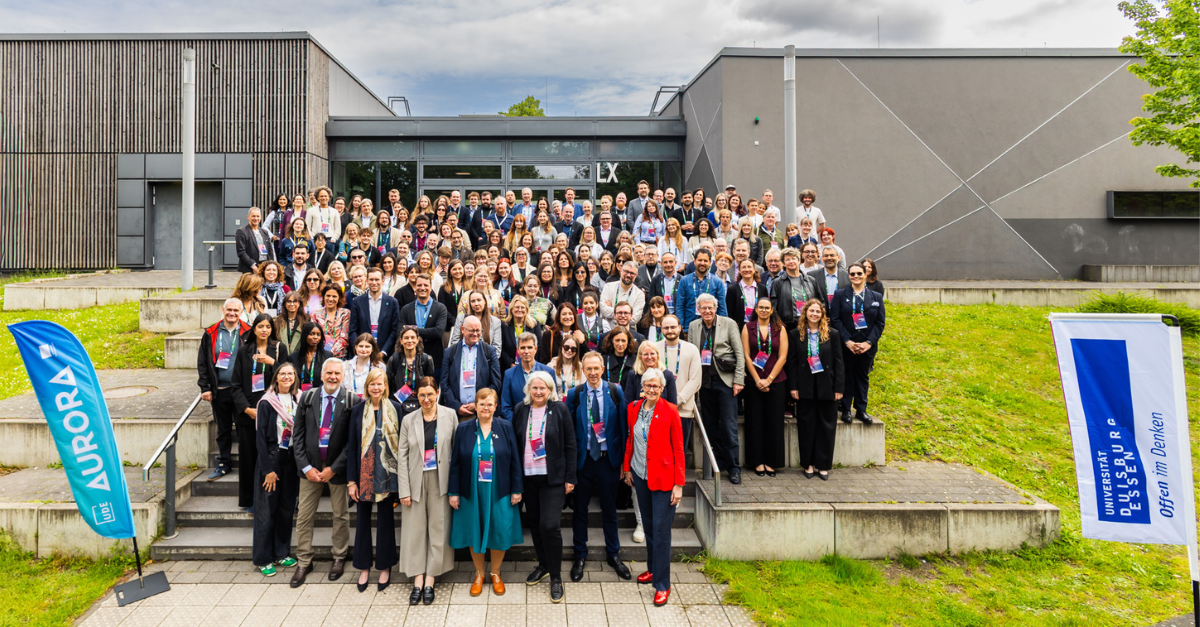
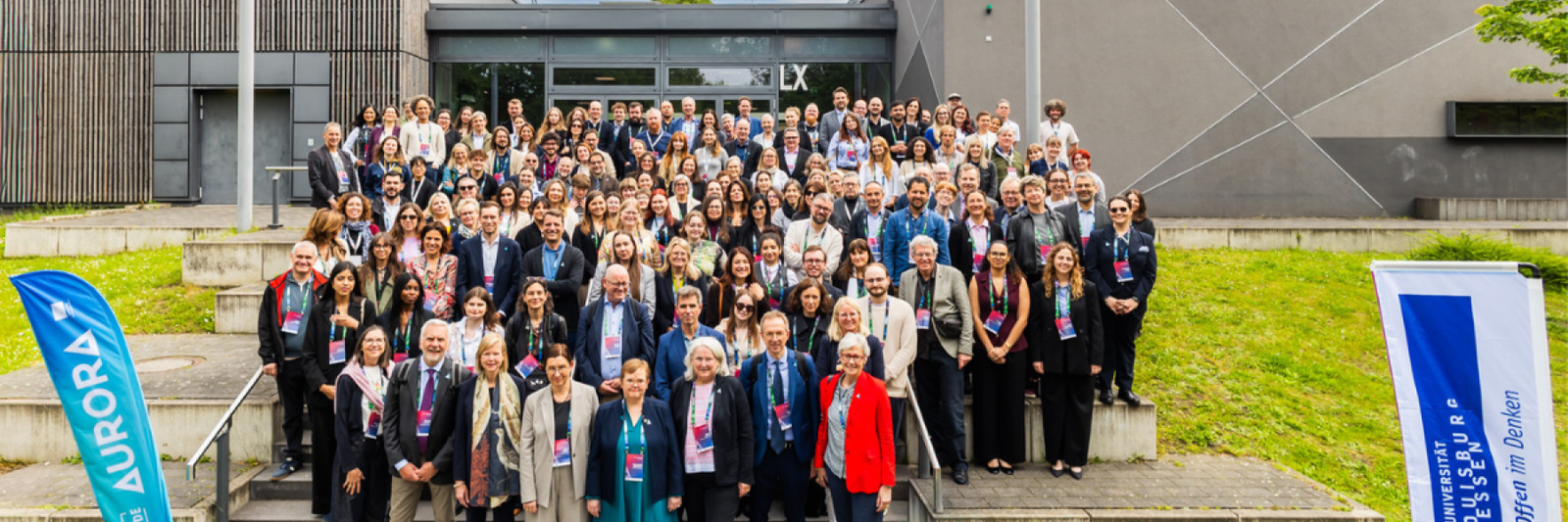
Participants from 15 Aurora universities across Europe and Canada. © Photo credit: eventfotograf.in
Over four days, academics, students, staff and stakeholders, engaged in plenary sessions, workshops, strategic meetings, and networking events designed to address some of the most pressing challenges facing higher education. Numerous exchanges focused on how universities can strengthen their societal impact, foster innovation, support student engagement, and build trust in science in an increasingly complex global environment.
Building A Future Of Trust
A central theme throughout the conference was the role of universities as trusted institutions. In the opening keynote, renowned science communicator and chemist Dr Mai Thi Nguyen-Kim addressed the challenge of communicating science in an era of information overload and declining public trust. Her presentation sparked discussions on how universities can engage more effectively with society, combat misinformation, and strengthen public confidence in research and evidence-based decision-making.
© Photo credit: eventfotograf.in
Research and innovation, and entrepreneurship featured prominently across the programme. Sessions examined topics such as open science, digital education, international mobility, citizen engagement, and innopreneurship, highlighting ways Aurora institutions are developing new approaches to teaching, learning, and research. Students also played an active role in the conference, contributing perspectives on inclusion, mobility, and the future of students’ active involvement in European higher education.
During the conference, attendees confirmed their commitment to Aurora’s long-term vision for transforming higher education through joint educational programmes, interdisciplinary research, and learning opportunities that prepare students to tackle global challenges.
Marking Milestone Moments And Achievements
One of the highlights of the Opening Ceremony at the Aurora Annual Conference 2026 was the handover of the Aurora Presidency to Dr Margrethe Jonkman, President of the Executive Board of Vrije Universiteit Amsterdam. In her first address as Aurora President, Jonkman highlighted the importance of strong collaboration among Aurora universities in a rapidly changing international landscape and emphasised the commitment to joint education, knowledge exchange, research cooperation, and societal impact.
The opening also featured the seizmic Awards 2025, an initiative that rewards students’ engagement for societal impact through their social entrepreneurship and innovation projects. This year, Project SavEat took the grand prize and was lauded for its practical solution to food waste in Naples, Italy.
© Photo credit: eventfotograf.in
While the conference focused on future ambitions, it also provided an opportunity to reflect on Aurora’s achievements since its inception in 2016. Over the past decade, Aurora has grown into a global network of universities committed to matching academic excellence with societal impact, and doing this through international collaboration and community engagement. The Aurora community looked back on ten years of joint projects, student exchanges, research partnerships, and institutional cooperation that have strengthened connections between member universities.
The conference was also an opportunity to recognise and formalise the work of Aurora Communities of Practice (CoP). During the closing ceremony, three CoPs were voted as laureates for the first-ever Aurora CoP Awards: South-South and Triangular Cooperation on Food Systems and Climate Change (SSTC- FSCC), Peace in Practice Across Universities, and Permahaven Research Group (PRG).
The Aurora Annual Conference 2026 further emphasised that the achievements of Aurora’s first decade provided a foundation for the next phase of development. By combining reflection on ten years of progress with a clear focus on future goals, the conference showed how European university alliances can help shape a more connected, inclusive, and resilient higher education landscape.