News
From 8 to 11 September 2026, the EAIE 2026 conference and exhibition brought together thousands of professionals from across Europe and beyond. Under the theme The Rhythm of Revolution, the conference explored how the higher education sector can navigate rapid change while creating new opportunities for collaboration, innovation and impact. Glasgow became a central hub for the community to discuss how to make internationalisation more inclusive, learning more connected, mobility more meaningful and Europe more resilient.
Aurora brought these ambitions to life through its booth at the Scottish Event Campus exhibition hall. Over fifty visitors dropped in to discuss international cooperations with representatives from Aurora universities present at the EAIE 2026 over the four days. In addition, Aurora showcased collaboration in action in four sessions that offered different perspectives on some of the key questions facing international higher education today.
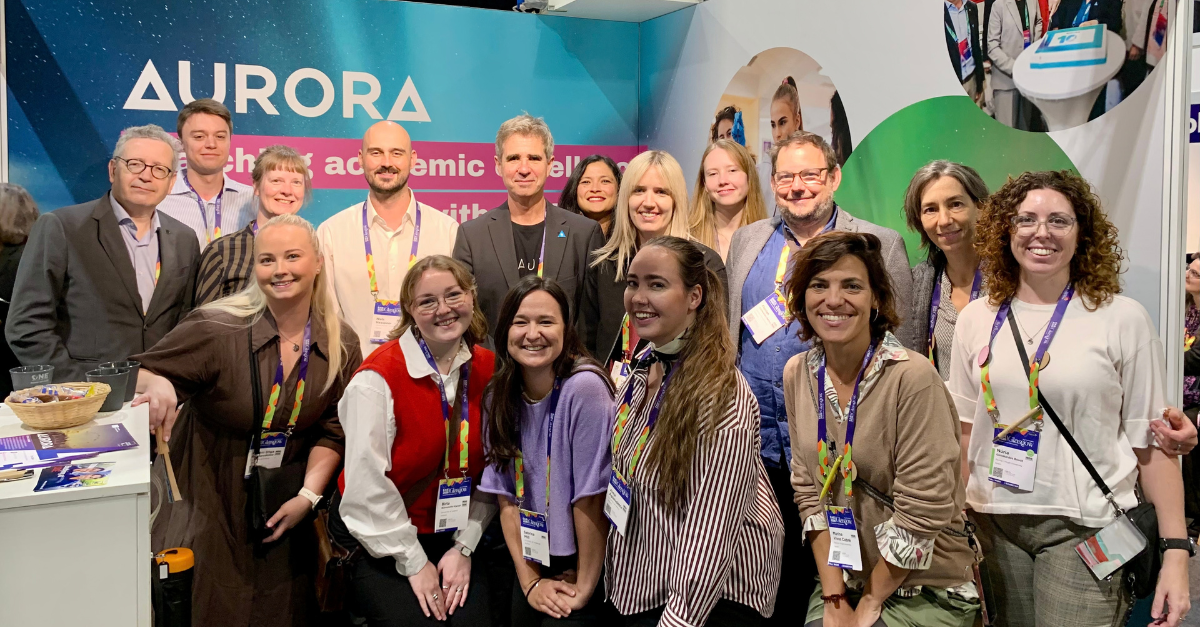
Aurora team at dedicated booth at the EAIE 2026 exhibition hall in Glasgow, Scotland.
Making Internationalisation More Inclusive And Connected
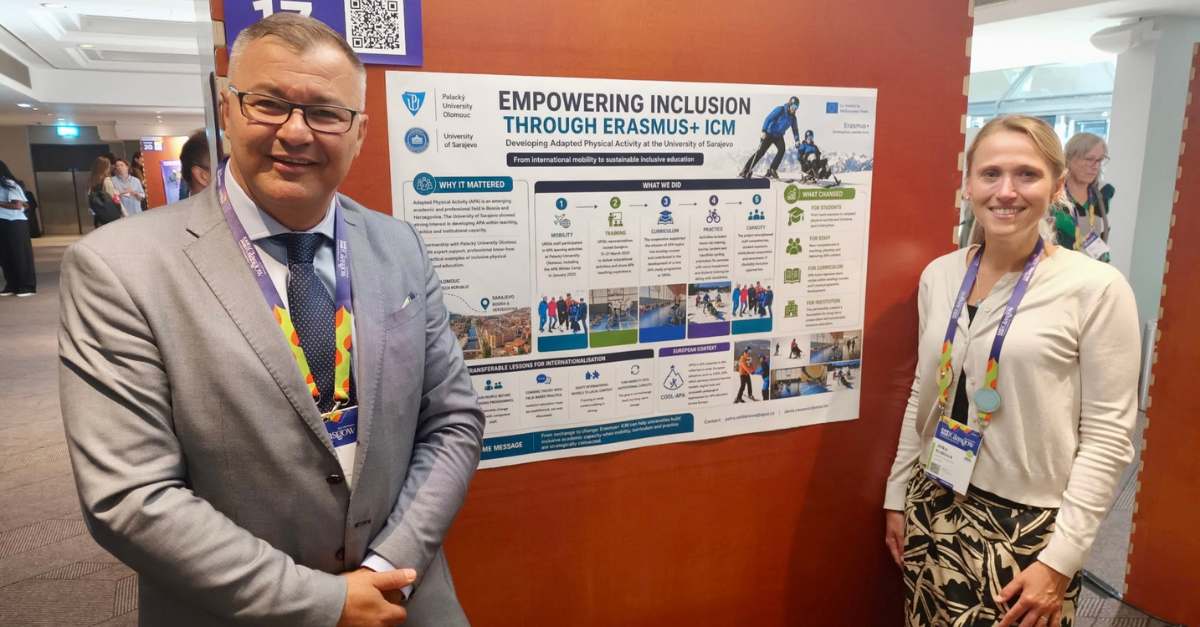
One of the sessions featured Jitka Králová from Palacký University Olomouc (UP), who presented the poster “Empowering inclusion through Erasmus+ ICM: Developing adapted physical activity at the University of Sarajevo”. The initiative demonstrates how Erasmus+ International Credit Mobility helped support the development of the Adapted Physical Activity Programme, hence promoting inclusive education while strengthening institutional cooperation and creating new opportunities for knowledge exchange across borders.
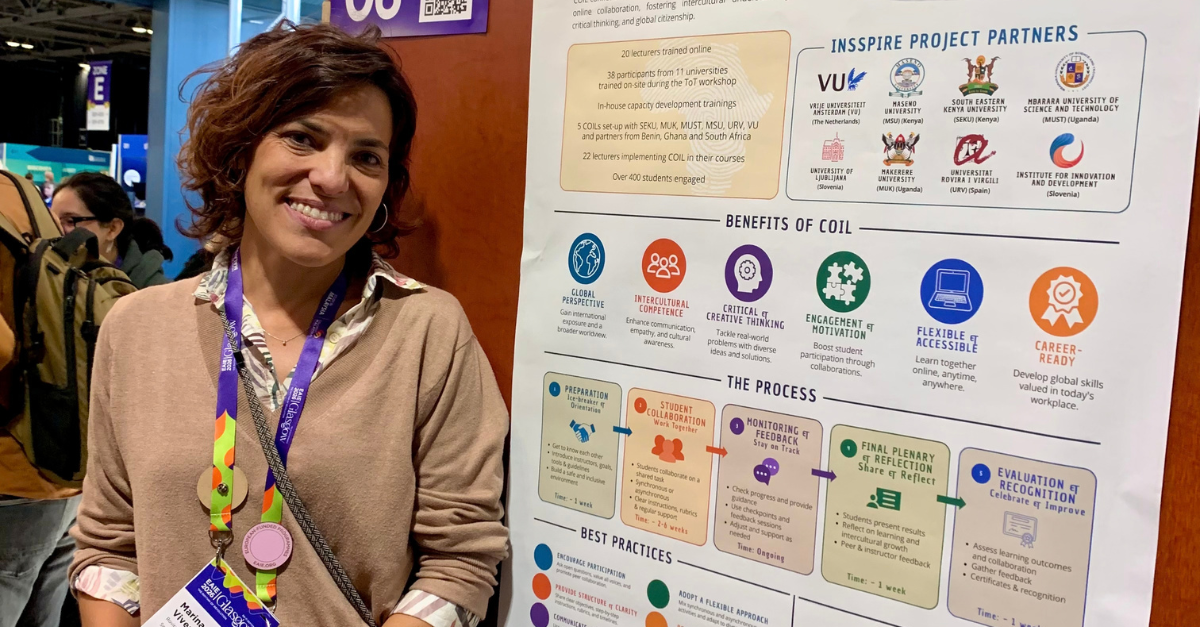
Marina Vives Cabré from Universitat Rovira i Virgili (URV) brought another dimension to the conversation with the “Introducing the INSSPIRE COIL manual” poster. The manual offers practical guidance for implementing Collaborative Online International Learning (COIL), helping universities create learning experiences that connect students and educators regardless of geographical location. The poster presentation shows that digital collaboration can open up internationalisation to a wider community, fostering joint approaches to shared challenges such as food systems, climate change and inclusive education.
Together, these contributions highlighted how internationalisation can be made both more accessible and more innovative, combining physical mobility with new forms of digital and collaborative learning.
Turning Collaboration Into Lasting Impact
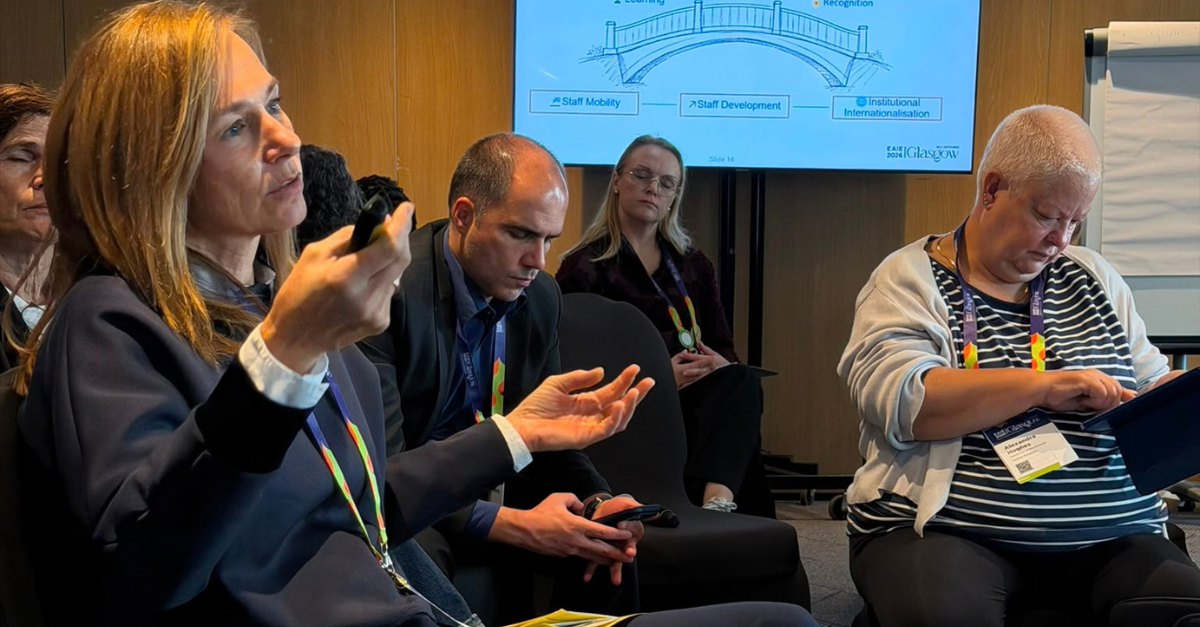
Another session contribution from Aurora involved a panel session with Isabella Göschl from Universität Innsbruck (UIBK). Her panel “Turning mobility into professional growth: Institutional strategies that work” explored how international mobility can become more than a temporary experience, by supporting staff development and helping participants bring new skills, perspectives and connections back to their institutions.
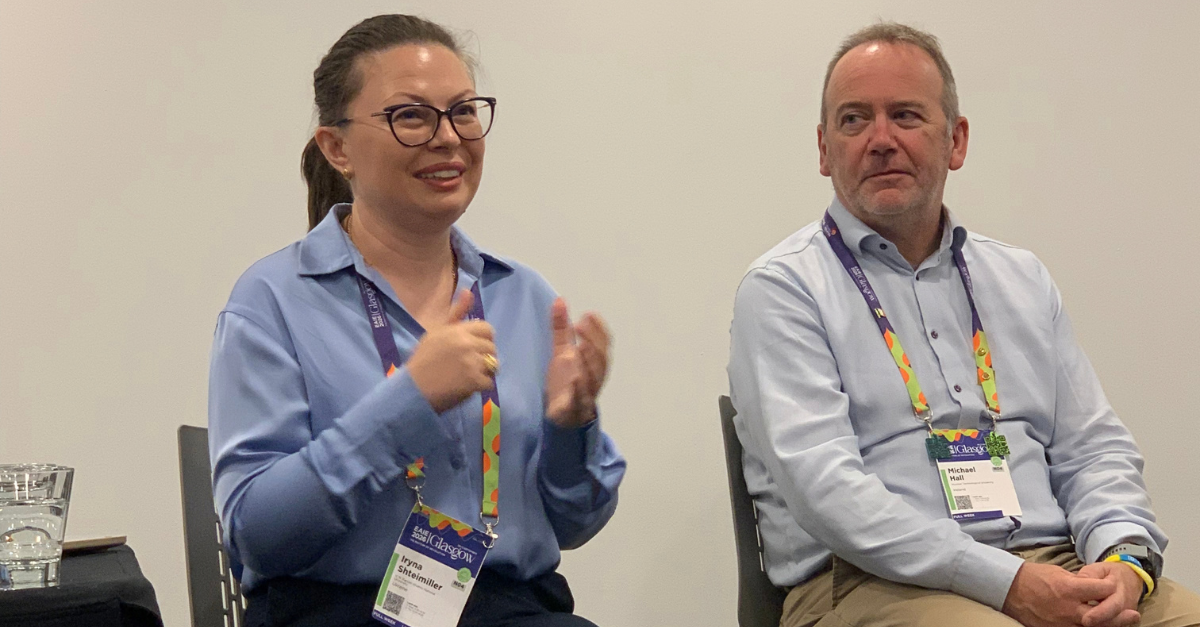
The final Aurora session brought a particularly important perspective to the programme. Iryna Shteimiller from Karazin Kharkiv National University (KKNU) spoke on the panel on “University alliances joining forces with Ukraine: Building a resilient and competitive Europe”. During the session, she highlighted the role of European university alliances in sustaining meaningful cooperation with Ukrainian higher education institutions and contributing to a more resilient European higher education community. Iryna shared her own professional experience in Aurora, where her university actively participated in activities such as the Aurora Karazin Peace Education Hub, and co-creating educational offers and trainings.
From inclusive mobility and innovative learning to professional growth and solidarity with Ukraine, Aurora’s contributions at EAIE 2026 reflected the breadth of international collaboration across the alliance. Different perspectives, different approaches, but one common thread: when universities work together, internationalisation can become a powerful force for connection, innovation and positive change.