News
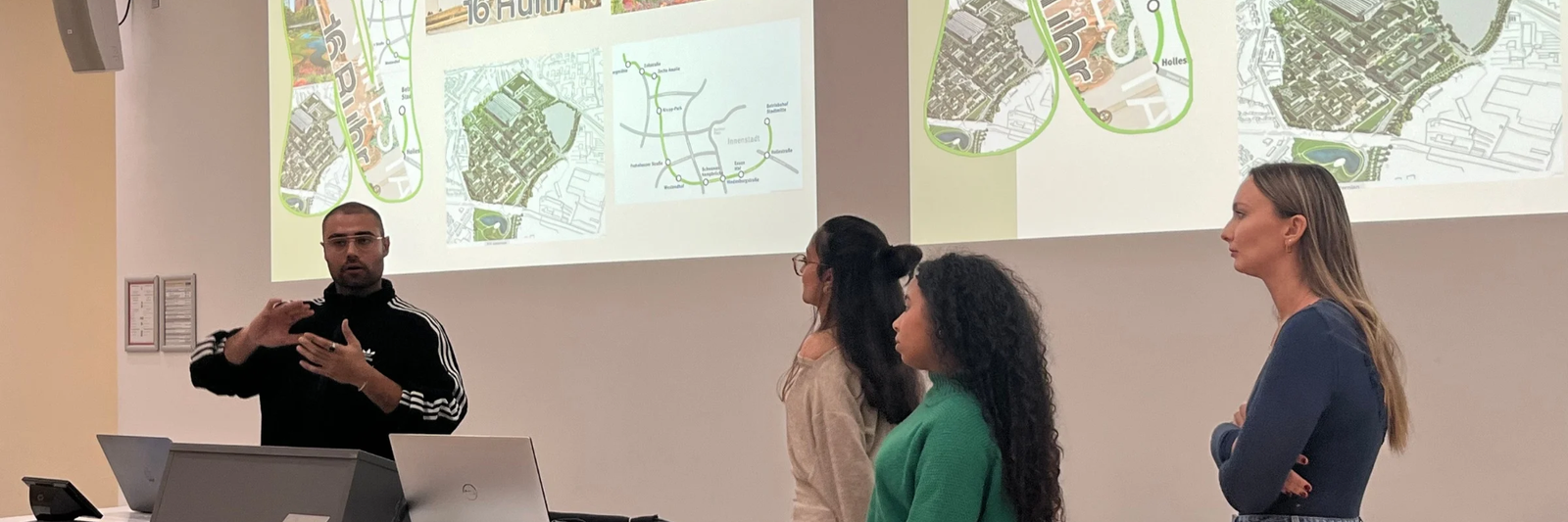
What does a healthy city actually look like and who gets to write the story? For five days in Essen, Germany, Master’s students in urban planning from the École d’Urbanisme de Paris (UPEC / Université Gustave Eiffel) and students of Cultural and American Studies at the University of Duisburg-Essen (UDE) worked together to answer these questions. The second edition of the co-taught Aurora seminar “Healthy Cities”, led by Prof. Dr. Barbara Buchenau (UDE), Prof. Dr. Marcus Zepf (UPEC), and Assistant Prof. Dr. Hélène Dang Vu (École d’Urbanisme de Paris), this year, the seminar widened its lens from the city center to the metropolitan scale.
A Region Looking For A New Narrative
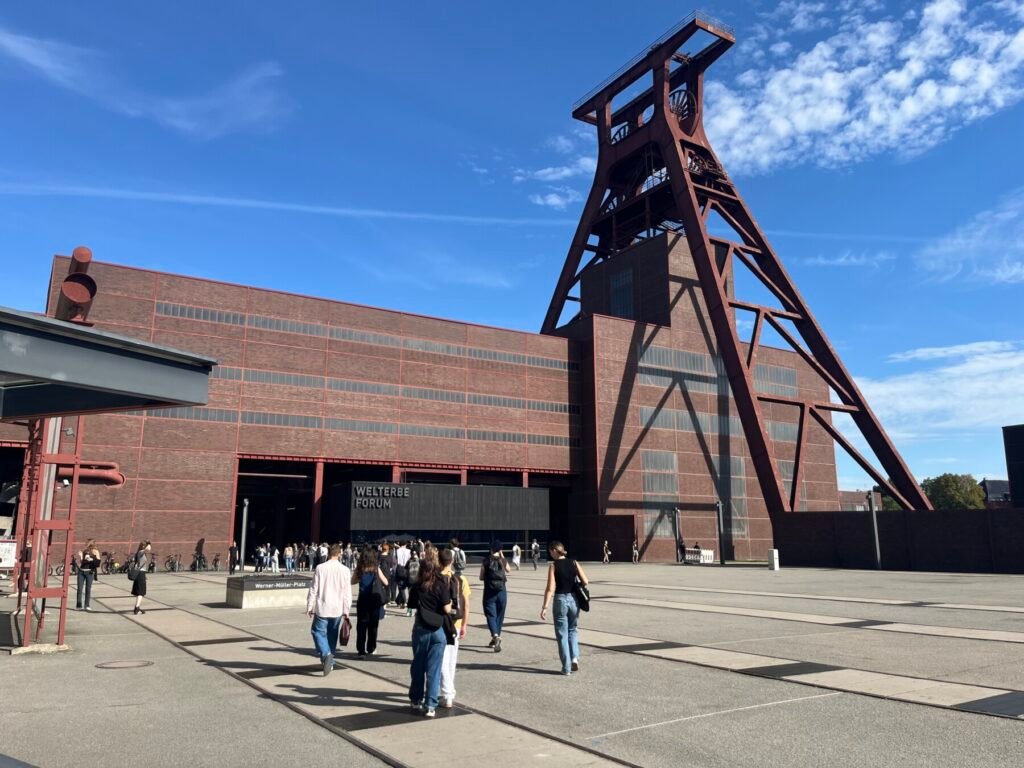
The Western Ruhr faces a wicked challenge: how can a territory built on coal and steel evolve into a metropolitan region associated with health, well-being and nature without erasing the industrial identity that still defines it? Rather than starting with master plans and flagship projects, the workshop challenged students on the question of building and activating a shared territorial narrative.
Inspired by the Charleroi Bouwmeester’s approach of “scripting the city” through many small, coherent interventions, students explored how heritage reinterpretation, public space, mobility and cultural programming can together rewrite a region’s image.
From The Lecture Hall To The Field
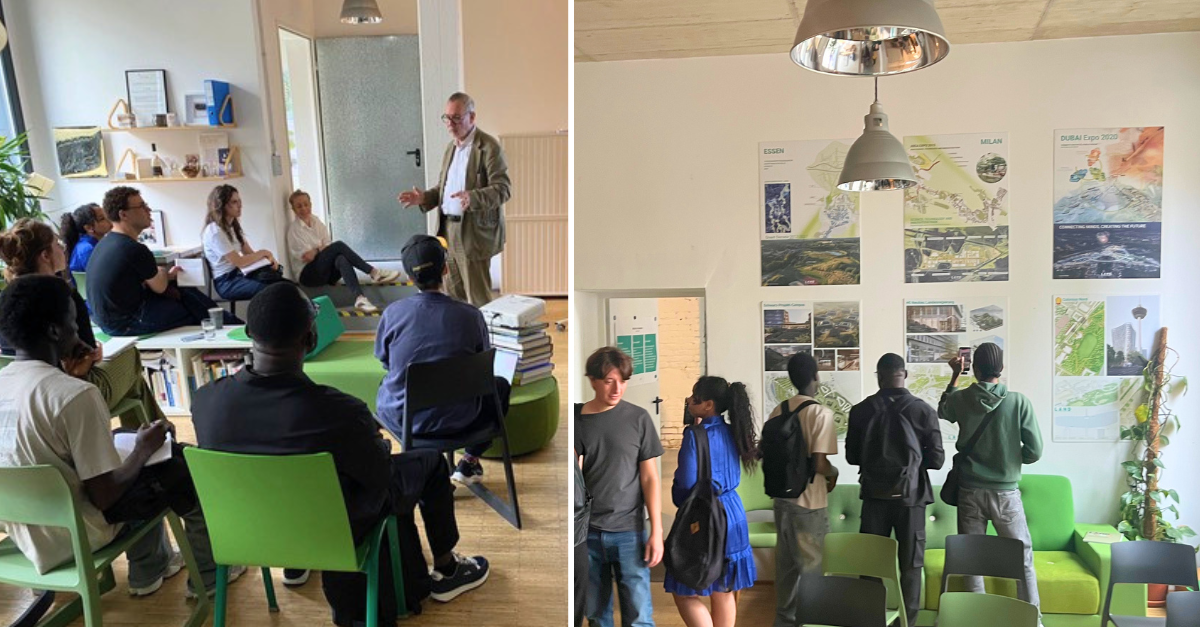
The week combined site visits, guest input and self-directed group work. Students traveled to Düsseldorf to meet Andreas Kipar and the landscape consultancy LAND, whose nature-based solutions sparked one of the week’s most memorable moments.
“For hours, he developed this idea of healing cities in a very meaningful manner,” recalls Barbara Buchenau.
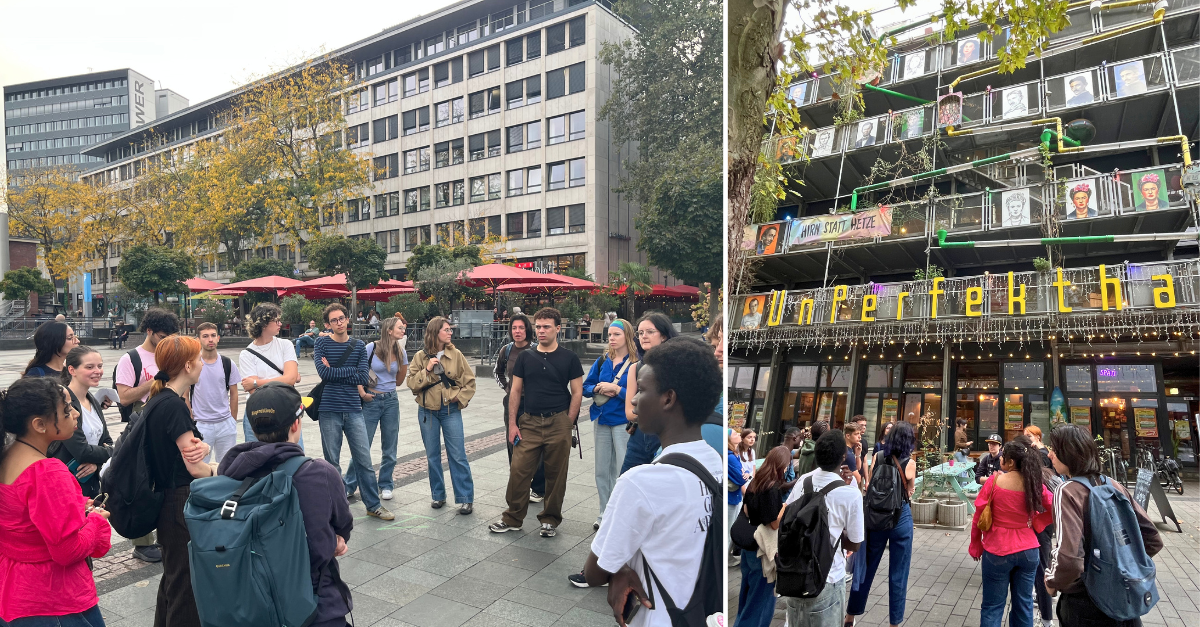
Back in Essen, students visited grassroots regeneration initiatives and discussed the city’s green transformation with Deputy Mayor Simone Raskob, who has steered Essen’s European Green Capital legacy for a decade. In mixed teams, they then developed concrete, small-scale visions for “Essen 2050”.
Friction That Becomes Productive
Bringing planners and cultural analysts into one room produces friction — and that is the point. When UDE students were asked to invent visions for 2050, the planning students immediately replied: “No, it’s programmation.” For students of cultural studies, invention means imagination; for planners, it means justifying a proposal from the existing situation.
Hélène Dang Vu sees the value precisely in this encounter: “UDE students bring a different way of reading places and looking at how words and images shape our perceptions, which may help planning students feel more free to make incredible proposals.”
Marcus Zepf stresses that planning today is a continuous intervention and permanent adaptation, involving civil society, politicians and experts alike — a process that needs communicators as much as it needs plans.
Health As The Next Luxury?
Several threads ran through the week: Essen’s struggle to become green inside against a culture attached to the car; the shift in Paris since the pandemic towards car-free streets, cooling islands and biodiversity; and the sobering realization that if green becomes the next luxury, health may follow, making inclusiveness and the dynamic nature of vulnerability central planning questions.
The group’s takeaway, however, was deliberately hopeful: a nature-positive city, in which nature is no longer the source of extraction, but something like a bank that you have to pay into if you want a future.
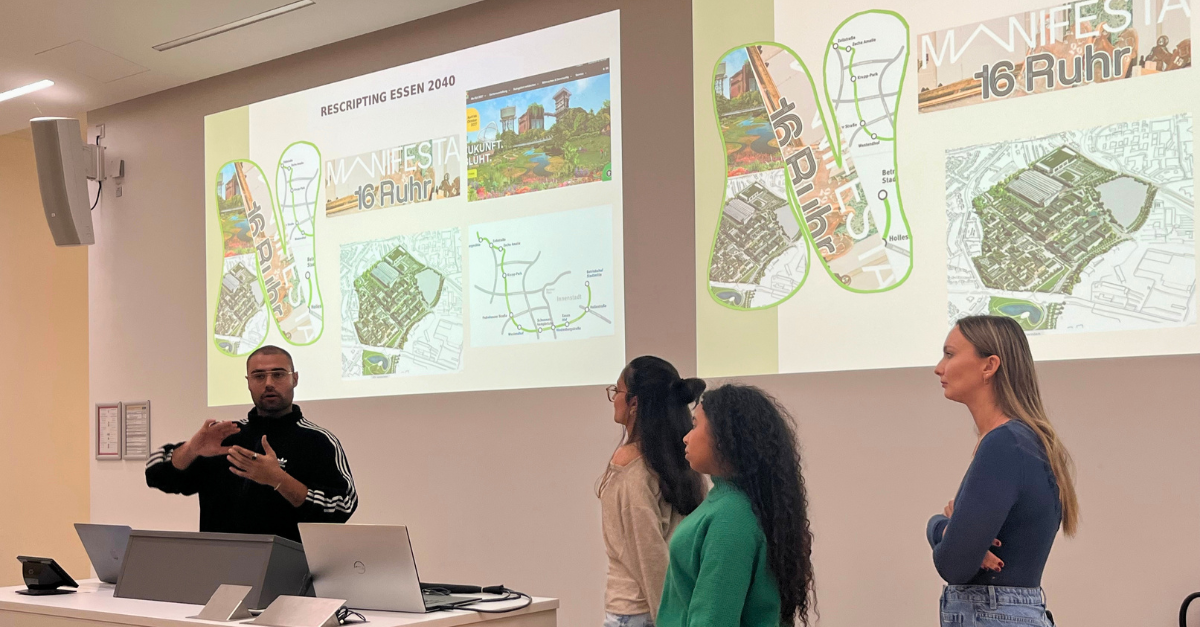
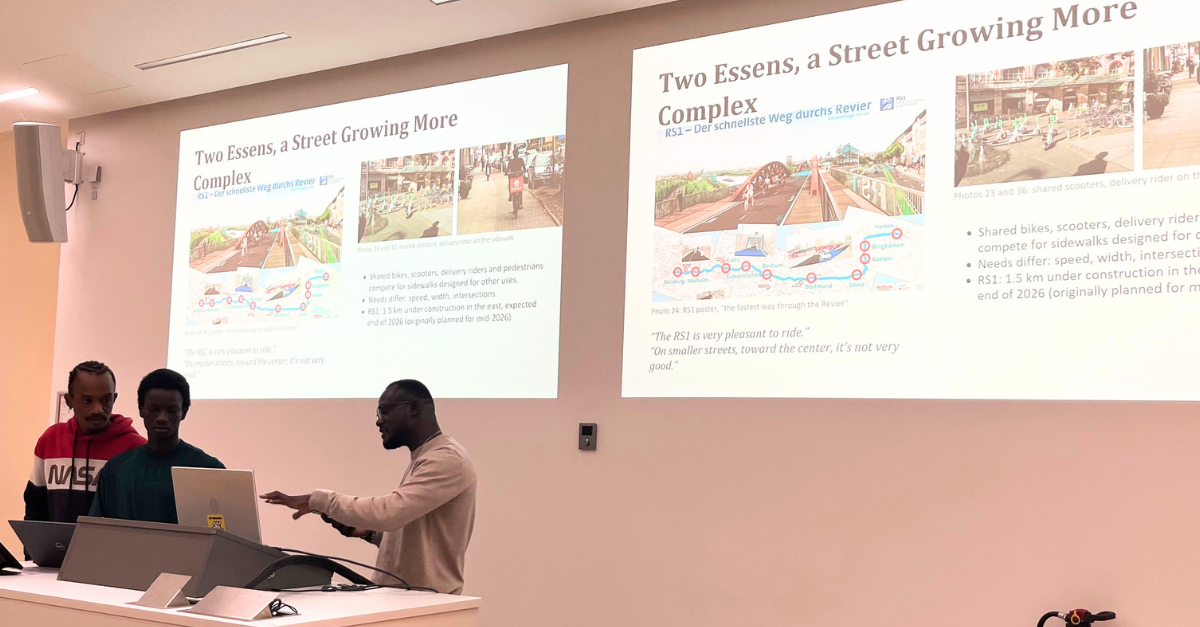
The partnership between two Aurora universities – UDE and UPEC – has already produced a jointly authored book chapter on methods for addressing urban needs in “messy cities”, co-written with stakeholders and students, and fed directly into a European research project on young adults’ struggle for urban health. Further down the line will come a series of podcasts on these collaborative initiatives intertwining both research and teaching.