News
Micro-credentials drive flexible, inclusive European higher education, enabling modular, transdisciplinary learning and shaping Aurora’s cross-border inter-university campus
Micro-credentials are rapidly transforming higher education in Europe. As certified, small-scale learning units with clearly documented and assessed learning outcomes, they offer a flexible, inclusive, and responsive way for learners to acquire relevant competences. Within Aurora, micro-credentials play a vital role in shaping the inter-university campus of the future – one that is modular, transdisciplinary, and accessible across borders.
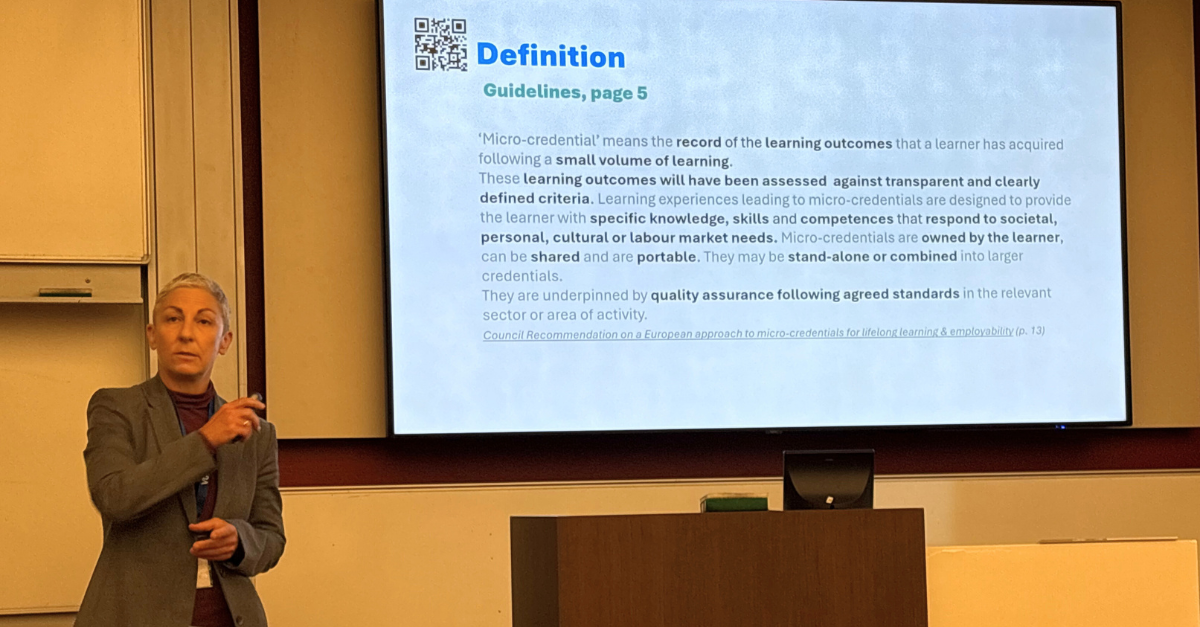 Christina Raab from Universität Innsbruck presents the Aurora Guidelines for Micro-credentials
The newly developed Aurora Guidelines for Micro-credentials provide a shared framework for designing, issuing, and recognising these qualifications across partner universities. Grounded in the European Council’s Recommendations and driven by Aurora’s mission for societal impact, these guidelines aim to harmonise practices and strengthen collaboration throughout the alliance.
Christina Raab from Universität Innsbruck presents the Aurora Guidelines for Micro-credentials
The newly developed Aurora Guidelines for Micro-credentials provide a shared framework for designing, issuing, and recognising these qualifications across partner universities. Grounded in the European Council’s Recommendations and driven by Aurora’s mission for societal impact, these guidelines aim to harmonise practices and strengthen collaboration throughout the alliance.
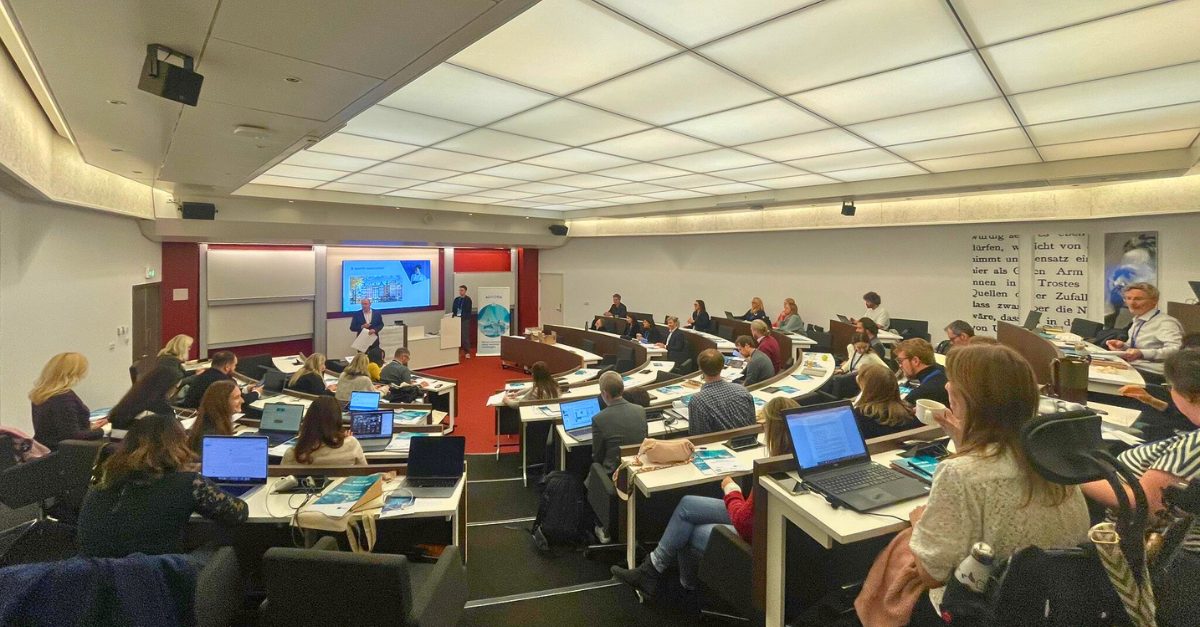 Aurora Academic Matchmaking Retreat where the Aurora Guidelines for Micro-credentials were presented
Christina Raab from Universität Innsbruck presents the Aurora Guidelines for Micro-credentials
The newly developed Aurora Guidelines for Micro-credentials provide a shared framework for designing, issuing, and recognising these qualifications across partner universities. Grounded in the European Council’s Recommendations and driven by Aurora’s mission for societal impact, these guidelines aim to harmonise practices and strengthen collaboration throughout the alliance.
A European Approach for a Changing Learning Landscape
Micro-credentials have emerged as important instruments to support lifelong learning, upskilling, and mobility within the European Higher Education Area. They allow learners to engage in small-scale learning experiences while ensuring that the acquired competences and knowledge are quality-assured, portable, transparent and stackable. For Aurora, micro-credentials are more than just short courses. They are building blocks for a European inter-university campus:- Gateways to flexible participation across institutions
- Tools for harmonising recognition and mobility
- Foundations for socially impactful, transdisciplinary education.
Designing Micro-Credentials for Quality, Transparency, and Impact
Aurora micro-credentials follow a set of shared principles to ensure comparability and quality across universities:- Learning outcomes-based design: Each micro-credential integrates subject-specific and transversal competences, drawing on frameworks such as the Aurora Competence Framework, LOUIS, BEVI, and seizmic
- Standardised size and structure: Typically 3 to 10 ECTS credits, documented according to the standard elements defined by the European Council Recommendation
- Quality assurance: Each issuing university applies its institutional QA processes, guided by ESG standards and national regulations
- Levels of Aurorisation: Micro-credentials must reach at least Level 2 – meaning they are aligned with an Aurora Educational Hub, an SDG, and at least one key competence, ensuring a clear connection to Aurora’s mission and pedagogical standards.
Aurora Academic Matchmaking Retreat where the Aurora Guidelines for Micro-credentials were presented
Collaboration Across Borders: How Joint Micro-Credentials Are Built
Joint micro-credentials are co-designed within Aurora’s Educational Hubs, where academics collaboratively develop content, align learning outcomes, and agree on assessment methods. “Joint” may also simply refer to the fact that participating students can come from all Aurora universities. While co-creation in the development process is the intended goal, it is not an absolute requirement for every joint micro-credential. Each participating university quality-assures the components it teaches, while one or more designated universities act as the official issuers. Because not every partner institution is equally positioned or technically equipped to issue micro-credentials, issuing responsibilities are assigned based on regulatory and technical feasibility. This collaborative model – anchored in mutual trust and transparent procedures – allows learners to combine learning units across institutions and receive a single, high-quality, jointly recognised credential. To ensure consistency and support continuous development, Aurora’s Micro-Credential Coordination Committee (Aurora-MCC) – formally established in November 2025 – serves as a central body for coordination, expertise, and peer learning. Rather than enforcing compliance, the committee fosters a shared ecosystem, promoting visibility, interoperability, and alignment across work packages.Digital Solutions for a Seamless Learning Experience
Technology is central to Aurora’s micro-credential ecosystem. The Aurora Virtual Campus serves as the central platform for publishing, accessing, and promoting Aurora micro-credentials. The corresponding courses will be displayed in the Aurora Joint Course Catalogue, enhancing visibility, transparency, and open participation for Aurora students and staff. Aurora universities currently issue micro-credentials in two primary formats:- Digitally signed (e-sealed) PDF certificates, and
- Secure digital badges, compliant with EU interoperability and data protection standards.
Next Steps: Harmonisation, Visibility, and Future Readiness
Implementation of the guidelines will progress through several key actions:- Mapping existing micro-credentials and aligning them with Aurora standards
- Increasing visibility through the Aurora Virtual Campus and shared catalogue
- Developing shared workflows for issuing, recognition, and interoperability
- Establishing a regular review and peer-learning cycle under the Aurora-MCC.