
News
Representatives from Aurora universities the University of Iceland and Université Paris-Est Créteil (UPEC) led a discussion during the Science Café “Science for Impact: Changing the World through Social Innovation and Entrepreneurship”, hosted by Rannís, the Icelandic Centre for Research in Reykjavik.
Institutions Unite Around Societal Impact
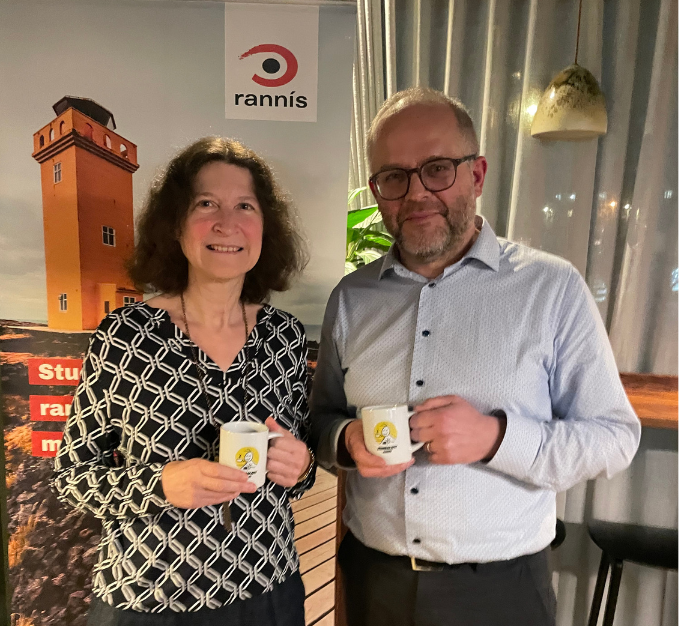
Held in collaboration with the French Embassy in Iceland, the University of Iceland (UI), and UPEC, the event highlighted the growing role of social innovation and entrepreneurship in creating positive societal change. The discussion brought together Rögnvaldur Sæmundsson, Pro-Rector for Science and Interdisciplinary Studies at the University of Iceland, and Laurence Beierlein, Associate Professor at UPEC.
“Social innovation and entrepreneurship are important mechanisms for creating societal impact,” said Sæmundsson. “However, we have yet to develop a comparable support system as for profit-driven innovation and entrepreneurship.”
Beierlein further emphasised the responsibility of higher education institutions to equip students with the skills needed to respond to societal challenges. She stressed:
“The role of the academic world is to create the conditions that enable students to develop their skills and stimulate their creativity, so that they can devise and design social enterprise projects that benefit society whilst operating in a sustainable manner.”
The Science Café provided an opportunity for members of the public to engage directly with researchers and academic leaders on how universities can contribute to solving social, environmental and economic challenges through innovative approaches.

Interdisciplinary Collaboration As A Driver Of Change
Being part of a European university alliance whose mission is to catalyse societal impact through collaboration, innovation and research, Sæmundsson also highlighted the crucial role of interdisciplinary collaboration.
“We can never achieve societal impact without interdisciplinarity,” he stated. “This includes the bridging between academic fields as well as combining it with knowledge and experience outside universities.”
Underlining the value of European Universities Alliances (EUAs), Beierlein explained how Aurora provides an established framework conducive to the implementation of collaborative, integrated research and education projects focused on social impact.
“Aurora enables students and lecturers to share their experience and understanding of unmet societal needs, existing or desirable solutions, and to exchange views on what actually could generate a positive impact for society,” she continued.
Both Sæmundsson and Beierlein point to the importance of partnerships that cross national and disciplinary boundaries. Through Aurora, and initiatives like the EURIDICE project, universities are increasingly working together to foster social innovation, strengthen global citizenship and ensure that academic knowledge contributes to meaningful and sustainable societal change.