News
From 5 to 9 October 2026 at the University of Duisburg-Essen (UDE), doctoral and prospective doctoral students, and three researchers from Aurora universities came together for a week-long international retreat “Rising Voices: Emerging Scholars and Transdisciplinary Thinking”. An Erasmus+ Blended Intensive Programme (BIP), the retreat was organised by the Department of Anglophone Studies as part of the work undertaken within the Transdisciplinary European Research-driven Educational Hubs under the Aurora 2030 programme.
Two Tracks, One Common Goal
This BIP is the fourth edition of a format that has travelled across Aurora, from Iceland to Matrei and Olomouc, and has become a cornerstone of Aurora’s efforts to link research training with science communication and transdisciplinary collaboration.
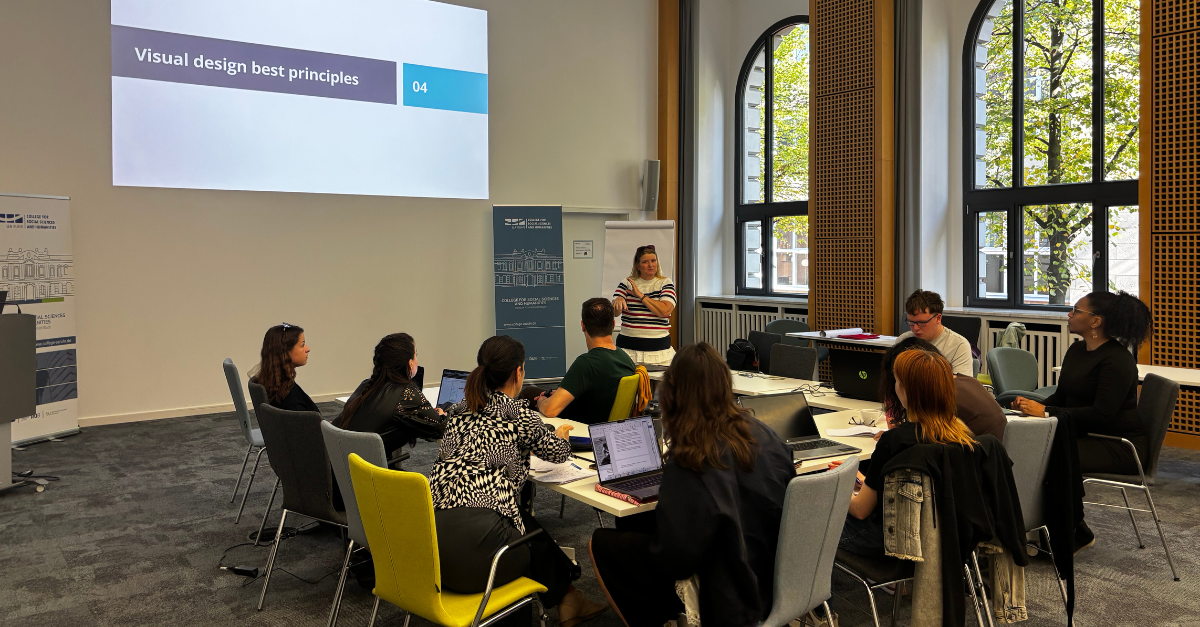
Following a virtual kick-off on 28 September, the retreat in Essen ran along two interlocking tracks targeted to students and emerging scholars, and researchers. Within the student track, science communication experts Suzanna Whitby and Toby Wikström coached participants in preparation for the Three-Minute Thesis (3MT) Competition. Students learnt how to distill a complex research project to its core message, build a narrative from hook to structure, design a single compelling slide, and rehearse for an audience beyond one’s own discipline.
“It has been helpful communicating with scholars from diverse fields because they each have different takes and perspectives on your research,” says Emily Matejko, doctoral candidate from the University of Iceland. “They gave me important feedback in the work that I’m doing, ultimately to make it better and learn how to communicate it to a variety of audiences.”
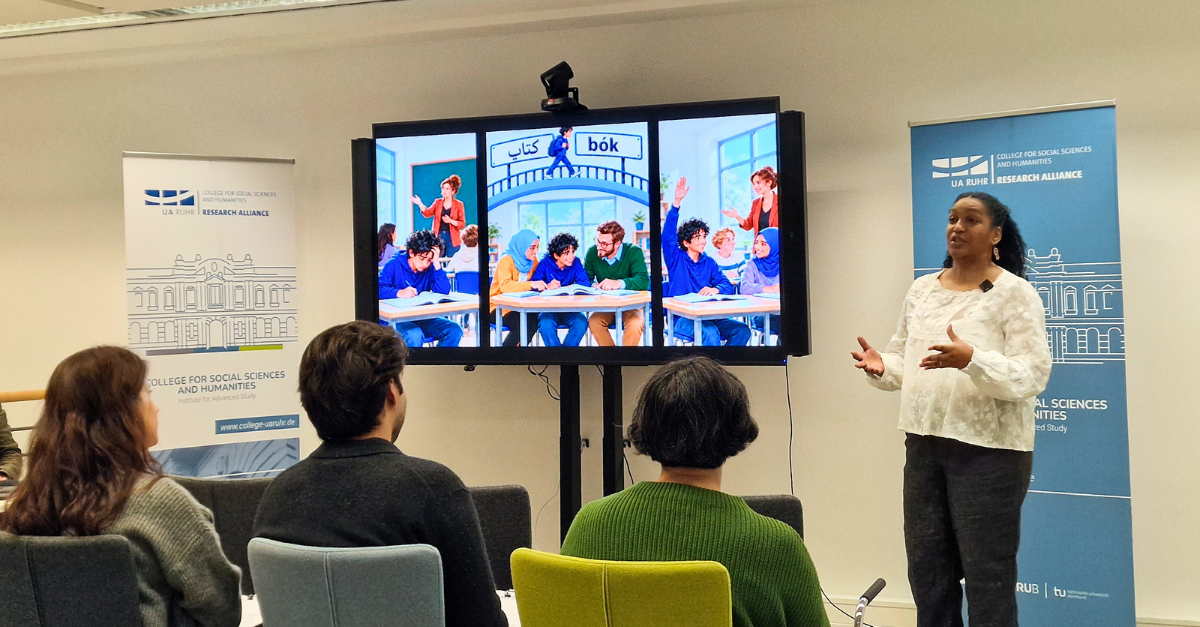
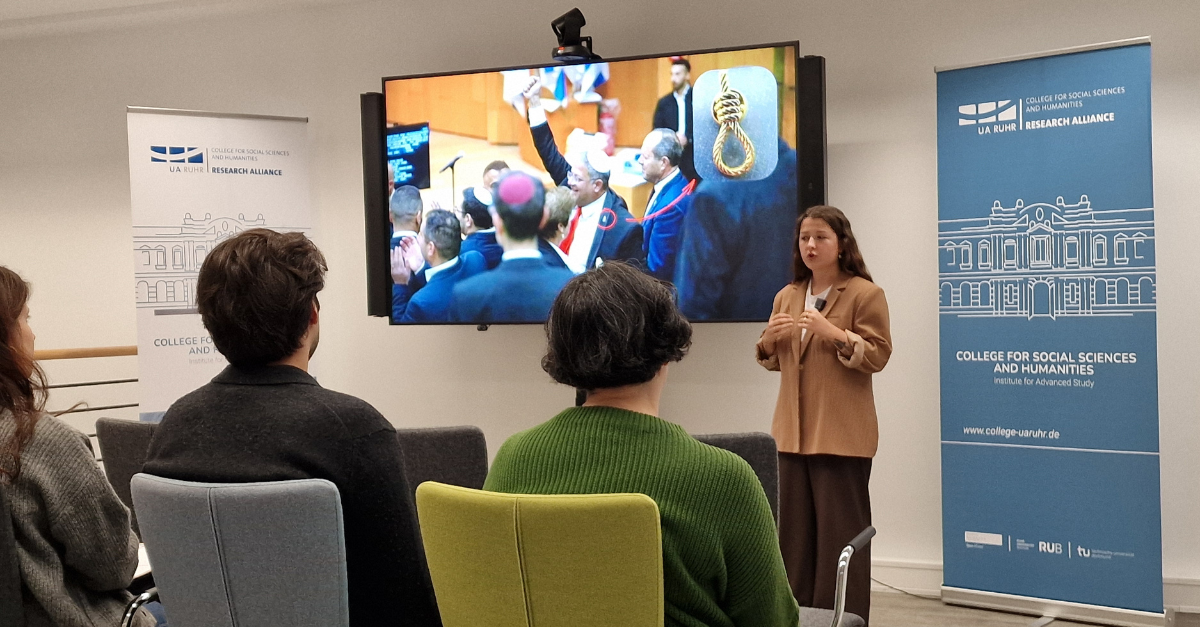
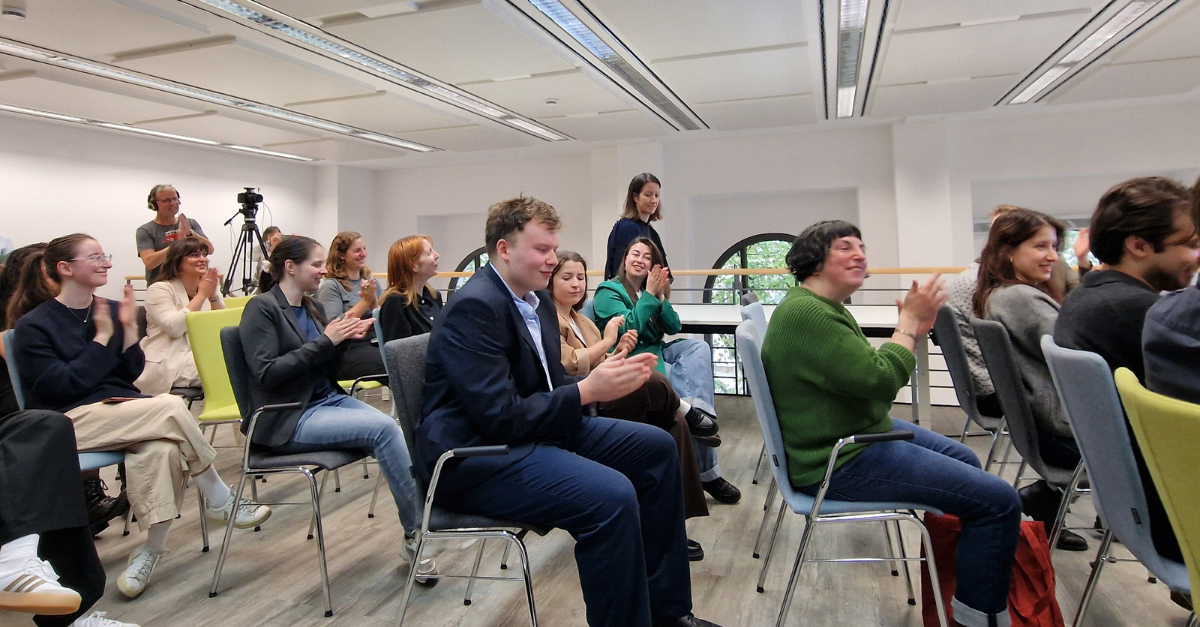
The researcher track focused on building transdisciplinary research connections between Aurora universities. Prof. Barbara Buchenau, Prof. Dr. Florian Freitag and Zohra Hassan-Pieper explored collaborative research interests. Together, they developed ideas for joint teaching formats and shared micro-credentials, and discussed potential ideas that could be of interest for researchers within Aurora.
“Aurora brings cultures, countries, and people from diverse fields, and it’s truly transdisciplinary,” says Dr. Pavlína Flajšarová, associate professor in the Department of English Studies of Palacký University Olomouc. “What connects us are the educational goals and the research goals.”
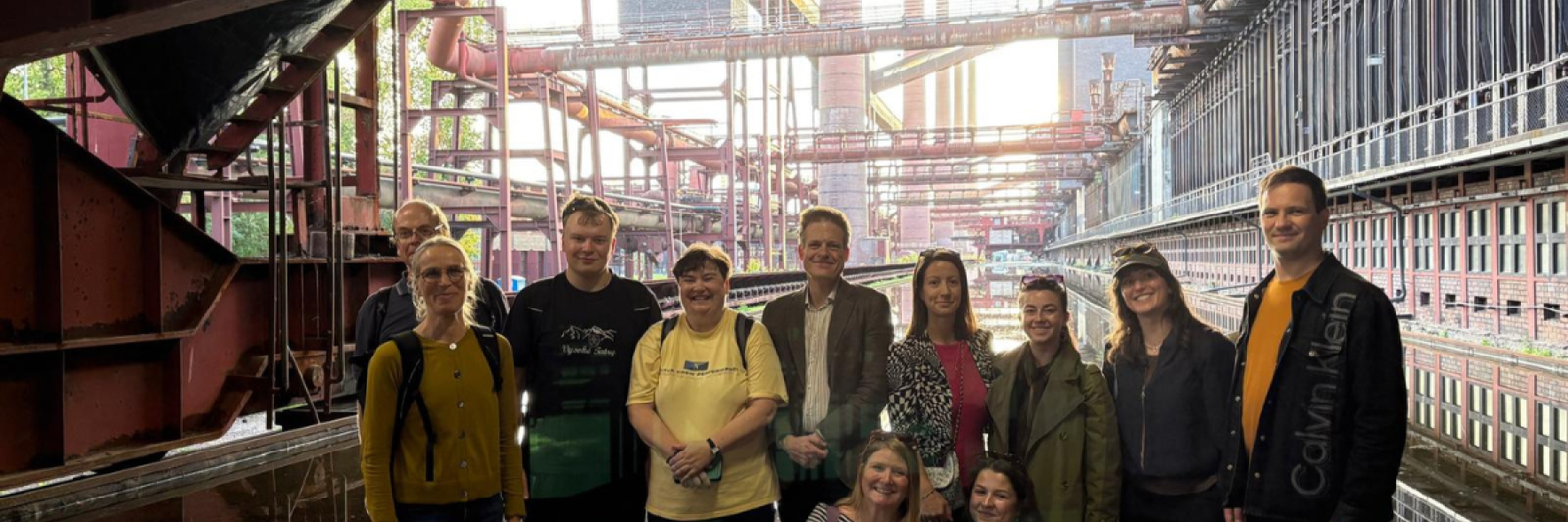
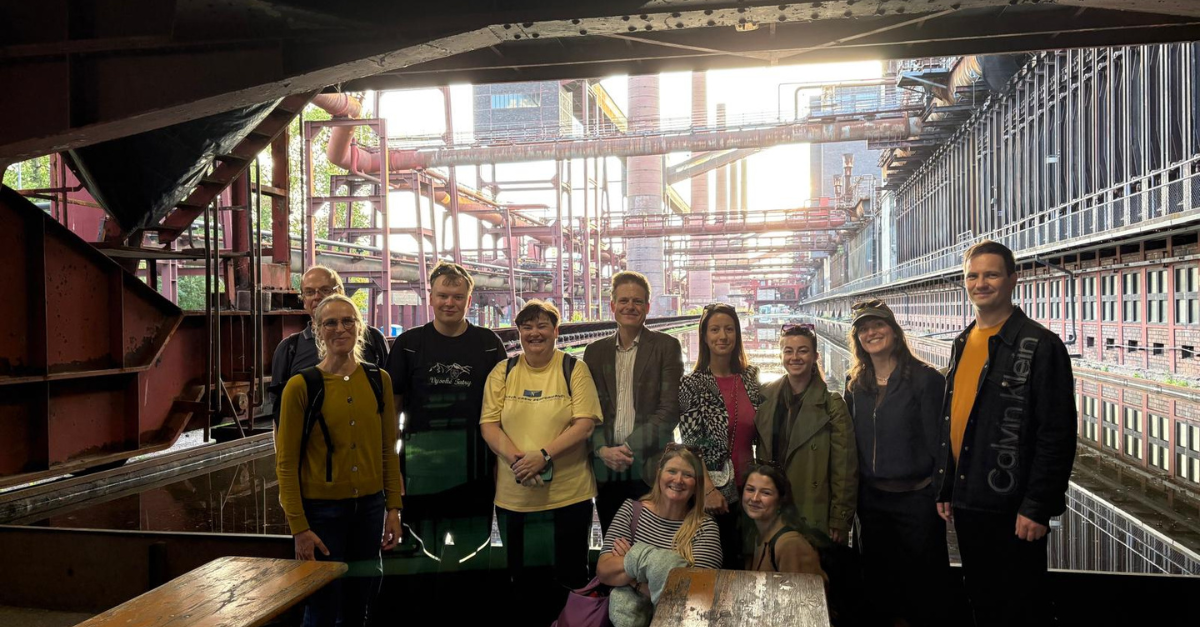
Several moments brought both groups together: an opening Research Survival Challenge, a guided excursion into Essen’s industrial heritage, and paired coaching sessions, where researchers mentored students one-to-one prior to the 3MT Competition.
Highlight 3MT Competition
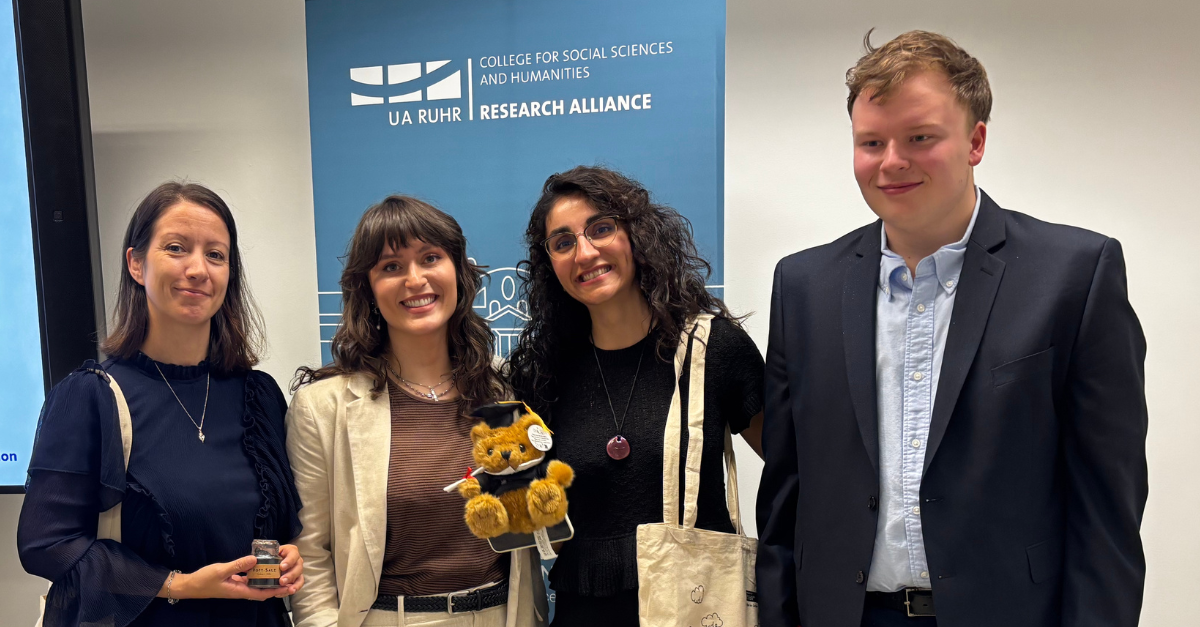
A key highlight of the week was the 3MT Competition, a short presentation format, where each student presented their research in three minutes on a single slide before a jury and an audience. Winners of the 3MT Competition are:
First Place
Emily Matejko, doctoral candidate from the Faculty of Education and Diversity at the University of Iceland. Her thesis entitled “Love Actually…Starts With Prevention” explores relationship experiences of adolescents with disabilities and how to make the prevention of violence more inclusive.
Second Place
Aleksandrina Pandurska, doctoral candidate from the Faculty of Philology at the South-West University “Neofit Rilski”. Her thesis entitled “Talking about Environmental Problems – New Strategies for Politicians” studies how political speech can affect individuals’ attitude to environmental problems.
Joint 3rd Place
Parinaz Mahdavi, doctoral candidate from the Faculty of Biomedical Sciences at the University of Iceland. Her thesis entitled “Same Diagnosis, Different Treatment” works on a specific mutation in skin cancer patients to understand how it can affect the behaviour of cancer cells in these patients.
Jan Flajšar, Master student from the Faculty of Law at Palacký University Olomouc. His thesis entitled “Light Pollution: Too Much Artificial Light, All Night” analyses sky-brightness data to identify where darkness is disappearing and provide reliable, evidence-based insights into the scale and distribution of the problem.
The programme strengthens interdisciplinary collaboration, research excellence, and the ability to communicate research effectively through science communication. One of the week-long retreat’s defining strengths is the interaction between students and experienced researchers. In creating such a community and opportunity, emerging scholars are able to speak about their research across disciplinary and national borders, and a group of researchers can already plan their next joint actions.
Watch the 3MT Competition Videos on Aurora YouTube