News
Researchers and academics Matthias Beekmann and Sander Bosch reflected on the evolution of research collaboration, open science practices and research assessment within Aurora. Their exchange highlighted both the progress achieved and the structural challenges that still shape the academic landscape in Europe.
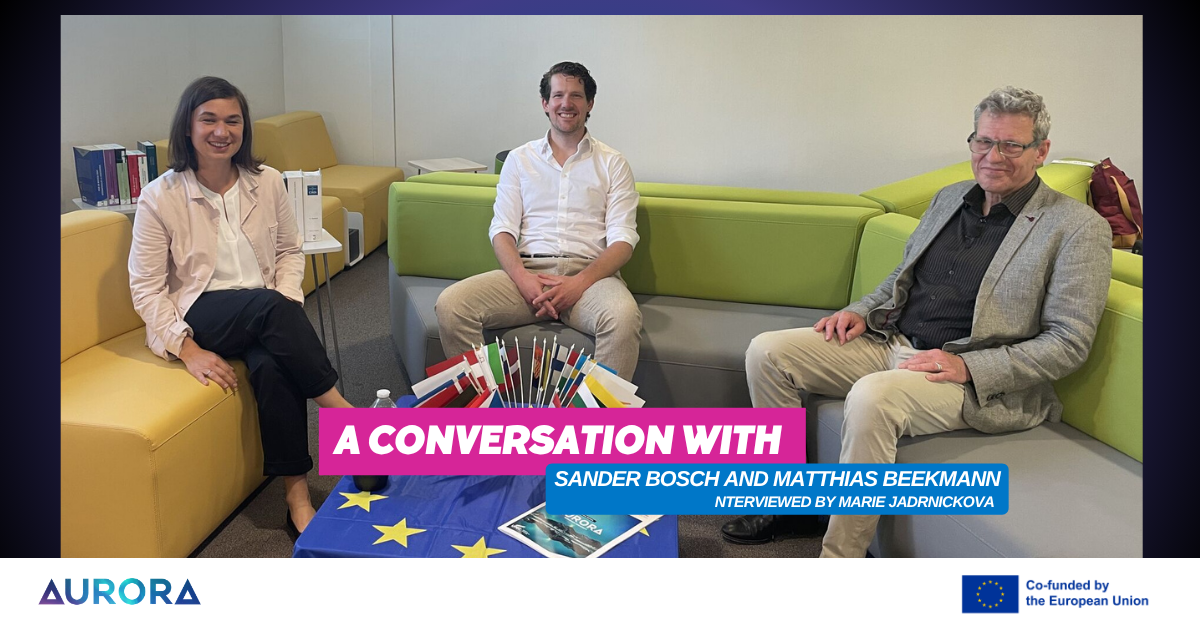 This conversation was led by Marie Jadrnickova, Aurora Research Officer at Palacký University Olomouc, combining learnings from the Horizon 2020 project – Aurora Research and Innovation for Societal Impact (Aurora R&I), and the European Universities Initiative – Aurora 2030. She speaks with Matthias Beekmann, President of the Aurora Research Council at Université Paris-Est Créteil (UPEC), and Sander Bosch, Open Science Coordinator at Vrije Universiteit Amsterdam.
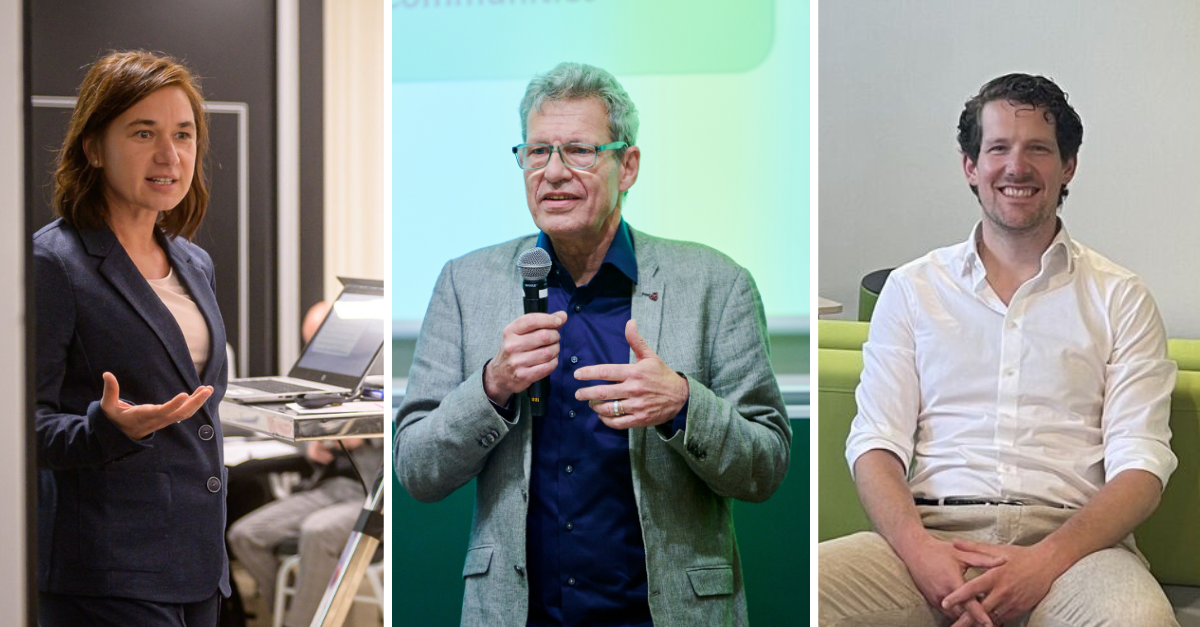
This conversation was led by Marie Jadrnickova, Aurora Research Officer at Palacký University Olomouc, combining learnings from the Horizon 2020 project – Aurora Research and Innovation for Societal Impact (Aurora R&I), and the European Universities Initiative – Aurora 2030. She speaks with Matthias Beekmann, President of the Aurora Research Council at Université Paris-Est Créteil (UPEC), and Sander Bosch, Open Science Coordinator at Vrije Universiteit Amsterdam.
Expanding The Scope And Culture Of Open Science
Over the past few years, initiatives undertaken within both projects have connected grant offices, HR teams, technology transfer units and experts in open and citizen science across Aurora. Marie: Aurora continues to build on its open science activities. Can you tell us what the starting point was and where we are now? Sander: Open science is a very broad concept and has been broadened over the past ten years from a focus on open access to publications to also sharing data and software. We are broadening the horizon of why we do this, also toward society, and that is where the open science agenda fits well with Aurora. Open science is a means to an end. We do not want transparency for transparency’s sake; we want it to connect better to society. Over the past few years, we have worked within Aurora to think about what needs to happen to make open science the norm and to connect it to society. We identified several areas of action: infrastructure to make it possible for researchers, students and staff to work transparently; support and training to give them the skills they need; and community building, as there are many enthusiastic people across our universities who want to learn from each other. Recognition and rewards, as well as policy, are also crucial. We cannot expect anyone to change their ways without recognising and rewarding the effort this requires. We have worked on a shared training platform, a monitor for assessment and the development of open science communities across Aurora universities.
Strengthening Research Collaboration Across the Alliance
Marie: Matthias, you are also creating a community. What kind of community are you trying to build? Matthias: In the first years of Aurora, we made good progress in creating communities at the governance level, at the research and administrative level and among students. Our new aim is to create a community of academic researchers and teachers and to make researchers work together. We launched a Call for Incentive Research Collaboration with the aim of making academics work together on small projects. We do not aim for finalised research but for small projects with new ideas that bring people together. We created the Aurora Research Council to evaluate these projects, with members from all nine universities. A question was how Aurora researchers could find colleagues in other universities. This now works well thanks to open science tools and the mapping of scientific infrastructures from the previous Aurora R&I project. These first steps turned out to be extremely helpful. Marie: You mentioned challenges related to mindset and institutional culture. Can you explain further? Sander: To work more transparently, you need to rethink what academia is and how you do research. This requires a transformational change at almost all levels of the university. Students need new skills, teachers must adapt, researchers must think about sharing their results throughout the research process, and administrative staff need specific expertise to support open metadata, open data and open software. Leadership also needs to support this and create policies to embed it. National context is crucial. If open science is not on the national agenda, it is difficult for single universities to change the system. This is a collective action problem: we need to move toward open science all or none. Within Aurora, we help each other by sharing what is already in place at different institutions.