News
From 19 to 23 October 2026, students from across Aurora spent five days in Naples, Italy, asking one hard question: how do we feed ourselves on a planet we have already changed? The 2026 seizmic Hackathon, hosted by the Università Federico II (UNINA), set out to rethink food systems in the Anthropocene, and to turn that rethinking into social business ideas that could actually work. The week moved from lecture halls to market stalls and back again. It ended with teams pitching their solutions to a jury of researchers and practitioners.
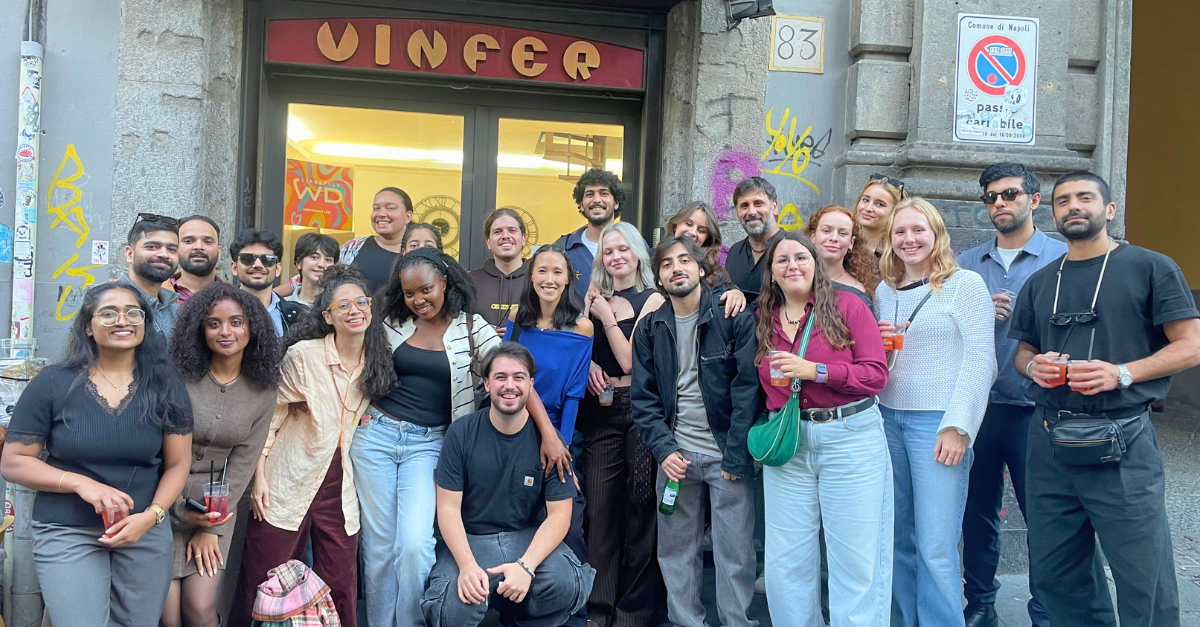
seizmic Hackathon 2026 in Naples, Italy
The Challenge
The seizmic Hackathon is part of the seizmic framework, Aurora’s programme for social entrepreneurship and innovation. seizmic gives students courses, a business-model application, and a survey that tracks how their entrepreneurial skills grow. The Naples hackathon is one of its longest-running activities: the 2026 edition is already its sixth.
This year’s brief, presented on day one by organisers Ramon Rispoli and Benedetta Toledo, was focused on cooking:
“Cooking — and food production in general — has always been imbued with issues of cultural identity, but there is much more to it: the kitchen is an outright political space in which different kinds of struggles are still being fought, from those traditionally related to class to those concerned with women’s empowerment or with colonial legacies”.
Teams had to design responses to the social and ecological pressures on how food is grown, distributed, and eaten, built around a viable social business model.
Setting The Scene
The week opened at Palazzo Gravina with Lisa Janssen (TH Köln) speaking on intercultural communication as a social practice, to a truly multicultural room. It was more than just a frontal lecture; it quickly became a lively conversation as the audience joined in.
Adam Arvidsson (UNINA) followed with a lecture that gave students a deep grounding in the Anthropocene. Ottavia Semerari then introduced Variabile K and its food projects in Ercolano, giving everyone a closer feel for Naples and its food culture. The cherry on top was lunch: Tavuliata, a social initiative run by Neapolitan nonnas working with Variabile K, cooked for the hackathon fresh from their kitchen. It was a delicious first taste of the city.
In the afternoon workshop, “Between Food Agency and Epistemic Resistance”, Jennifer Marsiglia (Sabores & Saberes) and Valentina Alcalde Gómez (seizmic Doctoral Network) asked students to close their eyes and think of something that sustains their lives. The answers poured in: mother, family, friends. Then one stood apart: nature. In a single word, it captured what this hackathon was about.
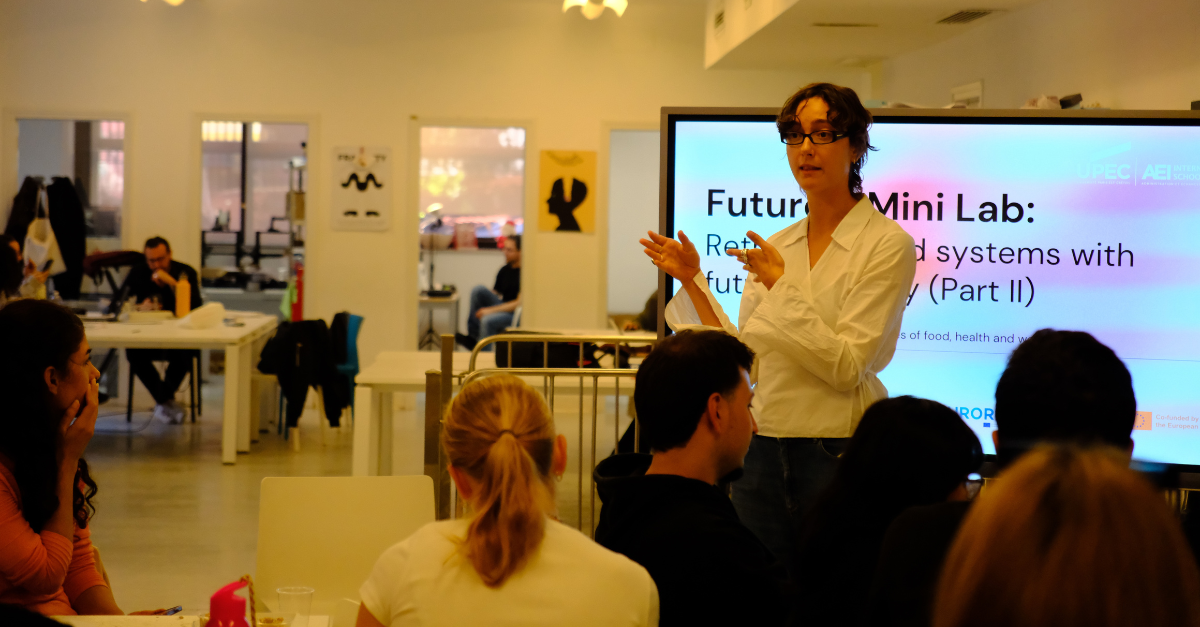
Anika Keils (UPEC) closed the day with a workshop on futures literacy, full of brainstorming, as teams sketched their ideas on desirable futures on big white charts. The ideas that came out of those sheets planted the seeds of everything that bloomed later in the week. The following day, Anika led a second round of brainstorming that again produced a wave of strong ideas.
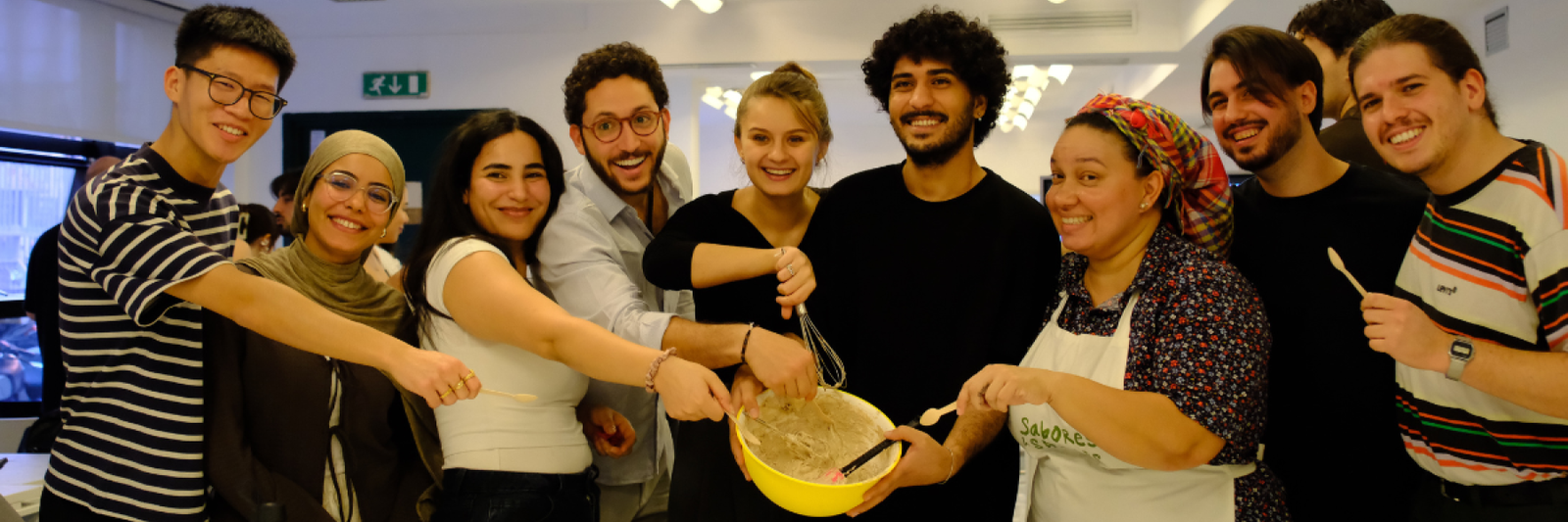
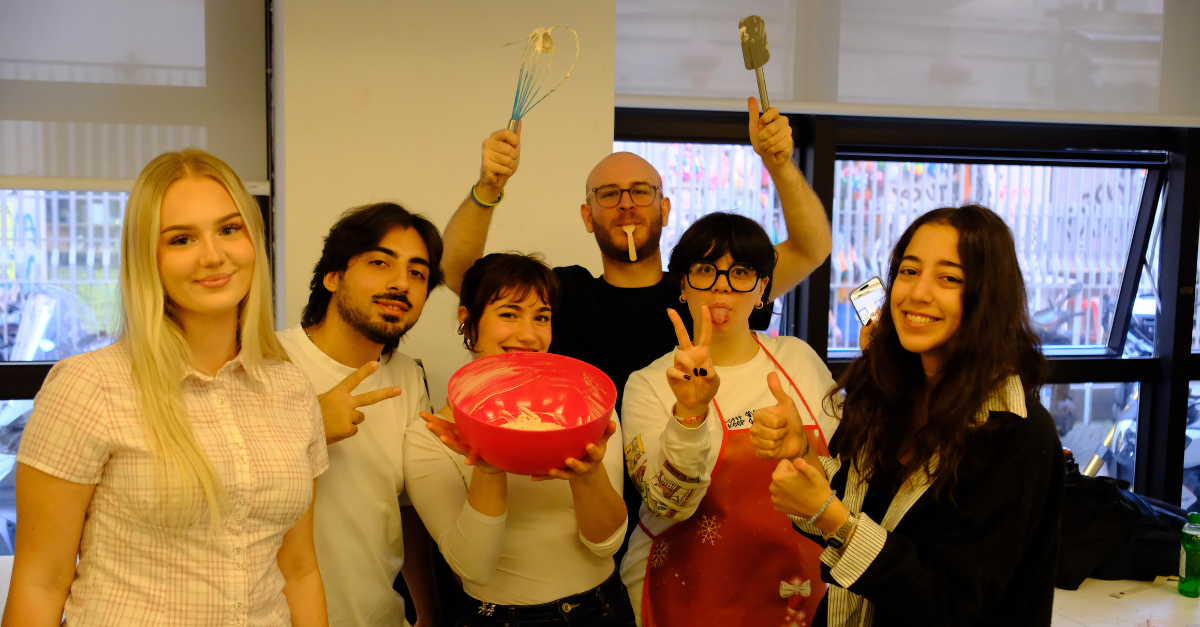
In Jennifer and Valentina’s session, students made a traditional Colombian tamarind jelly by hand, without a single electrical appliance. It let everyone feel, not just read about, what a resilient food system looks like. Lunch was a walk through the Pignasecca market, where teams tasted local Neapolitan food. Seeing a living market at work fed straight into their thinking about food systems.
As part of the week, students also had the opportunity to visit The Florist bar. Its owner cultivates her own land, right in the urban heart of Naples, and grows the produce her bar serves. Seeing a working local and sustainable food business in such a dense city sparked a wave of sustainable ideas among the students.
Building The Business
Benedetta Toledo and Martina Bosone (UNINA) led an intense session on designing food systems with social business models. Benedetta introduced systemic design, helping students look at problems and solutions from several dimensions at once. Martina built on it, explaining the circular economy and how a social business can put it into practice.
Together, these sessions laid the groundwork for the week’s real challenge: designing an effective social business for the food system. Teams were already brainstorming and shaping their first ideas. On the final day, six teams presented intense, very different and thought-provoking takes on different problems, each with a social business to answer it.
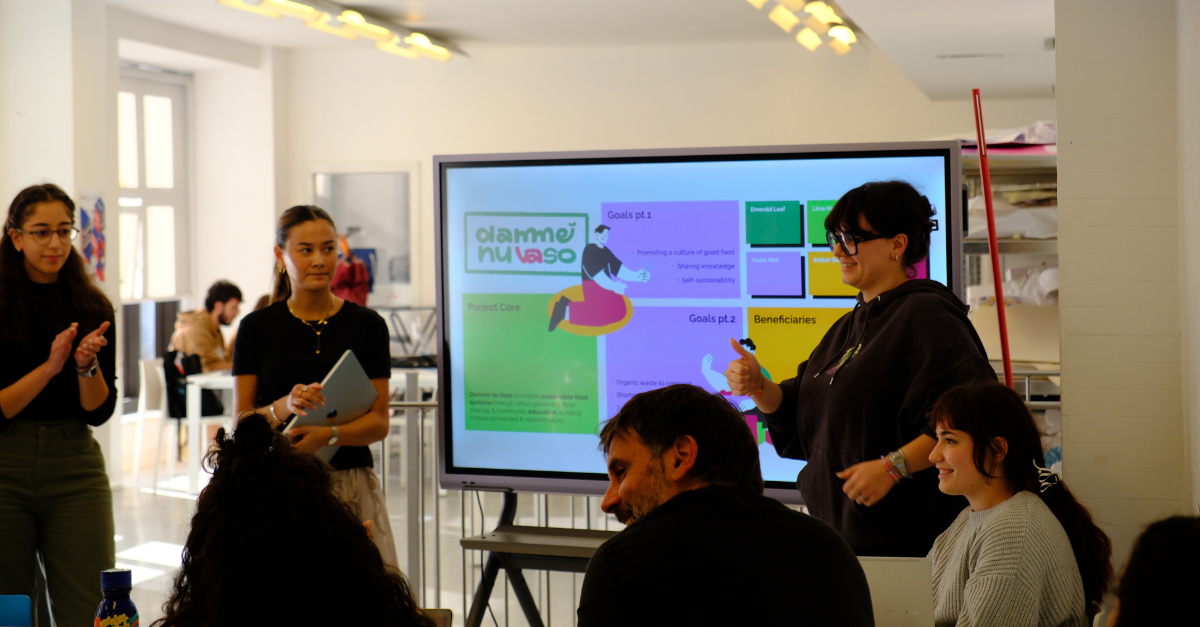
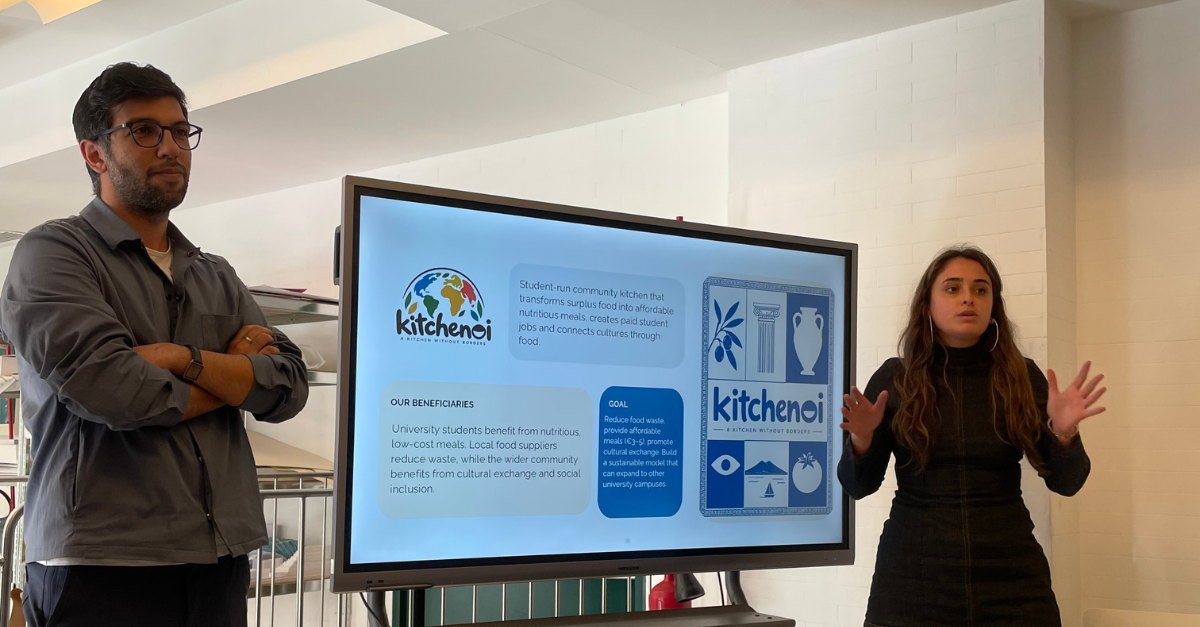
- The Garden Between Us. A garden inside Palazzo Fuga, built from modular cooking spaces where people from different cultures cook together and teach each other. Each culture is a different flower, and the exchange is what makes the garden bloom.
- KitchenNoi. Noi means “we” in Italian, so the name reads as “our kitchen”. Shaped by students from many disciplines and cultures, it proposes a canteen in the university serving subsidised meals from a different culture on rotation. Ingredients would come from almost expired food collected from NGOs, and the staff would be students too, supporting them in more ways than one.
- Rebake. In Naples, bread is a staple, and a lot of it is wasted every day. Rebake turns that surplus bread into beer and other products, closing the loop: waste becomes a new product that runs through the city’s veins just as bread does.
- REEVA. Seaweed was once a small part of Naples’ food culture and is now fading away. REEVA proposes eateries built around seaweed, inviting the city’s many communities to share their own ways of cooking with it and keep the tradition alive.
- Damme nu vaso. In Neapolitan the name means “give me a pot”, but also “give me a kiss”. The team brought a pinch of urban farming to home, encouraging people to grow vegetables on the city’s balconies, which, with the people on them, are already one of Naples’ best sights.
- NONNA. The final team took care of the emotions. Nonna means grandmother in Italian. Their platform lets grandmothers pass their cooking knowledge on to the next generation, especially international students, so traditional recipes and knowledge that are slowly disappearing stay alive.
Final Presentations And Future Development
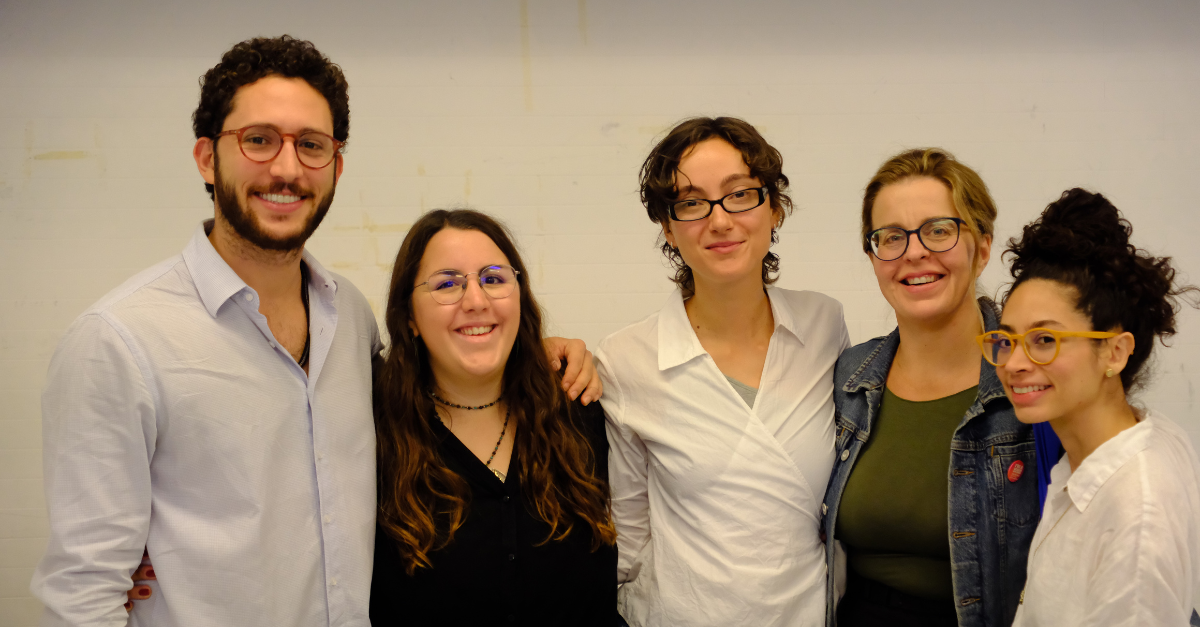
The jury of Jennifer Marsiglia, Valentina Alcalde Gómez, Anika Keils, and Celesta Bufano had warm praise for the teams. They also highlighted, in a constructive manner, certain shortcomings in some business models, and that feedback encouraged the students to continue developing their proposals, as they will be able to take part, as they do every year, in the seizmic Awards.
Across five days, a multicultural group of students went from lecture halls to market stalls, nonnas’ kitchens and an urban farm, and came out with six ideas rooted in Naples but relevant far beyond it. That is what rethinking food systems in the Anthropocene looks like in practice.
The 2026 seizmic Hackathon was organised at the Università Federico II of Naples (UNINA) by Adam Arvidsson, Ramon Rispoli, Mariarosalba Angrisani, Martina Bosone, Benedetta Toledo, Anika Keils, Valentina Alcalde Gómez and Valeed Abdul Hameed, within the Aurora alliance.